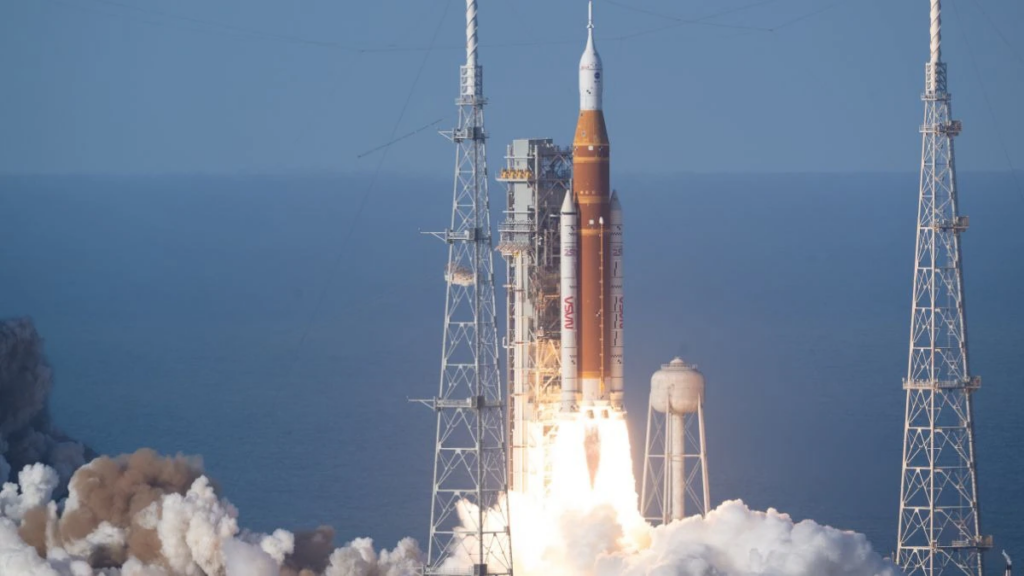
The Artemis II mission was supposed to be a pristine showcase of next-generation spaceflight. And in many ways, it still is. NASA successfully launched its Orion spacecraft, named Integrity, from Kennedy Space Centre, sending astronauts on a historic journey toward the Moon.
But amid the high-stakes engineering and scientific ambition, something refreshingly human happened: astronauts ran into a clogged toilet—and a Microsoft Outlook problem.
Yes, even in deep space, IT issues follow you.
What Happened During the Artemis II Mission?
Shortly after launch, the Orion spacecraft completed a critical manoeuvre known as translunar injection (TLI), setting it on a trajectory toward the Moon.
According to NASA:
- The spacecraft fired its main engine for nearly six minutes
- It exited Earth’s orbit successfully
- The crew is now en route for a lunar flyby
This marks a major milestone in the Artemis program, which aims to return humans to the Moon for the first time in decades.
What Went Wrong on the board?
Even the most advanced spacecraft can’t escape everyday problems—and Artemis II is proving exactly that.
1. The Toilet Malfunction
Early in the mission, astronauts encountered a blockage in the spacecraft’s toilet system.
While it might sound trivial, waste management in space is a serious engineering challenge:
- Systems rely on suction rather than gravity
- Failures can affect hygiene and crew comfort
- Repairs are far more complicated in zero gravity
Mission control had to step in to help troubleshoot the issue remotely.
2. Microsoft Outlook in Space? Yes, and It Broke
In a moment that could happen in any office on Earth, astronauts also faced a familiar frustration: Outlook wouldn’t work.
The issue:
- Two versions of Microsoft Outlook were installed
- Neither version functioned properly
- Astronauts had to call mission control for help
Mission control eventually “remoted in” to fix the problem, essentially performing IT support from Earth to space.
Why These Problems Matter More Than They Seem
At first glance, a clogged toilet and email glitch might seem like minor inconveniences. But in space, small problems can escalate quickly.
The Bigger Picture
These incidents highlight:
- System complexity: Even redundant systems can fail in unexpected ways
- Human factors: Astronauts rely on familiar tools like email for communication and workflow
- Mission resilience: The ability to troubleshoot remotely is critical
In many ways, these hiccups are a reminder that space missions are not just about rockets—they’re about people operating in extreme environments.
What Happens Next on Artemis II?
Despite the early issues, the mission is proceeding as planned.
Lunar Flyby and Science Goals
NASA has outlined a detailed observation plan for the Moon, including:
- Studying craters and ancient lava flows
- Examining surface cracks and ridges
- Understanding the Moon’s geological history
One highlight:
- A solar eclipse is expected during the flyby, lasting nearly an hour
This data will help scientists better understand not just the Moon, but the formation of the solar system.
Why Artemis II Is Still a Big Deal
Technical glitches aside, Artemis II represents a major step forward in human space exploration.
Key Achievements So Far
- First crewed mission in the Artemis program
- Successful launch and orbital exit
- Demonstration of deep-space navigation systems
Looking Ahead
The mission lays the groundwork for:
- Future lunar landings
- Long-term human presence on the Moon
- Potential missions to Mars
The Human Side of Space Exploration
There’s something oddly comforting about astronauts dealing with the same issues as office workers.
Whether it’s:
- A malfunctioning restroom
- A stubborn email client
- Or calling IT for help
It underscores a simple truth: no matter how advanced the mission, human experience—and human problems—come along for the ride.
TL;DR
- Artemis II successfully launched and is heading toward the Moon.
- Astronauts faced two unexpected issues: a clogged toilet and a Microsoft Outlook glitch.
- Mission control resolved both problems remotely.
- The mission continues with planned lunar observations and scientific goals.
- Even in space, everyday workplace problems still exist.