
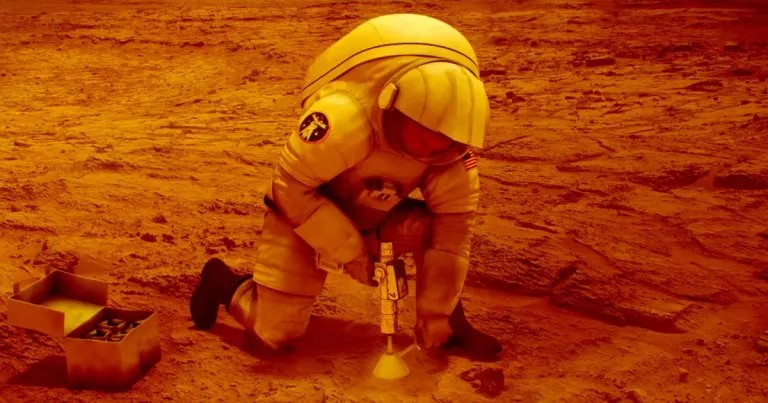
Humanity’s ambition to send astronauts to Mars faces a fundamental challenge: the human body evolved under Earth’s gravity and magnetic shielding, not in the harsh environment of deep space. A new study examining the combined effects of radiation and simulated weightlessness in rats raises concerns about cardiovascular damage, immune-system changes, and mutations that could increase the risk of cancer during long-duration space missions.
Researchers associated with the Medical College of Wisconsin investigated how space-like conditions affect the heart and blood cells over time. Their findings, published in PLOS ONE, suggest that exposure to high-energy radiation can trigger scarring around the blood vessels supplying the heart, while the combination of radiation and simulated microgravity may compromise important immune defenses.
The results do not establish that the human heart is too weak to survive a journey to Mars. The experiments were conducted in rats, and translating their findings into human health risks requires considerable caution. Nevertheless, the research highlights a problem that space agencies must address before sending astronauts on missions lasting months or years.
What did the study discover about space travel and the human heart?
The study examined the biological consequences of conditions that astronauts could encounter during long-duration spaceflight, particularly exposure to ionizing radiation and reduced gravitational loading.
On Earth, the atmosphere and magnetic field help protect living organisms from much of the radiation arriving from space. Beyond that protection, astronauts can encounter galactic cosmic rays and energetic particles associated with solar activity.
Microgravity presents a separate challenge. Without Earth’s usual gravitational pull, bodily fluids redistribute, muscles and bones lose conditioning, and the cardiovascular system must adapt to a different physical environment.
The researchers used rats to investigate how radiation and simulated weightlessness affect cardiovascular tissue and immune function over time.
Their findings included three major areas of concern:
- Cardiovascular damage: Radiation exposure was associated with fibrosis, or the formation of scar tissue, around coronary blood vessels.
- Immune-system changes: The rats experienced a substantial reduction in natural killer cells, which help identify and eliminate infected or abnormal cells.
- Genetic changes: Researchers identified persistent mutations in white blood cells, including changes involving genes associated with clonal hematopoiesis.
These findings provide evidence of biological effects under the experimental conditions. They do not, by themselves, quantify the likelihood of heart attacks or cancer in astronauts traveling to Mars.
How did scientists simulate the conditions of space?
Reproducing the space environment on Earth is difficult because researchers cannot fully recreate months of exposure to microgravity and the complex radiation field encountered beyond Earth’s protective environment.
The research therefore used two experimental approaches.
1. Simulating weightlessness with hindlimb unloading
The researchers used a technique called hindlimb unloading, developed for studying the effects of reduced gravitational loading in animals.
In this method, a harness elevates the rat’s hindquarters at an angle, allowing its rear legs to bear less weight. This changes the distribution of bodily fluids and reduces loading on the lower body.
The technique is widely used to investigate certain physiological effects associated with microgravity, including changes in muscles, bones, and circulation.
However, hindlimb unloading is not identical to living in space. The animals remain on Earth, experience normal atmospheric conditions, and retain some forms of gravitational loading. The method models selected aspects of microgravity rather than reproducing every consequence of spaceflight.
2. Exposing rats to simulated space radiation
To investigate radiation damage, the team used the NASA Space Radiation Laboratory at Brookhaven National Laboratory in New York.
The facility can expose biological samples and experimental animals to energetic particles relevant to space radiation research.
According to the supplied account, the rats underwent five days of simulated weightlessness before receiving a brief radiation exposure. They then remained under hindlimb unloading for another 25 days before returning to normal conditions.
The animals were subsequently monitored for approximately one year.
This follow-up period allowed researchers to investigate delayed biological changes that might not be apparent immediately after radiation exposure.
One important limitation is that the radiation was delivered over a short period. Astronauts on a Mars mission would generally encounter a more prolonged and variable exposure, so the timing and pattern of biological damage may differ.
How did radiation damage the rats’ hearts?
One of the study’s central findings involved perivascular fibrosis, a process in which scar tissue develops around blood vessels.
The coronary arteries supply oxygen-rich blood to the heart muscle. Damage affecting these vessels can interfere with circulation and may contribute to cardiovascular disease, depending on its location, severity, and progression.
High radiation exposure caused coronary scarring
The researchers reported that rats receiving an absorbed radiation dose of 1.5 gray developed perivascular fibrosis around coronary vessels.
The reported scarring increased over the observation period, with the amount approximately doubling by 270 days.
This finding suggests that radiation-related changes can continue to develop long after the initial exposure. The biological consequences of radiation may therefore extend beyond the period during which astronauts are actually traveling through space.
However, an absorbed dose of 1.5 gray cannot automatically be treated as equivalent to a particular human spaceflight risk. The biological effect depends on the type and energy of the radiation, the tissue exposed, and other factors.
Gray measures the energy absorbed per unit mass. Radiation risk assessments also consider factors such as radiation quality, organ exposure, and the individual’s susceptibility.
Lower exposure also produced delayed effects
The report describes a lower-radiation group intended to model exposure associated with a three-year Mars mission.
Although the scarring was not immediately apparent, the researchers reportedly found fibrosis in 83% of these rats after one year.
This result raises an important question: could radiation-related cardiovascular damage develop slowly enough that conventional monitoring during a mission would fail to detect its full extent?
The answer for humans remains uncertain. The rats’ results cannot be directly converted into a human probability of heart disease, and the study’s experimental radiation schedule differs from the exposure astronauts would experience.
The findings nevertheless support continued investigation into delayed cardiovascular effects, particularly for missions involving extended travel beyond Earth’s protective magnetic environment.
Why does the study raise concerns about cancer risk?
The researchers also investigated changes in immune function and the genetic characteristics of white blood cells.
These findings matter because radiation can damage DNA, while immune cells help the body identify infections and abnormal cells. Changes in either system may influence long-term health.
Natural killer cells declined
Natural killer cells, commonly called NK cells, are part of the innate immune system. They help recognize and eliminate certain virus-infected cells and abnormal cells, including some cancerous cells.
According to the supplied report, the rats’ spleens lost approximately two-thirds of their NK cells following the combined experimental exposure.
This finding suggests that space-like conditions may affect an important component of immune defense.
However, the extent to which this result translates to humans remains unclear. A reduction in NK-cell numbers does not automatically establish that an individual will develop cancer, and immune function depends on more than the number of these cells alone.
Researchers must also determine how long the changes persist, whether NK cells retain their normal activity, and how radiation and microgravity contribute individually to the effect.
Mutations persisted in white blood cells
The researchers sequenced the genomes of white blood cells and identified mutations that remained detectable months after radiation exposure.
Some of the affected genes were associated with clonal hematopoiesis of indeterminate potential, or CHIP.
CHIP occurs when a blood-forming stem cell acquires a mutation and produces a population of blood cells carrying that same genetic change. It becomes more common with age and does not necessarily cause illness.
However, certain forms of CHIP are associated with a higher risk of blood cancers and cardiovascular disease.
The study’s findings therefore raise concerns about whether radiation exposure could contribute to persistent mutations in blood-forming cells during or after long-duration spaceflight.
The distinction is important: identifying mutations in rats does not prove that astronauts will develop CHIP, leukemia, or cardiovascular disease. Further research would be required to establish the relevant mechanisms and estimate the risks to humans.
What is CHIP, and why does it matter for astronauts?
Clonal hematopoiesis is increasingly important in medical research because it demonstrates how changes in blood-forming cells can influence health even when a person has no obvious symptoms.
In CHIP, a mutated stem cell produces a growing population of genetically similar blood cells. The condition is often discovered through genetic testing rather than because a person feels unwell.
Some mutations associated with CHIP are linked to a higher risk of cardiovascular disease and certain blood cancers. The size of the risk varies according to the mutation and other individual factors.
For astronauts, the concern is that exposure to ionizing radiation might contribute to mutations in blood-forming cells, potentially creating health consequences that emerge long after a mission ends.
This is especially relevant for a Mars expedition, which could expose astronauts to radiation during the outbound journey, their time on the planet, and the return trip.
A credible risk assessment would need to consider several factors:
- The radiation dose received by blood-forming organs.
- The type of particles encountered and their biological effects.
- The possibility of persistent mutations.
- The influence of age, genetics, and other health conditions.
- Whether any changes increase the incidence of disease over the following years or decades.
The rat study contributes to this investigation, but it does not establish the frequency of CHIP or related diseases among astronauts.
Can the findings be applied directly to a human Mars mission?
Not yet. Animal studies are valuable because they allow researchers to examine biological changes under controlled conditions, but differences between species can substantially affect how results translate to humans.
There are several limitations to consider.
Rats are not humans
Rats and humans share many biological mechanisms, but they differ in lifespan, metabolism, cardiovascular physiology, and responses to radiation.
An effect observed in rats may also occur in humans, but its magnitude and timing can differ. A year of follow-up in a rat cannot simply be converted into a precise number of human years for every biological process.
The radiation exposure was delivered quickly
The study reportedly delivered radiation over a short period, whereas astronauts would experience varying levels of radiation throughout a mission.
The effects of a brief exposure may differ from those of repeated or continuous exposure. The experiment therefore cannot reproduce the complete radiation history of a Mars journey.
Simulated microgravity has limits
Hindlimb unloading models selected consequences of reduced gravitational loading but does not reproduce every aspect of living in microgravity.
Spaceflight also involves other variables, including confinement, stress, altered sleep patterns, changes in physical activity, and operational demands.
Long-term human evidence remains limited
The number of people who have undertaken extended missions beyond low Earth orbit is limited, and there are significant differences between low Earth orbit and deep space in terms of radiation exposure.
Human evidence is therefore insufficient to turn this particular rat experiment into a definitive forecast of cardiovascular outcomes on Mars missions.
The findings should be viewed as a warning about potential biological hazards, not proof that humans cannot survive the journey.
What does this mean for NASA’s plans to send humans to Mars?
The study reinforces the need for effective countermeasures before astronauts undertake long-duration deep-space missions.
Space agencies are already investigating ways to reduce radiation exposure and limit the physiological effects of microgravity.
Potential approaches include:
- Radiation shielding: Spacecraft design can incorporate materials and protective structures to reduce exposure from certain radiation sources.
- Solar storm shelters: Dedicated shielded areas can provide additional protection during some solar particle events.
- Exercise programs: Resistance and aerobic exercise can help astronauts maintain cardiovascular fitness and reduce losses in muscle and bone.
- Medical monitoring: Blood tests and cardiovascular assessments may help detect changes during and after missions.
- Mission planning: Route selection, spacecraft design, exposure limits, and time spent in deep space can influence cumulative radiation exposure.
None of these measures eliminates every hazard. Galactic cosmic rays are particularly challenging because highly energetic particles are difficult to shield against completely, and shielding materials can produce secondary particles when struck by radiation.
Researchers therefore need to evaluate spacecraft protection, medical countermeasures, and mission duration together rather than assuming that any single intervention will solve the problem.
The bottom line: Is the human heart too weak for Mars?
The study does not show that the human heart is incapable of surviving a trip to Mars. It shows that simulated space-related radiation and weightlessness can produce concerning cardiovascular, immune, and genetic changes in rats.
The reported coronary scarring, loss of natural killer cells, and persistent mutations highlight risks that could have implications for long-duration human spaceflight.
But translating these findings into human outcomes requires additional research, particularly studies that better reflect realistic radiation exposure and clarify the biological mechanisms involved.
The challenge for space exploration is not simply getting astronauts to Mars. It is ensuring that they can complete the journey and return without unacceptable long-term health consequences.
Future missions will depend on a combination of better spacecraft protection, medical monitoring, physical conditioning, and a clearer understanding of how deep-space radiation affects the human body.
Mars remains an ambitious destination, but the evidence does not justify declaring it uninhabitable for humans. Instead, the findings underline why protecting astronaut health must remain a central part of the mission design.