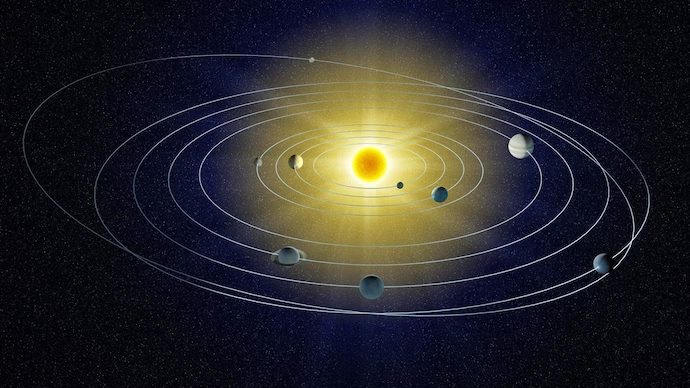
NASA is preparing to launch the Interstellar Mapping and Acceleration Probe (IMAP), a spacecraft designed to probe the boundary between our solar system and interstellar space. Set for liftoff on September 23, 2025, the mission will help scientists better understand how the Sun shapes the protective bubble around our planetary neighborhood—and what lies beyond it.
What is the IMAP mission?
IMAP is a dedicated scientific spacecraft that will study the heliosphere, a vast bubble created by the solar wind that shields Earth and other planets from harmful cosmic radiation.
At its core, the mission seeks to answer two big questions:
- How do particles from the Sun gain energy?
- How does the solar wind interact with interstellar space?
By addressing these, IMAP will fill in major gaps in our understanding of both solar physics and the broader galactic environment.
How will IMAP work?
A unique vantage point at L1
The spacecraft will be positioned at the first Earth-Sun Lagrange point (L1), roughly one million miles from Earth in the direction of the Sun. This stable orbit allows IMAP to:
- Continuously monitor solar activity before it impacts Earth.
- Provide early warnings—up to 30 minutes in advance—about harmful solar radiation.
This advance notice is critical for astronauts, satellites, and even power grids on Earth.
A toolkit of 10 specialized instruments
IMAP carries 10 instruments, each designed for a specific task. Together, they will:
- Detect high-energy particles streaming from the Sun.
- Map magnetic fields in interplanetary space.
- Track cosmic particles from distant supernovae.
- Measure energetic radiation that influences space weather.
Every instrument plays a role in painting a detailed picture of the Sun’s influence across the solar system.
What makes IMAP different from previous missions?
Several spacecraft—like Voyager 1, Voyager 2, and IBEX (Interstellar Boundary Explorer)—have offered glimpses of the heliosphere’s boundary. But IMAP represents a leap forward because:
- Real-time data: Its I-ALiRT system (IMAP Active Link in Real-Time) will provide immediate updates on solar wind and energetic particles.
- Space weather prediction: Unlike earlier missions, IMAP will directly feed data into tools that protect human spaceflight and technology infrastructure.
- Integration with Artemis: Its findings will directly support NASA’s Artemis program, ensuring astronauts traveling to the Moon and Mars are shielded from radiation hazards.
Why does the IMAP mission matter?
Protecting human explorers
Radiation is one of the biggest challenges for long-duration missions beyond low-Earth orbit. With Artemis aiming to establish a long-term lunar presence, IMAP’s early warnings could literally save lives.
Safeguarding technology on Earth
Solar storms don’t just affect astronauts. They can:
- Knock out GPS and communications satellites.
- Disrupt airline navigation.
- Cause blackouts by overloading power grids.
By monitoring space weather in real time, IMAP will strengthen Earth’s defenses against these risks.
Expanding scientific knowledge
Understanding the heliosphere is also a matter of cosmic survival. This bubble is our first line of defense against galactic cosmic rays—energetic particles that could damage DNA, electronics, and even Earth’s atmosphere over geological timescales.
How can the public follow the launch?
NASA will provide live coverage of the IMAP launch on September 23, starting at 6:40 a.m. EDT (4:10 p.m. IST). The broadcast will be available on:
- NASA+
- Amazon Prime Video
- NASA’s YouTube channels (including a Spanish-language stream)
For maximum reach, Spanish-language coverage will also begin at 4:10 p.m. IST.
What’s next for space science?
IMAP represents another step in a broader effort to prepare humanity for deep-space exploration. When combined with upcoming missions like Europa Clipper (exploring Jupiter’s icy moon) and Dragonfly (heading to Saturn’s moon Titan), IMAP underscores NASA’s commitment to exploring not only new worlds but also the invisible forces shaping our cosmic environment.
Suggested visual: An infographic showing the heliosphere, with Earth, the Sun, and IMAP’s position at L1. A side-by-side comparison with Voyager’s path could help readers visualize the difference in mission goals.
TL;DR
NASA is set to launch the IMAP spacecraft on September 23, 2025, to study the heliosphere—the Sun’s protective bubble around the solar system. Positioned at the L1 point, IMAP will provide real-time data on solar wind, energetic particles, and cosmic radiation. Its I-ALiRT system will improve space weather forecasts, protect astronauts on future Moon and Mars missions, and safeguard Earth’s technology from solar storms.