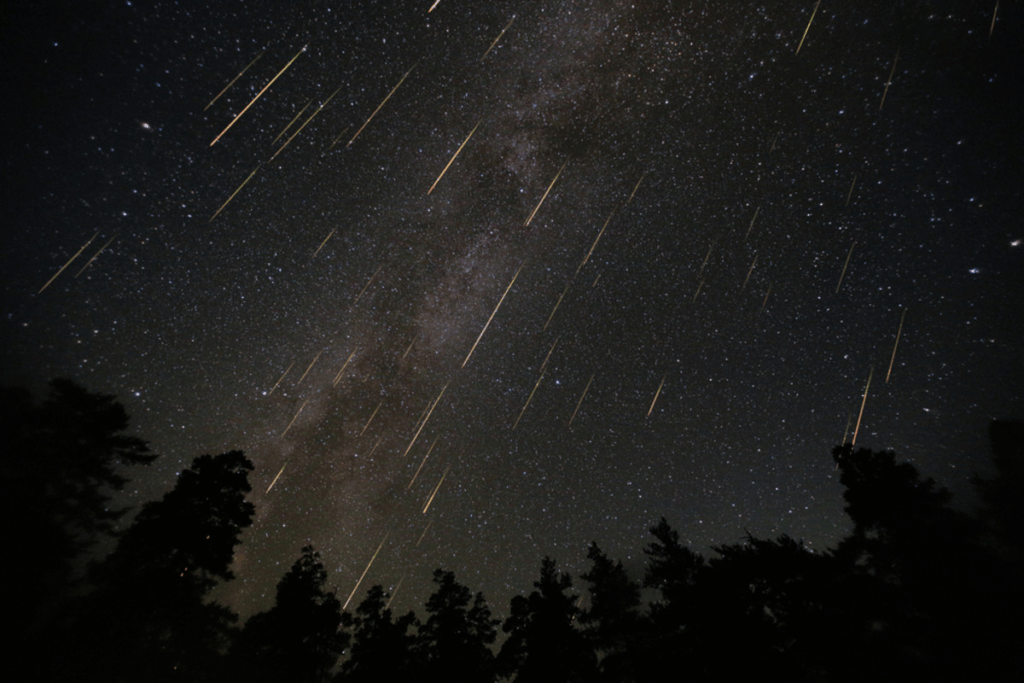
TL;DR: The 2025 Perseid Meteor Shower Cheat Sheet
- When: Perseid Meteor Shower 2025: Active from July 17 to August 24. Peak August 12–13 (best 2 a.m.–dawn).
- Where: Any dark spot in the US. Face northeast if you want to optimize, but just look up.
- Moon: Full moon on August 9 will make meteors harder to see; darkest viewing is late July.
- How many: Expect 10–35 per hour at peak due to moonlight. Still worth it for rare fireballs.
- Tips: Escape city lights, let eyes adjust, check the weather, dress warmly, bring friends.
- Why it’s cool: Fast, bright, sometimes colorful meteors. Reliable and accessible summer sky show.
If you’re looking for a reason to spend summer nights outdoors before the season fades, you’re in luck: The Perseid meteor shower, one of the year’s most dazzling celestial displays, is back. For newcomers and veteran skywatchers alike, the 2025 Perseids promise bright streaks, surprising fireballs, and a few unique viewing challenges. Here’s everything you need to know to catch the show, plus a few tips your neighbor might not have heard.
What Is the Perseid Meteor Shower?
The Perseids are an annual event, visible every August as Earth plows through the trail of dust and debris left by Comet 109P/Swift-Tuttle. When those specks, no bigger than a grain of sand, hit our atmosphere at 37 miles per second, they burn up, creating fleeting but brilliant trails. The shower is named after the constellation Perseus, the point in the sky from which the meteors appear to originate.
Unlike many comets, Swift-Tuttle is “periodic”, it returns every 133 years, leaving fresh dust each time. It was discovered in 1862, but its debris has been painting the sky for millennia. (NASA Jet Propulsion Laboratory offers an easy primer on comets for the curious.)
When Is the Perseid Meteor Shower in 2025?
The show technically runs July 17 through August 24, but the action really heats up in early August. In 2025, the peak is the night of August 12, in the hours before dawn on August 13. That’s when you’ll have the best shot at seeing the most meteors. The number of visible “shooting stars” ramps up each night toward the peak, then drops off, so early August is prime time.
However, there’s a cosmic catch: The full moon arrives on August 9, and a bright moon can wash out fainter meteors. For the best viewing, plan to catch the shower as close to the new moon (July 24) as possible, when skies are darkest.
Where and How to Watch the Perseid Meteor Shower in the US
For most Americans, the northern half of the sky is their hunting ground. Find a spot as far from city lights as you can—think state or national parks, rural areas, or even a dark corner of your backyard. No telescope or binoculars needed. Just your eyes.
Here’s how to get the best view:
- Find your bearings: Face northeast and look for the constellation Perseus, which rises in late evening and climbs higher as the night goes on. But don’t stress about pinpointing it—meteors will appear all over the sky.
- Timing is everything: The shower ramps up after midnight, with the best viewing window from 2 a.m. to dawn. (Set an alarm.)
- Dress for the occasion: Summer nights can surprise you with a chill, especially if you’re lying on a blanket for hours.
- Let your eyes adjust: Turn off phones and flashlights for at least 20 minutes to let your eyes adapt to the dark.
- Check the weather: Cloudy skies are the show’s biggest foe. Use reliable local forecasts (the National Weather Service is a go-to), and be ready to try another night.
Why Is 2025 Different? The Full Moon Challenge
In a typical year, the Perseids deliver 50 to 150 meteors per hour under pristine dark skies. This summer, the full moon cuts into those numbers—expect 10 to 35 visible meteors per hour at peak. Even so, the Perseids are known for extra-bright fireballs and lingering trains, so don’t despair if the count seems low. There’s still a good chance you’ll spot something spectacular.
If you want a real meteor feast, circle your calendar for 2026: Next year’s peak falls close to a new moon, offering darker skies and higher counts.
What Can You Expect to See?
Think “sky fireworks.” Most meteors are quick, silvery streaks, but some—the fireballs—glow with a green, yellow, or blue tint, last several seconds, and sometimes end in a visible explosion. Every few years, the shower spawns especially eye-popping displays, and 2025 could still deliver a few of these crowd-pleasers.
You might also notice “meteor trains”—glimmering trails lingering after a bright meteor. These are caused by ionized gas in the upper atmosphere and add a surreal touch to the night.
The Science Behind the Show
Meteor showers happen all year (see the American Meteor Society’s calendar), but the Perseids stand out for their speed and brightness. That’s because Swift-Tuttle’s orbit is steep relative to Earth’s, so the debris slams into our atmosphere head-on. The faster the particles, the brighter the light.
If you’re curious about the comet itself, NASA’s Solar System Dynamics site tracks its orbit and return dates. The next close pass isn’t until 2126, but its dust keeps the show going every summer.
What If You Miss the Peak?
The Perseids aren’t a one-night-only deal. Weeks before and after the peak, you can still spot meteors, just fewer per hour. If the weather or moon puts a damper on your plans, look again during the second half of July or the third week of August. It’s rare to leave a dark sky site without seeing at least a few.
Perseids vs. Other Meteor Showers
How do the Perseids stack up against other big showers? Here’s a quick comparison:
- Gemini s in December: Often more meteors per hour, but cold nights can be a deterrent.
- Leonids in November: Known for rare meteor storms but less reliable year to year.
- Lyrids in April: Milder, with lower hourly rates, but sometimes impressively bright.
The Perseids strike a sweet spot: predictable, warm, and visually impressive—the summer classic you don’t want to miss.
Tips for Sharing the Experience
Stargazing is better with company. A Perseid watch party is a perfect way to end summer, whether it’s with family, friends, or a club. Pack snacks, bug spray, and lawn chairs. Bring a red-filtered flashlight to preserve everyone’s night vision. If you have a camera, experiment with long exposures—you might capture a lucky streak.
The Perseids are a reminder that the night sky is a free, communal spectacle, even in a world crowded with screens and schedules. You don’t need fancy gear, just patience and a plot of darkness. This summer, let the Perseids be your excuse to reconnect with outdoors, with each other, and with the sky above.