
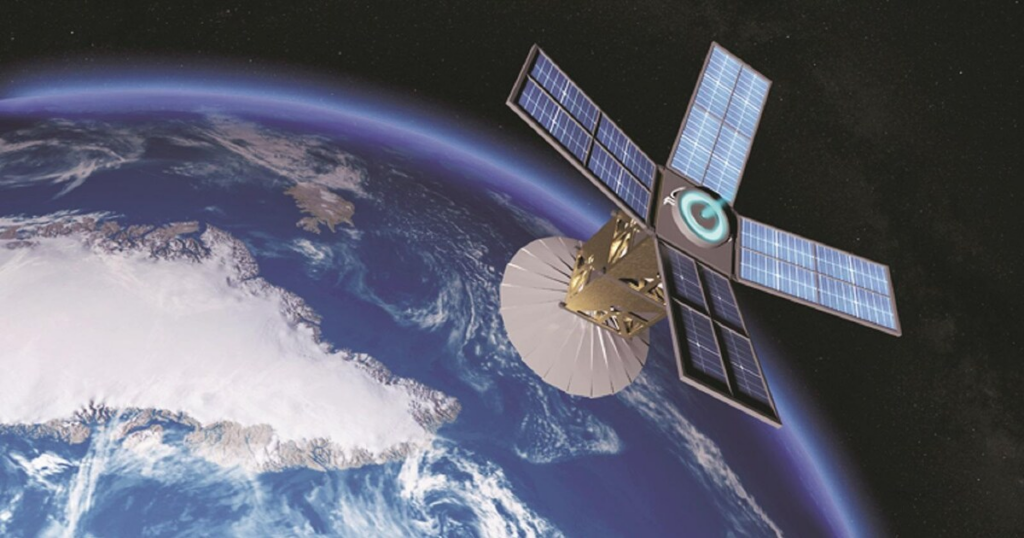
China has significantly expanded its military satellite capabilities over the past decade, prompting growing concern among U.S. defense officials about the changing balance of power in space.
According to U.S. government assessments, China’s military now has access to more than 510 intelligence, surveillance, and reconnaissance (ISR) satellites, providing enhanced capabilities to monitor military activity, support precision targeting, and improve battlefield awareness.
The developments come amid intensifying strategic competition between the United States and China in space, an increasingly important domain for communications, navigation, intelligence, and national security.
What Are U.S. Officials Saying?
According to U.S. Space Force assessments cited by U.S. officials, China’s military has access to more than 510 intelligence, surveillance, and reconnaissance satellites.
ISR satellites are designed to collect information that supports military planning and operations. Depending on their capabilities, they may be used to:
- Monitor troop movements.
- Observe naval activity.
- Track missile launches.
- Support targeting.
- Conduct battlefield surveillance.
Military satellite constellations often include systems serving multiple purposes, including communications, navigation, weather monitoring, and reconnaissance.
Why Does This Matter?
U.S. defense officials say China’s expanding satellite network enhances its ability to monitor military activity across the Indo-Pacific region.
According to Pentagon assessments, improved space-based surveillance can strengthen:
- Long-range precision strike capabilities.
- Military command and control.
- Intelligence collection.
- Operational coordination between different branches of the armed forces.
The ability to collect information rapidly from space has become increasingly important in modern military planning.
Advances in Remote Sensing and Artificial Intelligence
Analysts say China has continued investing in remote-sensing technologies capable of collecting imagery under a wider range of environmental conditions.
Modern satellite systems may employ optical, infrared, and synthetic aperture radar (SAR) sensors, the latter allowing imagery collection through cloud cover and during nighttime conditions.
Researchers also note that advances in artificial intelligence can accelerate the processing of satellite imagery by helping identify objects, detect changes over time, and prioritize information for human analysts.
Independent Assessments
The U.S.-China Economic and Security Review Commission has stated that China’s expanding space capabilities have strengthened its ability to support military operations through improved intelligence, communications, and surveillance.
Separately, a 2024 study led by the Center for Strategic and International Studies (CSIS) found that several Chinese commercial remote-sensing systems ranked among the world’s leading capabilities in multiple technology categories.
Commercial satellite operators can provide imagery for civilian purposes, although governments may also purchase commercially available satellite data where permitted by law.
Concerns About Counterspace Capabilities
U.S. defense agencies have also expressed concern about China’s investment in technologies designed to affect satellites during a conflict.
According to U.S. military and intelligence assessments, China is developing a range of counterspace capabilities, including systems intended to:
- Disrupt satellite communications.
- Interfere with navigation signals.
- Conduct electronic warfare.
- Potentially target satellites in orbit.
These assessments reflect U.S. government analyses of China’s military modernization. Public details regarding the operational status of individual systems remain limited.
Allegations Regarding Satellite Imagery
The U.S. State Department has previously accused certain Chinese companies of supplying satellite imagery that could support Iranian military activities.
Those allegations have been made by U.S. officials. Public reporting has not established the full extent of any such support, and the companies involved have not necessarily accepted those allegations.
Growing Competition in Space
The United States and China continue to invest heavily in military and civilian space programs.
Both countries are expanding capabilities in areas including:
- Satellite communications.
- Navigation systems.
- Earth observation.
- Missile warning.
- Space situational awareness.
- Lunar exploration.
Defense analysts increasingly view space as a critical operational domain alongside land, sea, air, and cyberspace.
Why This Matters
Satellites underpin many aspects of modern military operations, including communications, navigation, intelligence gathering, and precision targeting.
As China expands its space capabilities, U.S. policymakers are placing greater emphasis on protecting satellite networks, improving resilience against potential disruptions, and maintaining technological advantages in an increasingly contested space environment.
The evolving competition is expected to remain a central element of U.S.-China strategic relations in the coming years.
The Bottom Line
U.S. officials say China has significantly expanded its military satellite network, with more than 510 intelligence, surveillance, and reconnaissance satellites now supporting its armed forces. According to U.S. defense assessments, these capabilities improve China’s ability to monitor military activity, enhance command and control, and support precision operations. The developments underscore the growing strategic importance of space in the evolving security competition between the United States and China.
TL;DR
- U.S. officials say China now has access to more than 510 intelligence, surveillance, and reconnaissance satellites.
- The Pentagon says the expanding satellite network improves China’s ability to monitor military activity and support long-range operations.
- Analysts say advances in remote sensing, navigation, and artificial intelligence have strengthened China’s space capabilities.
- U.S. officials have also raised concerns about China’s development of counterspace technologies.
- Beijing’s growing presence in orbit is contributing to increased strategic competition between the world’s two largest military powers.