
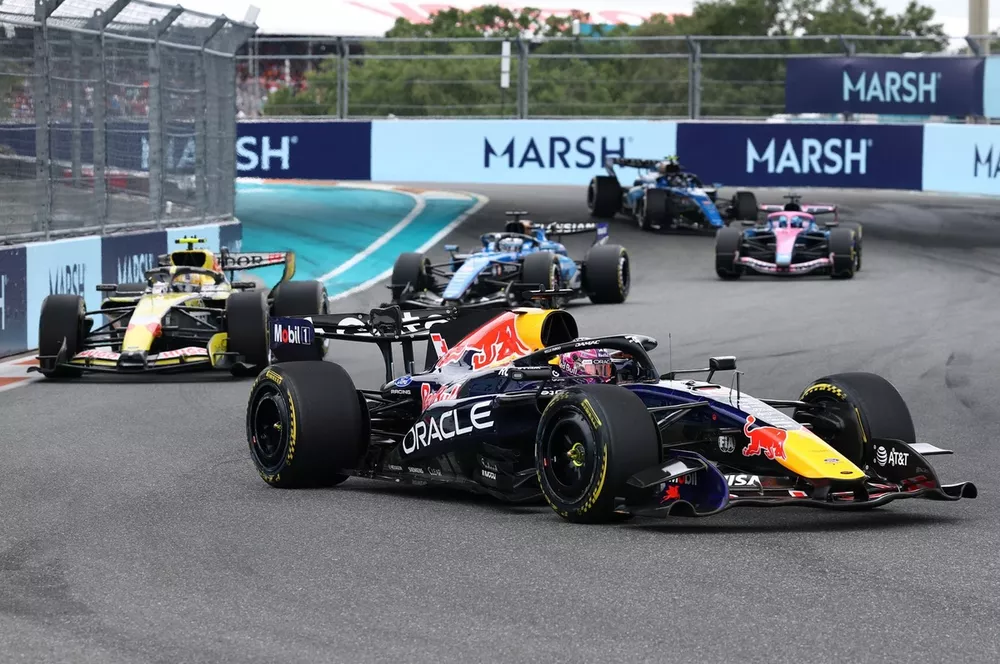
Formula 1 is preparing another major technical shift. After driver backlash over the 2026 power units, the F1 paddock has agreed to revise engine regulations for 2027—pending final approval.
At the center of the change is a rebalanced power split between combustion and electric energy. The goal is simple: make cars faster to race, easier to drive at the limit, and less dependent on energy-saving tactics that frustrated drivers and fans alike.
What are the F1 engine changes for 2027?
The headline adjustment is a shift in how power is delivered.
From 50-50 to 60-40 split
The 2026 regulations introduced a 50-50 split between:
- Internal combustion engine (ICE)
- Electrical energy (hybrid system)
That balance is now set to change to:
- 60 percent combustion power
- 40 percent electrical power
This effectively reduces reliance on battery deployment during a lap.
Reduced electrical output
The electrical component will drop from:
- 350 kW → 300 kW
This may sound technical, but the impact is straightforward: drivers won’t need to constantly manage battery energy mid-race.
Why this matters on track
Under the new setup, drivers should be able to:
- Accelerate more consistently on straights
- Attack corners without worrying about energy depletion
- Maintain higher speeds without lifting off the throttle
In short, racing becomes more about driving—and less about energy management.
Why were drivers unhappy with the 2026 engines?
The push for change didn’t come from teams alone. Drivers were vocal early in the season.
The “lift and coast” problem
With the 50-50 power split, drivers had to conserve energy constantly. That led to a style of driving where they:
- Lifted off the throttle early before corners
- Coasted to recharge batteries
- Avoided full-throttle racing
For fans, it reduced intensity. For drivers, it felt restrictive.
Safety concerns
Energy-saving strategies also created inconsistent speeds across the grid. That led to:
- Unexpected slowdowns on straights
- Greater speed differentials between cars
- At least one reported incident linked to these variations
Driver reactions
Even top drivers like Max Verstappen voiced frustration, arguing that the cars no longer allowed them to push flat-out.
Defending champion Lando Norris echoed similar concerns, saying improvements were needed despite mid-season tweaks.
What changes has F1 already made in 2026?
Formula 1 didn’t wait until 2027 to act.
Mid-season adjustments
After just three races, regulators introduced early tweaks—implemented at the Miami Grand Prix.
These changes aimed to:
- Improve energy deployment
- Reduce extreme lift-and-coast scenarios
- Address immediate driver complaints
Why more changes are needed
Despite those fixes, drivers and teams agreed the core issue remained: the power balance itself.
That’s why a more structural change—like the 60-40 split—is now planned.
How will the 2027 changes affect racing?
The intent is to restore a more aggressive, competitive racing style.
More flat-out racing
Drivers should be able to:
- Push continuously without saving energy
- Attack overtakes more confidently
- Maintain rhythm throughout a lap
Better wheel-to-wheel action
With fewer artificial slowdowns:
- Speed differences become more predictable
- Racing lines improve
- Overtaking opportunities increase
Improved fan experience
For viewers, this could mean:
- Fewer confusing slowdowns
- More consistent racing pace
- A return to high-intensity driving
What does this mean for teams and car design?
Engine changes ripple through every aspect of car development.
Engineering adjustments
Teams will need to:
- Rebalance cooling systems
- Optimize fuel efficiency under higher ICE reliance
- Redesign energy recovery systems
Strategic shifts
Race strategy could also change:
- Less focus on energy harvesting
- More emphasis on tire management
- Different overtaking windows
Competitive impact
Teams that adapted best to hybrid-heavy systems may need to rethink their approach, potentially reshuffling the competitive order.
Current 2026 F1 standings: who’s leading?
The 2026 season has already delivered surprises.
Top contenders so far
- Kimi Antonelli (Mercedes) leading with 100 points
- George Russell in second with 80
- Charles Leclerc third with 59
Further down:
- Lando Norris and Lewis Hamilton tied on 51
- Oscar Piastri at 43
- Max Verstappen further back with 26
The standings highlight how competitive—and unpredictable—the current regulations have been.
Why this rule change matters long-term
Formula 1 is constantly balancing three priorities:
- Performance
- Sustainability
- Entertainment
The hybrid dilemma
The 2026 rules aimed to:
- Increase electrical power usage
- Promote sustainability
- Push technological innovation
But the trade-off was reduced racing intensity.
The 2027 correction
The new rules suggest F1 is recalibrating:
- Keeping hybrid technology
- Reducing its dominance
- Restoring driver control and race quality
This reflects a broader philosophy: innovation should not come at the cost of the sport itself.
What happens next?
The proposed changes still need final approval from governing bodies, including the FIA.
Timeline
- Final regulation approval expected before the 2027 season
- Teams begin development adjustments soon after
- Full implementation in 2027 cars
What to watch
- Additional tweaks before final approval
- Team reactions during development phase
- Whether further balance changes are introduced
TL;DR
- F1 plans to change engine rules for 2027 after driver complaints
- Power split shifts from 50-50 to 60-40 in favor of combustion
- Electrical output will be reduced from 350 kW to 300 kW
- Changes aim to eliminate lift-and-coast driving
- Goal is faster, more aggressive, and more predictable racing