
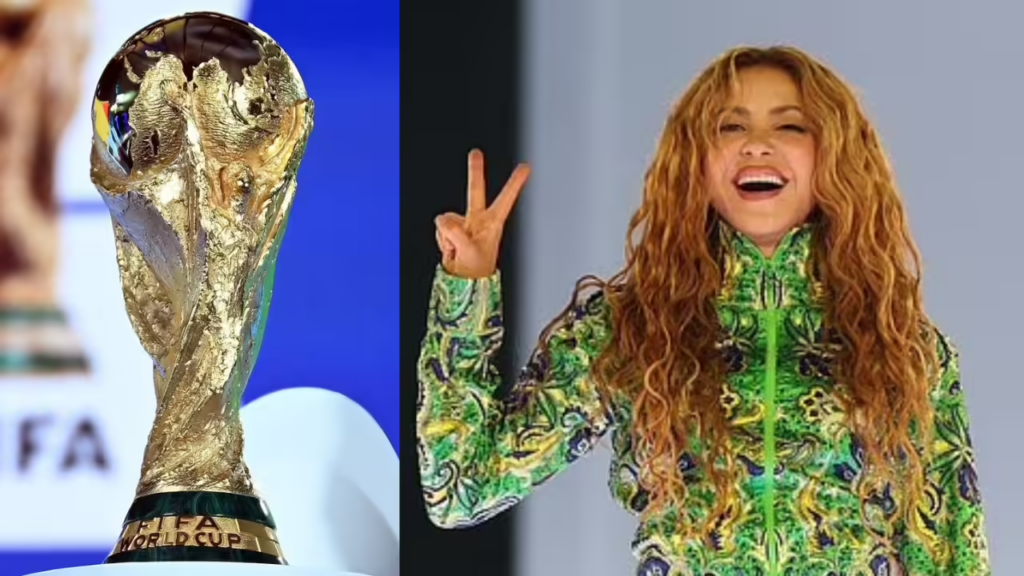
The decision to introduce a Super Bowl-style halftime show at the 2026 FIFA World Cup final has triggered a fierce debate among football fans worldwide, with many accusing FIFA of “Americanising” the world’s biggest sporting event.
The controversy exploded online after reports claimed the first-ever FIFA World Cup final halftime show would feature performances from Shakira, BTS and Madonna during the championship match on July 19, 2026.
For some fans, the lineup sounds like a global entertainment spectacle. For others, it feels like football is losing part of its identity.
Why the FIFA World Cup Halftime Show Is Causing Controversy
The backlash centers on one core concern: many supporters believe FIFA is borrowing too heavily from American sports culture.
The halftime show format is synonymous with the Super Bowl, where elaborate performances from major music stars are part of the spectacle. But football — or soccer, depending on where you are — has traditionally treated halftime very differently.
In football, halftime serves a practical purpose:
- Players recover physically
- Coaches adjust tactics
- Teams regroup mentally
- The match resumes quickly after 15 minutes
That rhythm is deeply ingrained in the sport. Fans argue that inserting a celebrity concert into the middle of a World Cup final risks disrupting the flow and seriousness of the game itself.
Social media reactions reflected that anxiety almost instantly.
“Football fans will not like halftime shows. They are not like American football fans,” one X user wrote.
Another post read:
“Halftime show at the World Cup final feels like FIFA trying to be the Super Bowl.”
The criticism isn’t entirely about music. It’s about culture, tradition, and fears that football’s global identity is being reshaped to fit American entertainment standards.
Why FIFA Introduced a Halftime Show for 2026
The 2026 tournament is already historic for several reasons.
It will be:
- The first World Cup was jointly hosted by three countries
- The largest FIFA World Cup ever in terms of participating teams
- A tournament heavily influenced by North American sports infrastructure and commercial strategy
The United States, in particular, has long blurred the line between sports and entertainment. Pregame concerts, celebrity appearances, elaborate opening ceremonies, and halftime productions are standard parts of the American sports experience.
FIFA appears to be leaning into that formula.
According to FIFA president Gianni Infantino, the halftime show will also support the FIFA Global Citizen Education Fund, positioning the event as both entertainment and philanthropy.
Infantino described the show as:
“Bringing together music and football on the biggest stage in sport for a very special cause.”
From FIFA’s perspective, the move likely serves multiple goals:
- Expanding commercial appeal
- Capturing younger audiences
- Increasing crossover with pop culture
- Maximizing broadcast engagement
- Creating viral global moments
But critics argue the World Cup already commands unmatched global attention and does not need a Super Bowl-style reinvention.
The Biggest Problem: How Will a 15-Minute Halftime Even Work?
Beyond the cultural debate, many fans are simply confused by the logistics.
A standard football halftime lasts 15 minutes.
By contrast, Super Bowl halftime shows typically run closer to 30 minutes once staging, setup, performance, and teardown are included.
That raises obvious questions:
- Will FIFA extend halftime?
- Will players be forced to wait longer before returning?
- How can three major artists perform in such a short window?
- Will the pitch need temporary staging equipment?
Fans online quickly pointed out the mismatch.
“Three artists in 15 minutes sounds impossible,” one user posted.
Others worried about player recovery and momentum during the most important football match on earth.
Sports science experts have long emphasised the importance of maintaining physical readiness during halftime. Extending the break significantly could alter warm-up routines, muscle recovery, and tactical flow.
That concern is especially relevant in a World Cup final, where tiny physical or mental disruptions can change the outcome of a match.
Why Shakira’s Involvement Feels Symbolic
Of the three reported performers, Shakira’s inclusion may be the least controversial.
Her song Waka Waka (This Time for Africa) remains one of the most recognisable World Cup anthems ever created.
For many football fans, Shakira already belongs to the cultural fabric of the tournament in a way few artists do.
That’s why even some critics of the halftime concept admitted her appearance makes sense.
One social media user described it as:
“Shakira returning for what’s basically her Waka Waka swan song.”
The reactions to Madonna and BTS, however, have been more divided.
Some fans feel the lineup reflects FIFA’s attempt to build a globally dominant entertainment package rather than something organically tied to football culture.
BTS Fans Are Celebrating the Announcement
While football traditionalists criticised the halftime idea, fans of BTS reacted with overwhelming excitement.
The K-pop group recently reunited after members completed mandatory military service in South Korea and returned with their album Arirang.
The group’s massive global fanbase immediately turned the FIFA announcement into a trending topic online.
Many supporters see the World Cup stage as a natural fit for BTS’s worldwide popularity.
“This is going to be legendary,” one fan wrote.
Another posted:
“My favorite sport is soccer and my favorite band is BTS. How am I supposed to get tickets now?”
The enthusiasm highlights FIFA’s likely strategy: combining football audiences with massive global music fandoms to create a broader entertainment event than ever before.
Is Football Becoming More Entertainment-Driven?
The backlash surrounding the FIFA World Cup halftime show reflects a broader shift happening across global sports.
Modern sports organizations increasingly compete not just for viewers but for attention in a crowded entertainment economy dominated by streaming, social media, gaming, and celebrity culture.
That has led leagues and governing bodies to experiment with:
- Celebrity integrations
- Music collaborations
- Documentary storytelling
- Influencer partnerships
- Viral social media moments
Football has historically resisted some of those trends compared to American sports leagues. But the 2026 World Cup may signal that FIFA is becoming more comfortable embracing spectacle alongside tradition.
Whether fans accept that evolution remains unclear.
The Debate Is Bigger Than One Concert
At its core, the argument over the FIFA World Cup halftime show is really about what football should be.
For some fans, football’s simplicity is sacred. The match itself is the show.
For others, adding major performances from globally recognized artists only increases the scale and excitement of an already enormous event.
The challenge for FIFA will be balancing those two visions without alienating traditional supporters.
Because if the halftime show overshadows the football itself, the backlash could become louder than the music.
TL;DR
FIFA’s decision to introduce a Super Bowl-style halftime show at the 2026 World Cup final has divided fans worldwide. Performances from Shakira, BTS, and Madonna are reportedly planned during the July 19 final, but critics say the move feels like an unnecessary “Americanisation” of football.
Fans are also questioning the logistics of fitting three major acts into football’s traditional 15-minute halftime break. While many supporters dislike the idea, BTS fans and pop music audiences are already celebrating what could become one of the most-watched musical performances in sports history.