TL;DR
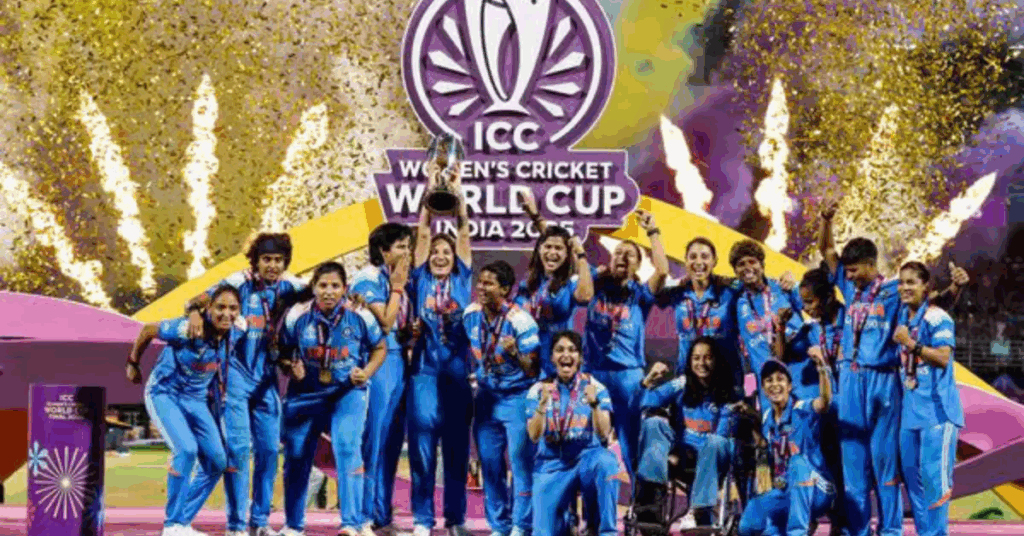
Sixteen Indian women cricketers have achieved what generations before them only dreamed of: winning India’s first senior ICC Women’s World Cup. But their stories go far beyond the boundary. From small towns and narrow lanes to world stages and stadium lights, these women defied gender bias, social limits, and cultural prejudice to carve a new chapter in Indian sport. This is not just a cricket victory; it’s a collective story of resilience, reinvention, and revolution.
Breaking Boundaries: The Rise of India’s Women Champions
For decades, women’s cricket in India lived in the shadow of its male counterpart, underfunded, underwatched, and undervalued. That changed when Harmanpreet Kaur’s squad lifted the ICC Women’s World Cup, a moment that will forever divide history into “before” and “after.”
These 16 women didn’t just play a sport; they redefined its purpose. Their journeys tell us how determination, family sacrifices, and community defiance can turn barriers into stepping stones.
The Pioneers Who Made History
Harmanpreet Kaur: The Relentless Captain from Moga
At 36, Harmanpreet Kaur stands as the beating heart of Indian women’s cricket. From her father buying her a “Good Batsman” T-shirt at birth to her iconic 171* against Australia in the 2017 World Cup, her story is a chronicle of grit and grace.
When Adam Gilchrist tweeted, “Seriously impressed with Harmanpreet. Classy, skillful”—it wasn’t just praise; it was validation for every girl who had ever picked up a bat in a dupatta.
Fun Fact: Kaur has scored the most runs in Women’s ODI World Cup knockout matches.
Smriti Mandhana: The Face of Indian Elegance
From Sangli to the world stage, Smriti Mandhana’s rise is as poetic as her cover drives. Born into a cricket-loving family, she debuted at 16 and soon became the backbone of India’s batting lineup.
Now 29, she’s just one century shy of Meg Lanning’s ODI record, and her smile under pressure continues to light up scoreboards and stadiums alike.
Did you know? Mandhana was ranked the No. 1 ODI batter in the world and became India’s vice-captain in 2022.
Jemimah Rodrigues: Mumbai’s Multitalented Maverick
Bandra’s own Jemimah Rodrigues might have been a hockey prodigy, but cricket chose her. Known for her composure and clutch performances, Rodrigues embodies adaptability, whether opening or rescuing an innings from the middle order.
Her 127* against Australia after being dropped from the lineup earlier in the tournament cemented her reputation as India’s comeback queen.
Fact check: Rodrigues represented Maharashtra in U-17 field hockey before turning full-time to cricket.
Deepti Sharma: Agra’s All-Round Engine
If India’s win had a soul, it would look like Deepti Sharma, the all-rounder who does it all. Spotted for her “bullet throw” as a child, Deepti was trained by her brother Sumit, who quit his job to coach her full-time.
She became the first woman to score 200+ runs and take 15+ wickets in a single World Cup.
Did you know? Her 188 against Ireland remains the highest score by an Indian woman in ODIs.
Richa Ghosh: The Power-Hitter from Siliguri
Richa Ghosh’s story starts with broken windows; her father encouraged her to practice six-hitting at home, even if it meant replacing glass panes regularly. That audacity translated into fearless batting.
Now the youngest player in the side at 22, Richa’s journey from concussion substitute in the 2020 World Cup final to India’s go-to finisher shows what raw power combined with perseverance can do.
Harleen Deol: The Viral Catch and Beyond
The internet remembers her for that boundary-line catch against England, a moment that made highlight reels worldwide. But Harleen Deol is more than a viral video.
Her technical consistency and top-order stability have made her a vital cog in India’s batting setup. Her journey from Chandigarh to cricket fame is a study in composure under the spotlight.
Pratika Rawal: Scholar, Striker, Successor
The Delhi-based psychology graduate turned opener, Pratika Rawal, represents the modern face of Indian cricket: educated, focused, and fearless. Training with her father on their terrace during lockdown, she became the fastest Indian woman to reach 1,000 ODI runs.
Insight: Rawal’s success inspired dozens of girls to join her training center, once dominated by boys.
Uma Chetry: Assam’s Beacon of Hope
From Golaghat to global glory, Uma Chetry has put the Northeast on India’s cricketing map. A lifelong MS Dhoni fan, her wicketkeeping skills and calm batting made her the region’s first woman to play for India.
Her debut at this World Cup wasn’t just a personal triumph; it was a representation for millions who’d never seen their home state on the cricketing radar.
Kranti Gaud: Tribal Talent Turned Fast-Bowling Force
Kranti Gaud’s story is pure defiance. Hailing from a small tribal family in Madhya Pradesh, she started out as a tennis-ball cricketer. Her mother pawned jewelry to fund her journey, and Kranti repaid that faith by taking 6-52 against England, the best ODI figures by an Indian against them.
When villagers in Ghuwara installed an LED screen to watch her bowl, it wasn’t just pride — it was history in motion.
Sneh Rana: The Queen of Comebacks
Sneh Rana’s career has been a testament to persistence. Dropped for five years, she returned stronger, balancing spin, swing, and sorrow after her father’s passing. Her 80* in Bristol remains the highest by an Indian at No. 8, proof that comebacks aren’t just possible, they’re powerful.
Renuka Singh Thakur: For Her Father’s Dream
From the hills of Himachal, Renuka Singh’s story began with loss; she was only three when her father passed away. Today, she bowls with purpose, leading India’s pace attack with control and heart.
Fact: Renuka was the top wicket-taker at the 2022 Commonwealth Games with 11 dismissals.
Arundhati Reddy: The Bold Mover
Few would leave comfort zones for growth, but Arundhati did. Moving from Hyderabad to Kerala to reinvent herself, she proved that courage is a prerequisite for greatness. Now a dependable all-rounder, she stands as proof that bold choices build lasting legacies.
Radha Yadav: From Vegetable Stall to Victory Lap
Born in Mumbai to a vegetable vendor, Radha Yadav’s journey to the national team reads like a movie script. From playing street cricket in Kandivali to becoming India’s best fielder, her story proves raw talent needs only one thing: opportunity.
Amanjot Kaur: The Carpenter’s Daughter Who Carved Her Path
Denied a bat by neighborhood boys, Amanjot’s father built one for her by hand. That symbolic moment became her foundation. After battling injuries, she made a stunning comeback in the WPL and went on to rescue India from a collapse at the World Cup.
Sree Charani: From Track Star to Spin Sensation
Originally an athlete, Sree Charani was steered toward cricket by a perceptive coach. Within years, she became India’s left-arm spinning solution, winning Player of the Series in England on debut.
Shafali Verma: The Redemption of Rohtak’s Firebrand
Shafali Verma’s journey is pure cinematic defiance, cutting her hair to play disguised as a boy, breaking Sachin Tendulkar’s record as India’s youngest half-centurion, and leading India to U-19 glory.
Her recall after injury proved one thing: talent may waver, but brilliance doesn’t fade.
Why This Victory Matters
This isn’t just about a trophy. It’s about rewriting gender roles, democratizing sports access, and changing how India defines success. Each player’s story carries lessons in resilience and equality that transcend cricket.
Their triumph signals the arrival of a generation that refuses to ask for permission, only opportunities.
The Legacy Ahead
The 2025 Women’s World Cup win is more than a milestone; it’s a manifesto. It says to every young girl in India: the pitch is yours too.
And as Harmanpreet Kaur lifted the trophy under the bright Navi Mumbai lights, one truth echoed across every home, every street, every stadium, her story is now India’s history.