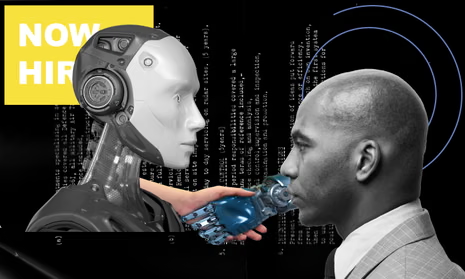
A Reddit post about an AI job application bot is sparking a familiar debate: when automation meets hiring, where should the line be drawn?
The anonymous user claims he built a system that handled his entire job search—finding openings, tailoring resumes and cover letters, answering application questions, and submitting everything automatically. The result: around 50 interview calls in one month.
The twist? He says the bot did it all while he slept.
What Is the AI Job Application Bot and How Did It Work?
End-to-end automation of the job hunt
According to the Reddit post on the “Get Employed” board, the bot functioned as a full-stack job search assistant:
- Scanned job listings across platforms
- Analyzed job descriptions for keywords and requirements
- Generated customised resumes and cover letters for each role
- Answered recruiter-specific application questions
- Submitted applications automatically
Each application was tailored—arguably the same level of personalization career coaches recommend, but executed at scale.
Why Did It Get So Many Interview Calls?
Personalisation at scale
The user attributes the success to one key factor: customization.
Instead of sending generic applications, the bot:
- Matched skills to job descriptions
- Adjusted wording to align with recruiter expectations
- Optimised for applicant tracking systems (ATS)
This mirrors what hiring experts often advise—just executed hundreds of times faster.
Beating the ATS filter
Most large companies rely on automated screening tools to shortlist candidates.
These systems:
- Scan resumes for keywords
- Rank applicants based on relevance
- Reject mismatches before human review
By tailoring each application, the bot likely increased the chances of passing these filters.
Is Using an AI Job Application Bot Ethical?
The argument in favour
The Reddit user defended his approach with a simple point:
Companies already use AI to screen candidates—so why shouldn’t candidates use AI to apply?
From this perspective, the bot is leveling the playing field:
- Recruiters automate screening
- Applicants automate applying
- Both sides optimize for efficiency
The concerns
Critics see it differently. Key concerns include:
- Application flooding: Recruiters may be overwhelmed with high-volume submissions
- Reduced authenticity: Applications may reflect algorithmic optimization rather than genuine interest
- Fairness issues: Candidates without access to such tools may be disadvantaged
The result is a potential “automation arms race” between applicants and employers.
Are Companies Already Using AI in Hiring?
The short answer: yes
AI is deeply embedded in modern recruitment workflows:
- Resume screening and ranking
- Chatbots handling initial candidate queries
- Automated interview scheduling
- Predictive analytics for hiring decisions
In many cases, a human recruiter doesn’t see a resume unless it passes automated filters first.
The paradox
This creates a feedback loop:
- Companies optimize hiring with AI
- Candidates respond by optimizing applications with AI
- The process becomes increasingly automated on both sides
As the Reddit user noted, this risks removing the human element from hiring.
Does This Strategy Actually Work for Everyone?
Not necessarily
While the reported success—50 interviews in a month—is striking, there are caveats:
- Quality of roles may vary
- Interview conversion doesn’t guarantee job offers
- Over-optimization can sometimes backfire if responses feel generic or scripted
Recruiters are also adapting, becoming more alert to AI-generated patterns.
What This Means for Job Seekers
AI is becoming a baseline tool
Using AI for parts of the job search is quickly becoming normal:
- Resume polishing
- Cover letter drafting
- Interview preparation
The difference here is full automation, not assistance.
Where to draw the line
A balanced approach may be more sustainable:
- Use AI for drafting and optimization
- Maintain human oversight and personalization
- Avoid mass, indiscriminate applications
Think of AI as an accelerator—not a replacement.
What This Means for Employers
Rethinking hiring systems
If candidates are automating applications, companies may need to adapt:
- Move beyond keyword-based screening
- Introduce more skill-based assessments
- Increase human interaction earlier in the process
The risk of signal loss
When both sides rely heavily on automation:
- Genuine candidates may get lost in volume
- Hiring decisions may rely too heavily on algorithmic signals
- Cultural fit and soft skills become harder to assess
The Bigger Picture: An Automation Arms Race
The AI job application bot story reflects a broader shift:
- Efficiency is being prioritised on both sides
- Technology is compressing timelines
- Volume is increasing, but clarity may not be
This isn’t just about one Reddit post—it’s about how hiring is evolving.
TL;DR
- A Reddit user built an AI bot to automate his entire job search.
- The bot tailored resumes, wrote cover letters, and applied to jobs automatically.
- He claims it led to 50 interview calls in one month.
- The approach has sparked debate over fairness and ethics.
- The story highlights how AI is reshaping both hiring and job seeking.