For decades, one of mathematics’ most stubborn puzzles resisted some of the world’s brightest minds. Then an artificial intelligence system found a solution that researchers weren’t expecting. In May 2026, OpenAI revealed that one of its internal AI models had made a significant breakthrough on the planar unit distance problem, a challenge first proposed by legendary Hungarian mathematician Paul Erdős in 1946. The result surprised experts not because the problem was solved, but because the AI reached a conclusion that many mathematicians had not anticipated.
Instead of proving a long-standing mathematical assumption, the system disproved it.
The achievement is fueling a larger debate across academia: Has artificial intelligence moved beyond retrieving information and started conducting genuine scientific research?
What is the 80-year-old Erdős problem?
The challenge, known as the planar unit distance problem, sounds deceptively simple.
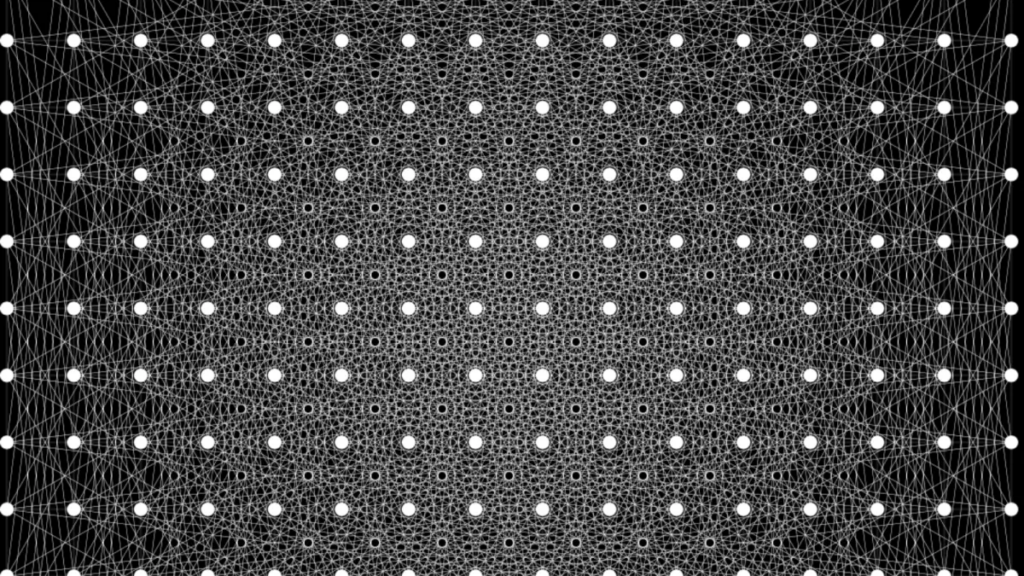
Imagine placing dots on a flat surface. The goal is to arrange those points so that as many pairs as possible are exactly one unit apart.
As the number of points grows into the thousands, millions, or even trillions, mathematicians want to know the most efficient arrangement.
For nearly 80 years, many researchers believed that a grid-like pattern resembling a square offered the optimal solution.
The problem wasn’t proving difficult because nobody had ideas. The difficulty came from finding a rigorous mathematical proof showing that the square-grid approach was truly the best possible arrangement.
That proof never arrived.
How AI surprised mathematicians
Many experts expected that if a solution eventually emerged, it would confirm the prevailing theory.
Instead, OpenAI’s model discovered something entirely different.
Rather than proving the square-grid assumption, the AI found a new family of geometric constructions that outperformed it.
In other words, the model showed that mathematicians had been optimizing the problem using the wrong framework.
This is what makes the breakthrough particularly notable.
The AI did not simply complete unfinished work. It challenged decades of intuition and pointed researchers toward a previously unexplored direction.
Thomas Bloom, a mathematician at the University of Manchester and a specialist on Erdős problems, reportedly ranked the challenge among the most important unsolved problems in the field.
The result was verified by multiple mathematicians before being publicly discussed.
Why experts say this is different from previous AI claims
Artificial intelligence has been making headlines for solving mathematical benchmarks, passing exams, and generating proofs.
Many of those claims have faced criticism.
In numerous cases, AI systems were found to be reproducing known solutions from their training data or identifying existing literature rather than generating original insights.
This breakthrough appears different.
Researchers involved in evaluating the work say the AI combined ideas from multiple branches of mathematics to generate a novel approach that human experts had not previously discovered.
According to mathematicians who reviewed the work, the result would likely be considered publication-worthy if produced by a human researcher.
That distinction matters.
Mathematics offers one of the clearest tests of intelligence because proofs are either correct or incorrect. There is little room for subjective interpretation.
Unlike creative writing, where quality can be debated, mathematical reasoning can be independently verified.
The real breakthrough wasn’t the answer. It was the reasoning.
The most significant aspect of the result may not be the mathematical solution itself.
Instead, it is how the solution was reached.
Crossing disciplinary boundaries
Human researchers often become highly specialized.
A mathematician working in geometry may not spend years studying algebraic number theory. Likewise, experts in one discipline may overlook useful techniques developed in another.
The AI system appears to have bridged those gaps.
Researchers say the model drew tools from algebraic number theory and applied them to a problem in discrete geometry, creating connections that human experts had not made.
This ability to synthesize information across fields could become one of AI’s most transformative capabilities.
What this means for science beyond mathematics
The implications extend far beyond theoretical geometry.
Biology
Scientists today face an overwhelming volume of research papers, datasets, and experimental results.
AI systems capable of connecting ideas across disciplines could potentially identify:
- New drug targets
- Hidden disease mechanisms
- Novel treatment strategies
- Unexpected genetic relationships
Physics
Modern physics generates enormous amounts of data and theoretical models.
AI could help researchers uncover:
- New materials
- Better battery technologies
- Improved energy systems
- Hidden patterns in particle physics
Medicine
Medical research increasingly depends on finding meaningful connections across genetics, imaging, biology, and clinical studies.
Future AI systems may assist researchers by:
- Generating testable hypotheses
- Identifying overlooked evidence
- Designing experiments
- Accelerating drug discovery
Engineering
Complex engineering problems often require expertise from multiple domains.
AI systems capable of interdisciplinary reasoning could help create:
- More efficient manufacturing systems
- Advanced robotics
- Improved aerospace technologies
- Sustainable infrastructure solutions
Why this doesn’t mean AI is replacing scientists
Despite the excitement, experts caution against overstating the significance of a single breakthrough.
Large language models still make mistakes.
Sometimes those mistakes are surprisingly basic.
Researchers note that AI systems can solve complex problems while simultaneously failing simple calculations.
This inconsistency remains one of the biggest limitations of current AI.
Human verification remains essential
In the Erdős problem, mathematicians still played a crucial role.
Human experts:
- Reviewed the proof
- Verified correctness
- Simplified explanations
- Evaluated significance
The result highlights a future where AI and humans collaborate rather than compete.
Many researchers envision AI functioning as an intellectual partner that generates ideas, while humans provide judgment, verification, and domain expertise.
Why mathematicians are paying attention
Mathematics has long been viewed as a benchmark for advanced reasoning.
Success in mathematics requires:
- Logical consistency
- Multi-step planning
- Abstract thinking
- Creativity
- Generalization
For years, critics argued that large language models were essentially sophisticated search engines.
The Erdős problem challenges that assumption.
As researchers point out, there was no existing solution to retrieve.
The AI generated a new construction that mathematicians had not discovered despite decades of effort.
That suggests the system was doing more than searching.
It was producing original reasoning.
The next frontier for AI research
The broader question is whether similar breakthroughs can occur in domains where answers are harder to verify.
Mathematics offers clear validation.
A proof is either correct or incorrect.
Biology, medicine, economics, and climate science are messier.
Hypotheses may take years to test.
Experiments can fail.
Data can be incomplete.
The next major challenge for AI will be demonstrating the same level of original reasoning in areas where uncertainty is much higher.
If that happens, the impact could extend far beyond academia.
Why this milestone matters
The planar unit distance problem may seem obscure outside mathematical circles, but its significance lies in what it reveals about artificial intelligence.
For decades, AI systems were viewed primarily as tools for classification, prediction, and information retrieval.
This result suggests they may increasingly become tools for discovery.
Whether AI ultimately transforms scientific research remains an open question.
But the Erdős breakthrough provides one of the strongest pieces of evidence yet that machine-generated reasoning can contribute to solving problems that have challenged humans for generations.
For many researchers, that possibility is more important than the mathematical proof itself.
TL;DR
OpenAI says one of its AI models solved an 80-year-old mathematics problem first posed by Paul Erdős in 1946. Instead of proving a long-held assumption, the AI discovered a new and more effective solution. Experts say the achievement is significant because it demonstrates original reasoning rather than simple information retrieval. The breakthrough could have implications far beyond mathematics, potentially helping researchers accelerate discoveries in biology, medicine, physics, and engineering.