
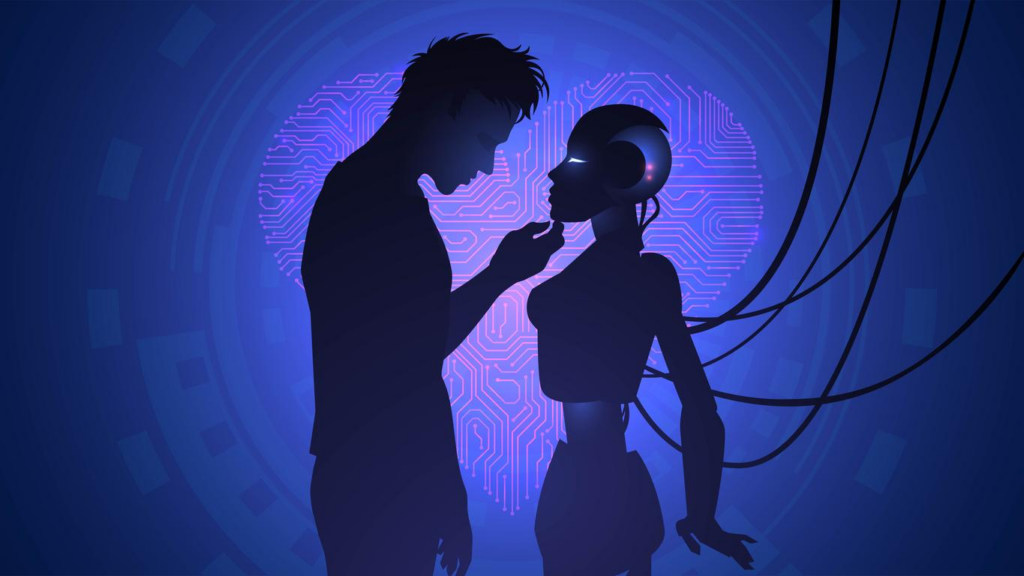
Artificial intelligence is no longer confined to answering questions or writing emails. Increasingly, AI chatbots, virtual companions, and social robots are becoming friends, confidants, and even romantic partners for millions of people worldwide. As these digital relationships become more common, a larger question is emerging: Can AI genuinely reduce loneliness, or does it merely imitate human connection?
Advances in generative AI have made digital companions more conversational, emotionally responsive, and available around the clock. For many users, these systems provide comfort during periods of isolation. Yet psychologists, philosophers, and social scientists caution that while AI may ease feelings of loneliness, it cannot replace the depth, reciprocity, and accountability found in real human relationships.
The growing popularity of AI companions reflects both the remarkable progress of artificial intelligence and the increasing challenge of social isolation in the digital age.
Why are people turning to AI for companionship?
Loneliness has become a growing public health concern in many countries.
Long working hours, remote lifestyles, aging populations, and increased digital communication have left many people feeling socially disconnected despite being constantly online.
AI companions attempt to fill that gap by offering conversations that are immediate, personalized, and available at any time.
Unlike human relationships, AI does not become impatient, distracted, or unavailable. It can remember previous conversations, adapt its responses over time, and provide continuous interaction without judgment.
For users experiencing isolation, those qualities can make AI feel reassuring and emotionally supportive.
How human do AI companions feel?
Modern AI models are becoming increasingly convincing in conversation.
Research cited by several technology studies suggests that many users perceive AI chatbots as humanlike, with some attributing intelligence, empathy, or even emotional awareness to them.
Applications such as Replika, Character.AI and other conversational platforms are specifically designed to create ongoing relationships rather than one-time interactions.
These systems learn conversational preferences, recall past discussions, and simulate emotional engagement, making interactions feel increasingly natural.
However, experts stress that this perceived empathy is generated through pattern recognition rather than genuine emotions or consciousness.
What is driving the rise of digital relationships?
Several cultural and technological trends are accelerating the popularity of AI companions.
Always available
Unlike human friends, AI assistants can respond instantly at any hour of the day.
Personalized conversations
AI remembers user preferences and tailors future conversations accordingly.
Emotional consistency
Virtual companions rarely express anger, frustration, or rejection, making interactions feel emotionally predictable.
Growing social isolation
Increasing numbers of people live alone, work remotely, or spend much of their social lives online, creating demand for alternative forms of companionship.
Together, these factors have made AI companions more appealing to users seeking regular social interaction.
Why are some people marrying virtual characters?
In some countries, digital relationships have extended beyond casual conversations.
Japan has become one of the most well-known examples, where a small number of individuals have held symbolic wedding ceremonies with virtual characters, including the holographic pop culture icon Hatsune Miku through Gatebox technology.
While these ceremonies are not legally recognized as marriages, they highlight how emotionally significant digital companions can become for some users.
Similarly, the country’s hikikomori phenomenon, involving prolonged social withdrawal, has prompted interest in virtual companions as a source of interaction for people living in extreme isolation.
These examples remain uncommon but illustrate how technology is reshaping traditional ideas of relationships and companionship.
Can AI really replace human relationships?
Most psychologists and social scientists argue that it cannot.
French philosopher Paul Ricoeur believed that human flourishing depends on relationships built on mutual recognition, shared responsibility, and participation in society.
Modern psychological research reaches a similar conclusion.
One of the longest-running studies on adult development, conducted by Harvard University over more than eight decades, found that close human relationships are among the strongest predictors of long-term happiness, physical health, and cognitive well-being.
These findings suggest that while AI may provide temporary emotional comfort, it cannot fully replicate the mutual trust, vulnerability, and shared life experiences that define meaningful human relationships.
What are AI companions missing?
Although AI conversations can feel emotionally satisfying, important differences remain.
No genuine emotions
AI models generate responses using statistical patterns rather than lived emotional experiences.
No independent consciousness
Current AI systems do not possess self-awareness, personal identity, or subjective experiences.
No moral responsibility
Unlike people, AI cannot be held ethically or legally accountable for its actions or advice.
No shared life experiences
Human relationships develop through mutual memories, personal growth, disagreements, forgiveness, and shared challenges, experiences AI can simulate but not truly live.
These limitations explain why many researchers view AI companions as useful tools rather than substitutes for authentic relationships.
Can AI still help reduce loneliness?
Yes, in many situations.
Mental health experts increasingly recognize that AI companions can provide short-term emotional support, encourage conversation, and reduce feelings of isolation for some users.
They may be particularly helpful for:
- People living alone.
- Older adults experiencing social isolation.
- Individuals practicing communication skills.
- Users seeking motivation or daily encouragement.
- People waiting to access professional mental health support.
However, experts generally recommend using AI as a supplement to, rather than a replacement for, relationships with family, friends, and communities.
Why this debate matters
As AI becomes more conversational and emotionally persuasive, society will face difficult questions about technology’s role in human relationships.
Digital companions may become increasingly capable of reducing loneliness in the moment, but long-term well-being depends on connections built through shared experiences, mutual care, and genuine human interaction.
The future is unlikely to involve choosing between AI and people. Instead, the challenge will be ensuring that artificial companions enhance human relationships rather than quietly replacing them.
TL;DR
- AI chatbots and virtual companions are increasingly being used for emotional support.
- Studies suggest many users perceive AI systems as humanlike or emotionally intelligent.
- Platforms such as Replika have attracted millions of users seeking companionship.
- Experts say AI can help reduce loneliness but cannot fully replace meaningful human relationships.
- Philosophical and psychological research continues to emphasize the importance of genuine social bonds for long-term well-being.