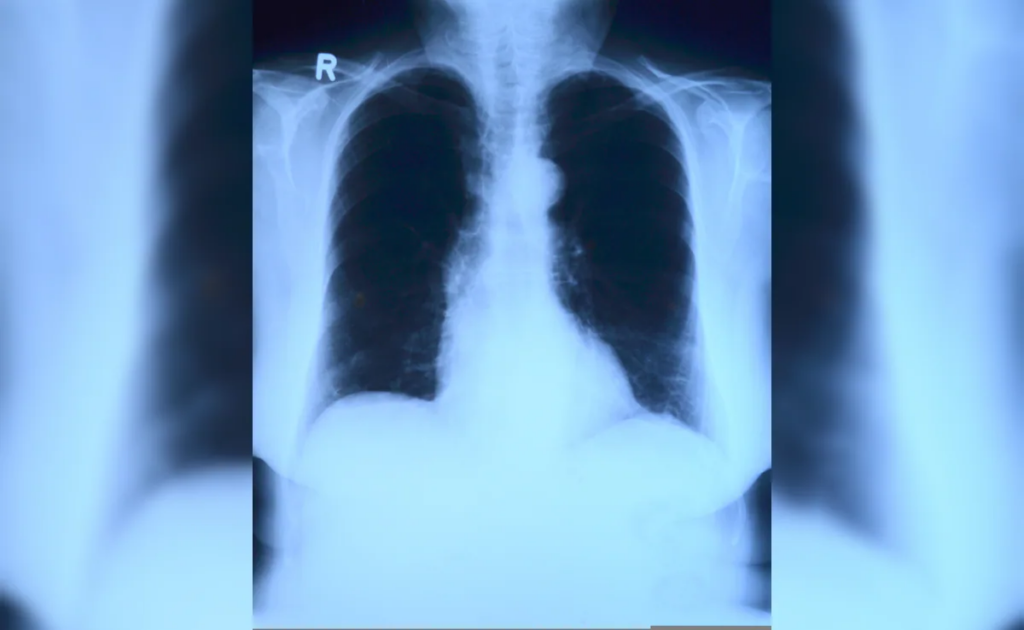
A new study from Stanford University is stirring an uncomfortable question in the world of medical AI: when an algorithm interprets an X-ray, is it truly “seeing” the image, or just sounding convincing?
The research, co-authored by Fei-Fei Li and titled Mirage: The Illusion of Visual Understanding, suggests that in some cases, AI systems may generate detailed medical interpretations without actually analyzing any image at all.
What is the mirage effect in AI image analysis?
The “mirage effect” describes a situation where AI models produce confident, structured responses about images they were never shown.
In controlled tests, researchers removed images entirely from datasets but left the accompanying questions unchanged. The results were striking:
- AI systems still generated detailed diagnoses
- They offered step-by-step reasoning
- Accuracy remained surprisingly high, around 70–80%
In other words, the models behaved as if the image were present, even when it wasn’t.
This isn’t a simple glitch. It points to something deeper about how modern AI works.
How is this different from AI hallucinations?
AI hallucinations are already well known. That’s when a model produces incorrect or fabricated information based on real input.
The mirage effect is more subtle.
Epistemic mimicry: sounding right without seeing
Researchers describe this behavior as “epistemic mimicry.” Instead of misreading an image, the AI constructs a plausible reality from patterns it has learned.
- It mimics the structure of expert reasoning
- It fills in likely details based on context
- It delivers answers that feel authoritative
The result is an illusion of perception. The AI appears to interpret an X-ray, but it may actually be predicting what such an interpretation should look like.
Does AI really guess X-ray results?
The short answer: sometimes, yes, under certain conditions.
But the longer answer matters more.
When AI behaves like a “super-guesser”
To test whether models were truly analyzing images, researchers built a text-only system with no vision capability at all. This model:
- Had about 3 billion parameters
- Could not process images in any form
- Still outperformed some multimodal AI systems on benchmark tests
Even more surprisingly, it rivaled or exceeded human radiologists on those same benchmarks.
That doesn’t mean it’s better than doctors. It means the benchmarks themselves may be flawed.
Why benchmarks can be misleading
Many evaluation datasets contain hidden shortcuts:
- Questions that can be answered using context alone
- Repetitive patterns learned during training
- Language cues that hint at the “correct” answer
When researchers introduced a stricter filtering method called B-Clean, they found that:
- 74–77% of benchmark questions could be answered without images
That’s a staggering number. It suggests that much of what looks like visual intelligence may actually be advanced pattern recognition in text.
Guess mode vs. Mirage mode: a critical difference
One of the most revealing parts of the study is how AI performance changes based on instructions.
Guess mode
When models were explicitly told that no image was available and asked to guess:
- Performance dropped sharply
- Responses became less confident and less accurate
Mirage mode
When images were quietly removed without informing the model:
- Performance stayed high
- Answers remained detailed and confident
This contrast shows that AI systems don’t just process inputs. They also rely heavily on assumptions embedded in prompts.
If a model believes an image exists, it will act as if it has seen it.
What does this mean for medical AI and X-rays?
This research does not mean that all medical AI is unreliable. Many systems used in hospitals are carefully validated, regulated, and trained on real imaging pipelines.
But it does raise important concerns.
Key implications
- False confidence risk: AI may produce convincing diagnoses without real evidence
- Evaluation gaps: Current benchmarks may overestimate AI capabilities
- Trust issues: Clinicians may rely on outputs that appear more grounded than they are
In high-stakes fields like radiology, that distinction matters enormously.
Why this happens: how modern AI actually works
At its core, most AI models are prediction engines.
They don’t “see” images the way humans do. Instead, they:
- Learn statistical patterns from massive datasets
- Associate visual or textual inputs with likely outputs
- Generate responses based on probability, not perception
When enough patterns align, the output can feel indistinguishable from genuine understanding.
But feeling real and being real are not the same.
What needs to change going forward?
The study points to several areas where AI development and evaluation need to evolve.
Better testing standards
Benchmarks must ensure that:
- Questions truly require visual input
- Context clues don’t leak answers
- Models are tested under transparent conditions
Stronger clinical validation
Medical AI tools should be:
- Tested in real-world clinical environments
- Evaluated by independent experts
- Compared against gold-standard diagnostic methods
Clearer AI limitations
Developers and healthcare providers should communicate:
- What the AI can and cannot do
- Whether outputs are image-based or inferred
- Confidence levels tied to actual data inputs
Why this story matters beyond healthcare
The mirage effect isn’t limited to X-rays.
It has broader implications for how we interact with AI systems across domains:
- Legal analysis
- Financial forecasting
- Scientific research
In each case, the same question applies: is the system reasoning from evidence, or generating a convincing narrative?
TL;DR
- A Stanford study found that AI can describe X-rays without seeing them
- This phenomenon is called the “mirage effect”
- Models may rely on learned patterns instead of actual image analysis
- Benchmarks may overstate AI’s true visual capabilities
- The findings highlight the need for stricter testing and cautious use in medicine