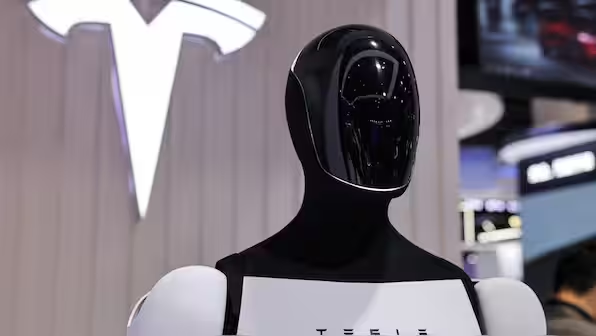
Elon Musk is tapping the brakes on public demonstrations of Tesla’s humanoid robot, citing concerns that competitors could copy key innovations. The decision signals a shift from showmanship to secrecy as the race to dominate robotics accelerates, particularly with rapid advancements emerging from China. At the center of it all is Optimus, which Elon Musk has repeatedly described as the company’s most important long-term product, potentially even surpassing its electric vehicles in impact.
Why Tesla is pulling back on Optimus demos
Elon Musk’s concern is straightforward: the more you reveal, the more rivals can reverse-engineer.
Robotics, unlike software, often exposes its secrets in motion. A well-shot demo can unintentionally showcase the following:
- Mechanical design choices
- Movement efficiency and balance systems
- Sensor placement and capabilities
- Task execution logic
With competitors aggressively investing in humanoid robots, especially in Asia, even small insights can be valuable.
China, in particular, has become a hotbed for robotics manufacturing and rapid iteration. By limiting public demos, Tesla is effectively placing a curtain over its workshop until it’s closer to large-scale production.
Why Elon Musk calls Optimus Tesla’s “biggest product ever”
That statement may sound bold for a company known for electric cars, but the logic is rooted in scale.
If successful, humanoid robots could:
- Replace repetitive manual labor
- Operate in factories, warehouses, and homes
- Work continuously with minimal supervision
Unlike cars, which are typically sold one per customer, robots could be deployed in fleets across industries. That creates a vastly larger addressable market.
For Tesla, Optimus represents a pivot from transportation to automation at scale, potentially redefining the company’s identity.
Tesla’s manufacturing plan: from Fremont to Texas
Even as demos slow down, Tesla’s production ambitions are speeding up.
Fremont factory: the first wave
Fremont Factory is expected to begin early production of Optimus units as soon as late July or August. Some modifications to existing assembly lines are reportedly required to accommodate robot manufacturing.
Tesla’s target for Fremont is ambitious:
- Up to 1 million robots annually at scale
That would already place Optimus among the most mass-produced robotics platforms in the world.
Texas expansion: the real scale play
A second, much larger push is planned at Gigafactory Texas, with a dedicated assembly line expected by 2027.
Here, Tesla is aiming for:
- Up to 10 million robots per year
That number, if achieved, would represent an unprecedented leap in robotics manufacturing, moving the industry from niche production to something closer to consumer electronics scale.
What Optimus can actually do right now
At launch, Optimus is expected to handle relatively basic but useful tasks.
Early capabilities
According to Elon Musk, the robot will be able to:
- Perform simple, repetitive physical tasks
- Operate for several hours without direct supervision
- Function in structured environments like factories
This positions Optimus less as a general-purpose humanoid and more as a specialized industrial assistant, at least in its early versions.
Minimal supervision model
One of the key selling points is autonomy. Optimus is designed to:
- Require limited human oversight
- Execute pre-defined workflows
- Adapt within controlled environments
That balance between independence and constraint is critical. Fully autonomous robots remain a technical challenge, so early deployments are likely to focus on predictable settings.
The role of Grok and AI integration
Optimus won’t be operating on hardware alone. It will be supported by software intelligence, including Grok, developed by xAI.
How AI enhances robotics
Grok is expected to help Optimus:
- Interpret instructions more naturally
- Manage task prioritization
- Interact in a more human-like manner
Instead of rigid programming, this introduces a layer of conversational and adaptive intelligence.
Think of it as the difference between a machine that follows commands and one that can understand context.
Why secrecy matters more in robotics than in EVs
Tesla has historically been open about its electric vehicle roadmap, often showcasing prototypes years in advance. Robotics changes that equation.
Faster imitation cycles
In EVs, manufacturing complexity creates barriers to entry. In robotics:
- Designs can be studied visually
- Components can be sourced globally
- Iteration cycles are faster
Competitive pressure
Companies across the US, China, and Europe are racing toward similar goals:
- Humanoid robots for industrial use
- AI-integrated automation systems
- Scalable production models
In this environment, even a small leak of design philosophy can accelerate a competitor’s roadmap.
What this means for the future of humanoid robots
Tesla’s decision to limit demos suggests a broader shift in the robotics industry.
From hype to execution
The early phase of humanoid robotics has been dominated by:
- Concept videos
- Controlled demonstrations
- Limited real-world deployment
Now, the focus is shifting toward:
- Manufacturing at scale
- Real-world utility
- Cost efficiency
The next milestone: mass adoption
For Optimus to succeed, Tesla must prove:
- It can produce robots at scale
- The robots deliver consistent value
- Costs can be reduced over time
If those pieces fall into place, humanoid robots could move from experimental technology to everyday tools.
TL;DR
- Elon Musk has paused Optimus demos to prevent competitors from copying its technology
- Tesla plans to begin production in Fremont in 2026 and expand to Texas by 2027
- The company aims for up to 10 million robots annually in the long term
- Optimus will initially handle basic tasks with limited supervision
- AI integration via Grok will enhance interaction and functionality