
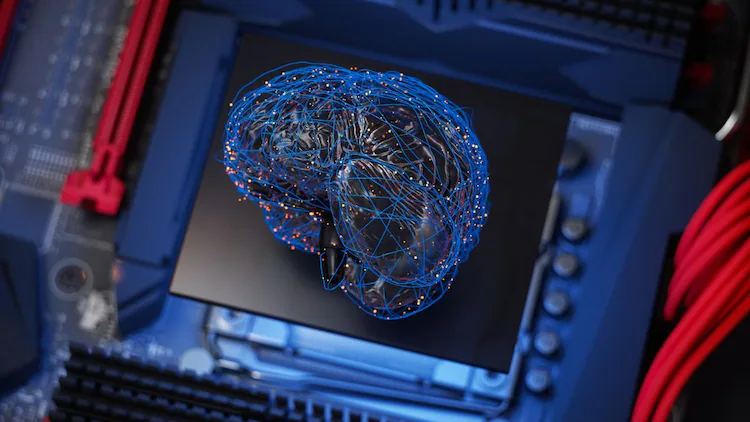
Neuralink, the brain-computer interface company founded by Elon Musk, says it is developing a next-generation surgical robot capable of accessing virtually any region of the human brain.
The company recently unveiled details about the system, describing it as a major step toward creating a generalized neural interface that could eventually help treat a wide range of neurological disorders.
At the center of the announcement is a machine that sounds like something between a neurosurgeon and a microscopic sewing robot: a precision device designed to insert ultra-thin electrode threads deep into delicate brain tissue with extraordinary accuracy.
If successful, the technology could push brain-computer interfaces, or BCIs, far beyond their current capabilities.
What is Neuralink’s new surgical robot?
According to Neuralink, the robot is designed to implant tiny flexible threads into the brain with greater precision and flexibility than earlier systems.
The company says the machine can potentially reach regions across the brain rather than focusing only on limited areas associated with movement.
How the robot works
The system functions almost like an automated microsurgeon.
It uses:
- High-resolution imaging
- Precision sensors
- Advanced positioning systems
- Needle-like insertion tools
to place extremely thin threads into brain tissue.
These threads are thinner than a human hair and contain electrodes capable of detecting electrical activity from neurons.
Because the human brain subtly shifts with:
- Breathing
- Heartbeat
- Blood flow
The robot must constantly adapt during surgery.
Neuralink says the system uses cameras and sensors to avoid blood vessels and minimize tissue damage during implantation.
How Neuralink’s brain-computer interface works
The broader goal of Neuralink is to create a direct communication pathway between the human brain and computers.
That technology category is known as a brain-computer interface, or BCI.
What is a brain-computer interface?
A BCI translates neural activity into digital commands.
When a person thinks about acting, neurons generate electrical signals inside the brain.
The implant detects those signals and sends them to external software systems, which interpret them into actions like:
- Moving a cursor
- Typing text
- Controlling digital interfaces
- Operating assistive technologies
In previous demonstrations, Neuralink users with paralysis controlled computer cursors using only thought.
The concept feels futuristic, but BCIs have existed in research environments for decades. What companies like Neuralink are trying to do is make them:
- More scalable
- Less invasive
- More precise
- Easier to implant
- More adaptable across brain regions
Why reaching “any part of the brain” matters
Earlier generations of brain implants typically focused on specific areas linked to motor control.
Neuralink’s new robot aims to dramatically expand that reach.
That could allow researchers to interact with brain regions tied to
- Movement
- Speech
- Memory
- Mood
- Vision
- Sensory processing
In theory, a more flexible implantation system could open the door to treating a wider variety of neurological and psychiatric conditions.
Conditions Neuralink believes could eventually benefit
The company has discussed potential future applications involving:
- Paralysis
- Parkinson’s disease
- Epilepsy
- Spinal cord injuries
- Blindness
- Depression
- Other neurological disorders
The key phrase, however, is “potential future applications.”
Many of these goals remain highly experimental and scientifically challenging.
The brain is not a neatly labeled circuit board. It is more like a stormy galaxy of billions of interconnected neurons firing in patterns researchers still only partially understand.
Why the robot itself may be as important as the chip
One of Neuralink’s biggest engineering challenges is not just reading brain signals, but implanting electrodes safely and reliably.
Traditional neurosurgery can be:
- Time-intensive
- Highly specialized
- Risky for delicate tissue
Neuralink’s robot attempts to automate portions of the process with machine-level precision.
Why precision matters in brain surgery
The threads used in BCIs are extremely fragile.
If inserted incorrectly, they could:
- Damage blood vessels
- Trigger inflammation
- Shift position over time
- Lose signal quality
By automating implantation, Neuralink hopes to improve the following:
- Accuracy
- Scalability
- Safety
- Surgical consistency
In many ways, the robot is the hidden engine behind the company’s broader ambitions.
Without reliable implantation, even the most advanced neural chip becomes little more than futuristic jewelry for the skull.
What stage is Neuralink currently in?
Despite the attention surrounding the company, Neuralink technology is still in the clinical testing phase.
The devices are not approved for widespread public use.
Human trials remain limited and heavily regulated.
Current limitations and unanswered questions
Researchers still need to understand:
- Long-term safety
- Implant durability
- Infection risks
- Tissue response over time
- Reliability of signal quality
- Ethical implications
Regulators will also scrutinize:
- Surgical safety
- Device failures
- Privacy concerns
- Data security
- Psychological effects
The path from experimental brain implant to mainstream medical treatment is likely to take years, not months.
The bigger race shaping the future of BCIs
Neuralink is not alone in pursuing brain-computer interfaces.
Several companies and academic institutions are racing to develop neural technologies capable of restoring lost function or augmenting human-machine interaction.
Major players in the field include:
- Synchron
- Blackrock Neurotech
- University neuroscience labs
- Government-funded neurotechnology programs
What distinguishes Neuralink is partly its ambition and partly its visibility.
Musk’s involvement ensures the company operates under a permanent spotlight somewhere between frontier science and science-fiction fandom.
Ethical concerns surrounding brain interfaces
As BCIs become more advanced, ethical debates are intensifying.
Critics and researchers alike are asking difficult questions:
- Who owns neural data?
- Can brain signals be hacked?
- Could BCIs influence thoughts or behavior?
- Will access become unequal?
- How should consent work for vulnerable patients?
Some neuroscientists worry public hype may outpace scientific reality.
Others argue that the technology could become transformative for people with severe disabilities.
Both perspectives can be true simultaneously.
What Neuralink’s latest robot signals about the future
Neuralink’s new surgical robot represents another step toward making brain-computer interfaces more flexible and potentially more practical for medical use.
The company’s long-term vision remains extraordinarily ambitious:
- Restoring lost movement
- Treating neurological disease
- Enabling direct human-computer communication
Whether Neuralink ultimately achieves those goals remains uncertain.
But the direction is clear. Brain interfaces are steadily moving from laboratory experiments toward real-world clinical systems.
The biggest question now is not whether humans will build more advanced neural interfaces.
It is how far society is prepared to go once the technology catches up with the ambition.
TL;DR
Neuralink says it is building a surgical robot capable of reaching nearly any part of the human brain to implant ultra-thin electrode threads for brain-computer interfaces. The system aims to improve treatment possibilities for conditions like paralysis, Parkinson’s disease, and epilepsy. While the technology remains experimental, the robot marks a major step in the growing race to connect brains directly with machines.