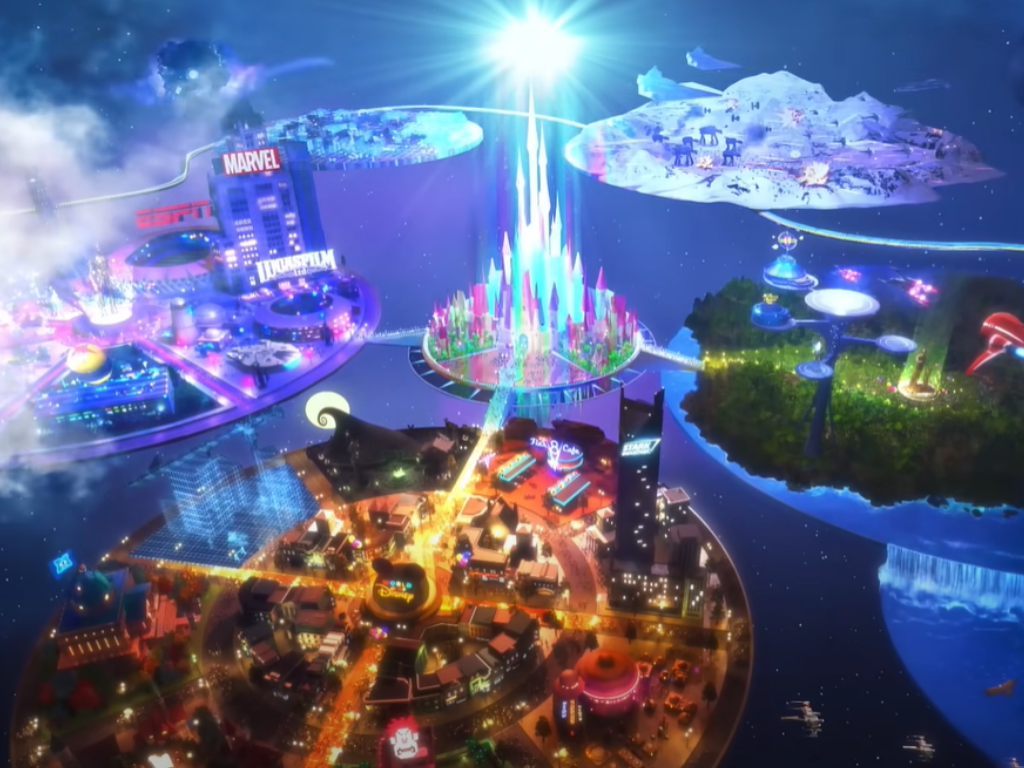
Epic Games is moving toward an artificial intelligence-first approach to game development, a major shift that could reshape how the company creates its upcoming titles. The maker of Unreal Engine is reportedly planning to use AI models for coding and artwork on an upcoming shooter being developed as part of its collaboration with The Walt Disney Company.
According to a report by Bloomberg, the new workflow will rely on AI-generated code and art assets, with human developers overseeing the process and guiding the results. The shift signals a move away from traditional production methods in which developers and artists create game assets directly.
The change comes as Epic’s planned Marvel- and Star Wars-themed shooter faces an indefinite delay. The project, originally expected to launch in March 2027, has reportedly been affected by the transition to AI-assisted development and a development team that has struggled to keep pace with expectations.
Epic Games Plans to Put AI at the Centre of Game Development
Under the reported strategy, AI models will take on coding and artwork production, while human developers remain responsible for directing the technology, evaluating its outputs and shaping the final experience.
The approach could alter the division of work across game development. Rather than writing every line of code or producing each visual asset manually, developers may increasingly focus on defining creative goals, reviewing AI-generated material, correcting errors and integrating components into a functioning game.
An Epic spokesperson described the company’s approach as AI-accelerated development led by its own creative and technical teams.
“We’re embracing AI-accelerated development, led by Epic developers who are the visionaries and creative drivers for everything we do,” the spokesperson said.
The distinction is significant. An AI-first workflow does not necessarily mean that people will be removed from the development process. Instead, it places AI tools at the centre of production while assigning humans a supervisory, editorial and creative role.
However, the reported plan to rely on AI for all coding and artwork would represent a more extensive change than simply using generative tools to brainstorm ideas or speed up routine tasks.
Disney Partnership Connects AI Shift to a Major Gaming Project
Epic’s reported transition is linked to its broader partnership with Disney, which was announced in February 2024. Disney committed $1.5 billion to acquire an equity stake in Epic Games as part of a collaboration intended to develop a new games and entertainment universe connected to Disney’s properties.
The partnership was presented as a way to expand Disney’s presence in interactive entertainment, allowing audiences to engage with its characters and stories through new experiences.
Marvel and Star Wars are among Disney’s major entertainment franchises, making a shooter based on these properties a potentially high-profile project.
The reported delay, however, introduces uncertainty about when players might experience the game. A release that had been expected in March 2027 is now described as indefinitely postponed, with the AI-related production changes and staffing challenges cited as contributing factors.
An indefinite delay does not necessarily mean the game has been cancelled. It indicates that a confirmed release date is no longer available.
The project’s eventual direction may also offer an early indication of how Epic intends to apply AI to large-scale productions rather than limiting it to smaller experiments or isolated development tasks.
Tim Sweeney Wants Developers to Build More With AI
Epic CEO Tim Sweeney has argued that AI should expand what developers can create rather than simply allow companies to produce the same amount of work with fewer employees.
“The aim isn’t to do the same stuff with fewer people, but to enable everyone here to build MORE and BETTER stuff,” Sweeney said in a social media post, according to the supplied report.
His position frames AI as a tool for expanding creative capacity. In principle, automated assistance could help smaller teams produce more detailed environments, develop prototypes faster and experiment with ideas that would otherwise require substantially more time and resources.
In a June interview with IGN, Sweeney also discussed the potential for small teams to create complex games featuring extensive dialogue possibilities.
Such ambitions reflect one of the central promises of generative AI in gaming: the ability to create or adapt content at a scale that would be difficult to achieve through entirely manual production.
Yet greater output does not automatically translate into better games. AI-generated code must work reliably, artwork must fit the game’s visual identity, and dialogue and narrative content must remain coherent. Human oversight, testing and quality assurance will therefore remain important even in highly automated workflows.
Epic CEO Questions the Need for AI Disclosure Labels
Sweeney has also criticised requirements to disclose AI use in games, including the AI-related content disclosure system used by Valve’s Steam platform.
He has argued that such labels make little sense when AI tools are expected to become part of nearly every stage of future production.
The debate reflects a broader disagreement across the gaming industry over transparency. Some developers and players favour disclosure so consumers can understand how generative AI contributed to a game’s assets or content. Others argue that AI is becoming a standard production tool, making a separate label less useful when human creators continue to direct the final work.
The distinction between AI-assisted and AI-generated content also complicates the issue. A game might use AI for early concept development, coding assistance or internal testing without including any visibly generated material in its final release. Another game might rely on AI-generated dialogue, images or other content that players directly encounter.
As AI adoption expands, the industry will have to consider whether disclosure should depend on the tools used, the extent of their contribution or the presence of AI-generated material in the finished product.
Epic’s reported strategy could intensify that discussion, particularly if AI becomes responsible for substantial portions of a major commercial game’s code and artwork.
Game Developers Are Increasingly Using Generative AI
Epic’s shift comes amid broader adoption of generative AI across game development.
A survey conducted ahead of this year’s Game Developers Conference found that 36% of more than 2,300 game industry professionals used generative AI tools in their work, according to the supplied report.
Among those surveyed, 81% said they used AI for research and brainstorming. Coding assistance was reported by 47%, while 35% used the technology for prototyping.
The figures suggest that AI is already serving a range of purposes, although its use for early-stage research and ideation remains more common than some technical applications.
Developers can use generative tools to explore concepts, summarise research, test ideas and accelerate certain repetitive tasks. Coding assistants may help produce initial implementations, while prototyping tools can make it easier to evaluate a concept before committing substantial resources.
However, adoption figures alone do not establish how much finished game content is being generated by AI. Using an AI assistant for brainstorming is fundamentally different from relying on models to create all code and artwork for a commercial release.
That distinction makes Epic’s reported plan notable: it appears to move beyond the more limited applications reported by many industry professionals.
Can an AI-First Workflow Deliver Better Games?
AI could offer game studios several potential advantages, including faster iteration, reduced time spent on repetitive tasks and the ability to test a wider range of creative ideas.
For smaller teams, these tools may help bridge gaps in resources and technical expertise. Larger studios could also use AI to accelerate parts of production, although complex projects still require coordination among designers, programmers, artists, writers, testers and other specialists.
The challenges are equally significant. AI-generated code can contain bugs or security weaknesses, while visual assets may be inconsistent or require extensive revision. Studios must also consider intellectual property, training data, quality control and the cost of integrating AI systems into established workflows.
Staffing is another important question. Even when companies describe AI as a way to increase productivity, a greater reliance on automation can raise concerns about the future responsibilities and employment prospects of artists, programmers and other creative professionals.
For Epic, the delayed shooter may become an important test of whether an AI-first strategy can improve production without compromising quality or extending development timelines.
The company’s approach also raises a larger question for the industry: whether AI will primarily help existing teams work faster or fundamentally change how games are conceived, built and delivered.
For now, Epic’s reported shift marks a significant experiment in AI-driven production. Its longer-term impact will depend on whether the technology can deliver reliable code, compelling art and polished gameplay at the scale major releases demand.