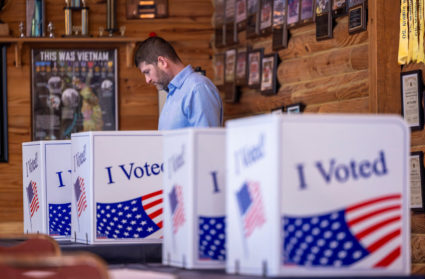
The 2026 US midterm elections could reshape the political landscape in Washington. All 435 seats in the House of Representatives are up for election, and the party that wins control will have a major say in the legislative agenda, government oversight, spending decisions, and investigations involving the Trump administration.
Democrats are hoping to capitalize on the historical tendency for the president’s party to lose House seats in midterm elections. Republicans, meanwhile, have pursued congressional redistricting in several states to improve their electoral position.
But changing district boundaries does not guarantee victories. Several districts Republicans sought to make more favorable to their candidates have become competitive, while incumbents in both parties face local concerns that could outweigh national political trends.
From New York and Texas to Iowa and Florida, the contests offer a snapshot of the issues shaping the campaign: the cost of living, immigration, allegations of misconduct, candidate fundraising, and voter attitudes toward the president.
Why Do the 2026 Midterm Elections Matter?
Midterm elections take place halfway through a president’s four-year term. Unlike presidential elections, they do not determine who occupies the White House, but they can change which party controls Congress.
The House has 435 voting members, and a party generally needs 218 seats for a majority. Democrats need a net gain of four seats in the 2026 contest to secure control, according to the current race outlook.
Control of the chamber matters for three main reasons:
- Legislation: The House plays a central role in passing bills and determining federal spending priorities.
- Oversight: The party in control influences committee leadership, congressional hearings, and investigations into the executive branch.
- Political leverage: A change in the majority could complicate Trump’s legislative agenda and force greater negotiation between the White House and Congress.
Historical patterns provide Democrats with a reason for optimism, but they do not determine the result. Individual races will depend on local political conditions, candidate quality, turnout, campaign spending, and the issues voters consider most important.
How Is Redistricting Affecting the House Race?
Redistricting—the process of redrawing congressional district boundaries—has become a major part of the battle for the House.
Republicans have pursued changes in states including Texas and North Carolina, aiming to improve their chances of winning additional seats. Democrats have challenged those efforts politically and have sought opportunities in districts where the new boundaries have not produced the expected advantage.
Texas is a particularly important example. Republican lawmakers redrew districts in 2025 with the goal of making several Democratic-held seats more favorable to Republicans. Yet shifting voter sentiment, including changing political attitudes among Hispanic voters in South Texas, has made some of those contests more competitive than Republicans had hoped.
The outcome will depend on more than the shape of a district. Redistricting changes the electorate candidates must appeal to, but economic concerns, candidate performance, and voter turnout can still affect the result.
With control of the House potentially resting on a handful of seats, even small changes in competitive districts could have national consequences.
10 House Races to Watch in the 2026 US Midterm Elections
1. New York: Can Mike Lawler Hold His Seat?
Republican Representative Mike Lawler faces a difficult reelection contest against Democrat Cait Conley, a combat veteran and national security expert.
Lawler represents one of only three Republican-held congressional districts won by Kamala Harris in the 2024 presidential election, making his seat a key target for Democrats.
Campaign finances add another layer to the contest. Democrats have spent more than Republicans in the district, while Lawler has maintained a substantial advantage in cash available to his campaign. Polls conducted in late September showed the candidates running closely, with neither establishing a decisive lead.
The race will test whether Lawler can maintain support in a district that backed the Democratic presidential candidate in 2024 while Republicans seek to defend their narrow House majority.
2. Texas: Could Republican Redistricting Backfire?
Texas is one of the most consequential battlegrounds in the fight for the House because Republicans redrew congressional districts in an effort to improve their chances of winning additional seats.
Three of the districts identified in the supplied race analysis have become competitive, including contests involving Democratic Representatives Vicente Gonzalez and Henry Cuellar, as well as a race between Republican Carlos De La Cruz and Democrat Johnny Garcia.
Gonzalez faces Republican Eric Flores, a former Texas Army National Guard infantry captain and former assistant US attorney. Gonzalez has held a fundraising advantage, while Democratic spending to defend the seat has exceeded Republican spending to win it, according to the reported figures.
The underlying question is whether redrawn boundaries will be enough to overcome local political shifts. South Texas has become a closely watched region because changes in support among Hispanic voters could influence several contests.
For Republicans, the stakes extend beyond individual incumbents: winning these districts could help offset losses elsewhere. For Democrats, keeping the races competitive could limit the gains Republicans hoped to achieve through redistricting.
3. North Carolina: Don Davis Faces a Tougher Map
Democratic Representative Don Davis is seeking reelection against Republican Laurie Buckhout, a retired Army colonel.
Republican redistricting changed the political makeup of Davis’s district, making it more favorable to Trump in the 2024 presidential election than it had been previously. That shift could make Davis’s reelection campaign more difficult.
Davis has reported stronger fundraising and cash reserves than Buckhout, while Democrats have invested substantially more in the race than Republicans, according to the supplied figures. A poll released in the week covered by the original report gave Davis a 10-point lead.
The contest illustrates the distinction between a district’s presidential voting history and its congressional preferences. A district that favors one party at the presidential level does not automatically elect a candidate from that party to the House.
Davis’s challenge is to retain voters who may have supported Trump while persuading them that he remains the right representative for their district.
4. Maine: An Open Seat Creates an Opportunity
Maine’s 2nd Congressional District is an important contest following Democratic Representative Jared Golden’s decision not to seek reelection.
Republican former Governor Paul LePage is challenging Democratic state Auditor Matt Dunlap for the seat. Trump carried the district by nine percentage points in 2024, giving Republicans a potentially favorable starting point.
The candidates’ financial positions have differed. LePage raised more than twice Dunlap’s reported fundraising total through June and held a substantial cash advantage. Democrats subsequently included Dunlap in their Red to Blue program, which identifies candidates the party is prioritizing in competitive races.
Polling has offered a less straightforward picture than the district’s presidential voting history alone might suggest. Recent surveys cited in the original reporting showed a close contest, although polling sponsored by a candidate’s own party should be assessed with its methodology and potential limitations in mind.
The race will test whether Republicans can translate Trump’s strength in the district into a House victory or whether Democrats can retain the seat through a competitive open-seat campaign.
5. Ohio: Max Miller Faces Questions Over Allegations
Republican Representative Max Miller is seeking another term in a district he won by 15 percentage points in 2024. However, allegations of domestic and child abuse have brought additional scrutiny to his campaign.
Miller has denied the allegations. Republican Senator Bernie Moreno, whose daughter is Miller’s former wife, has called on the congressman to resign and withdraw from the race, according to the supplied reporting.
Democrat Brian Poindexter, an ironworker and Brook Park city councilor, is challenging Miller. Democrats have included Poindexter in their Red to Blue program and invested significantly in the contest.
The race raises questions about whether controversy surrounding an incumbent can change the dynamics of a district that previously leaned Republican.
Campaign spending and party support will be important, but the allegations should be distinguished from established findings. Miller’s denial also remains relevant to how the claims are reported.
6. Iowa: Affordability Takes Center Stage
Democrat Christina Bohannan is challenging Republican Representative Mariannette Miller-Meeks for the third consecutive election cycle, after losing to her in 2022 and 2024.
This year’s contest is unfolding amid concerns about the cost of living. Tariffs, fuel prices, and higher costs for agricultural inputs such as diesel and fertilizer have become part of the political debate.
The candidates had raised roughly comparable amounts through June, but Bohannan began July with a reported cash advantage of more than $730,000. Democrats had also outspent Republicans in the district by more than $3 million, according to the figures in the supplied report.
For Iowa voters, the election offers a direct test of how economic pressures influence congressional contests. Farmers may be particularly attentive to fuel and fertilizer costs, while other households are focused on everyday expenses.
Bohannan’s repeated challenges make this a closely watched race, but her previous defeats underline why campaign spending and economic dissatisfaction do not guarantee an upset.
7. Florida: Maria Elvira Salazar Breaks With Trump on Immigration
Republican Representative Maria Elvira Salazar has publicly criticized aspects of Trump’s immigration policies, warning that some enforcement efforts have gone too far.
Her comments create a potential political tension. Salazar represents a South Florida district that Trump won by nearly 15 percentage points in 2024, but her criticism could appeal to voters who support tougher border controls while objecting to particular enforcement measures.
Her Democratic challenger, former television news anchor Eliott Rodriguez, has received support through the Democratic Congressional Campaign Committee’s Red to Blue program. The supplied report described the race as competitive, with a poll showing Salazar narrowly ahead within the margin of error.
The contest highlights the difficulty of balancing party loyalty with district-specific concerns. Immigration can be a powerful issue in Florida, but voters’ views are shaped by more than a single policy position.
Whether Salazar’s criticism of the administration helps her maintain a distinct political identity or creates friction with Republican voters remains a key question in the campaign.
8. Washington: Marie Gluesenkamp Perez Relies on a Cross-Party Appeal
Democratic Representative Marie Gluesenkamp Perez has sometimes broken with her party, including by supporting Republican positions on procedural votes and backing a resolution condemning another Democrat.
She faces Republican John Braun, the state Senate’s Republican leader, in a district that narrowly supported Trump in 2024.
Gluesenkamp Perez has reported a substantial fundraising advantage, although Republicans have spent more than Democrats in the district, according to the supplied figures. A September poll cited in the original report showed Braun leading by one percentage point.
Her approach reflects a broader challenge for lawmakers representing politically divided districts: demonstrating independence without alienating their party’s core supporters.
The outcome could offer insight into whether a moderate or cross-party voting record helps an incumbent appeal to voters who split their choices between presidential and congressional candidates.
9. Kentucky: An Open Seat Gives Democrats a Target
Kentucky’s 6th Congressional District is competitive following Republican Representative Andy Barr’s decision to pursue his party’s nomination for the Senate.
Republican Ralph Alvarado, a former Kentucky state senator and former head of Tennessee’s health department, is running against Democrat Zach Dembo, a former Navy judge advocate general officer and federal prosecutor.
The candidates have raised similar amounts, and the parties have spent roughly comparable sums on the contest. The supplied report cited Democratic-sponsored polls showing Dembo ahead, despite Trump having carried the district by 15 percentage points in 2024.
The race illustrates why an open seat can differ from a contest involving an incumbent. Without an established officeholder on the ballot, both parties have an opportunity to introduce their candidates to voters and define the central issues.
However, polling sponsored by one side does not establish that the district has shifted permanently toward the other party. The final outcome will depend on turnout, campaign performance, and the choices of voters who may have supported Trump in the presidential election.
10. California: Redistricting Produces Unusual Intra-Party Contests
California’s top-two primary system can produce general elections in which candidates from the same party face one another. The state’s redrawn congressional map has created unusual contests involving Republican Representatives Ken Calvert and Young Kim, according to the supplied report.
Democratic Representative Doris Matsui is also facing Sacramento City Council member Mai Vang, a democratic socialist.
Matsui has received support from prominent Democrats, including Governor Gavin Newsom, both of California’s US senators, and members of the state’s congressional delegation, as described in the original reporting.
These races differ from the other contests on this list because they do not necessarily determine which party controls the House. Instead, they could influence the makeup of a future Democratic majority or the ideological balance within a party.
The outcomes will help determine which candidates represent these districts, even if the overall partisan balance of the chamber remains unchanged.
What Issues Could Decide the 2026 Midterms?
Although the candidates and districts differ, several themes recur across the contests.
The economy and cost of living
Affordability is a central concern in Iowa and other competitive districts. Voters’ views on prices, energy costs, and economic policy could affect how they judge the party controlling Washington.
Immigration and Trump’s policies
Salazar’s criticism of immigration enforcement illustrates how the president’s policies can create different pressures for Republicans in different districts. Candidates must weigh national party priorities against the views of their own constituents.
Redistricting and electoral geography
Changes to district boundaries have altered the competitive landscape in states such as Texas and North Carolina. But redistricting is not a guarantee of victory, as the competitiveness of some newly drawn districts demonstrates.
Candidate controversies and personal credibility
Miller’s campaign in Ohio shows how allegations and political disputes can affect an incumbent’s reelection bid. Such claims must be reported with clear attribution and without presenting allegations as established facts.
Fundraising and campaign spending
Money helps campaigns reach voters through advertising, organizing, and other outreach. However, a financial advantage does not necessarily translate into votes, and reported totals can change as campaigns file updated disclosures.
When Are the 2026 US Midterm Elections?
Election Day is November 3, 2026. Voters will choose all 435 voting members of the House of Representatives, along with senators and numerous state and local officials.
The final outcome will depend on the combined results across districts rather than on any single headline contest. New York, Texas, North Carolina, Maine, Ohio, Iowa, Florida, Washington, Kentucky, and California each illustrate different aspects of the wider political battle.
The Bottom Line
The 2026 House elections will test the strength of the Republican majority and Democrats’ ability to turn national political dissatisfaction into victories in individual districts.
Republicans are using redistricting and campaign resources to defend their position, while Democrats are targeting vulnerable incumbents and open seats. Economic concerns, immigration policy, candidate controversies, and local political identities could all shape the results.
With Democrats needing a net gain of four seats, the outcome may hinge on a relatively small number of competitive races. Polls and fundraising reports provide clues about the campaigns, but neither can substitute for the votes cast on November 3.