Quick Summary
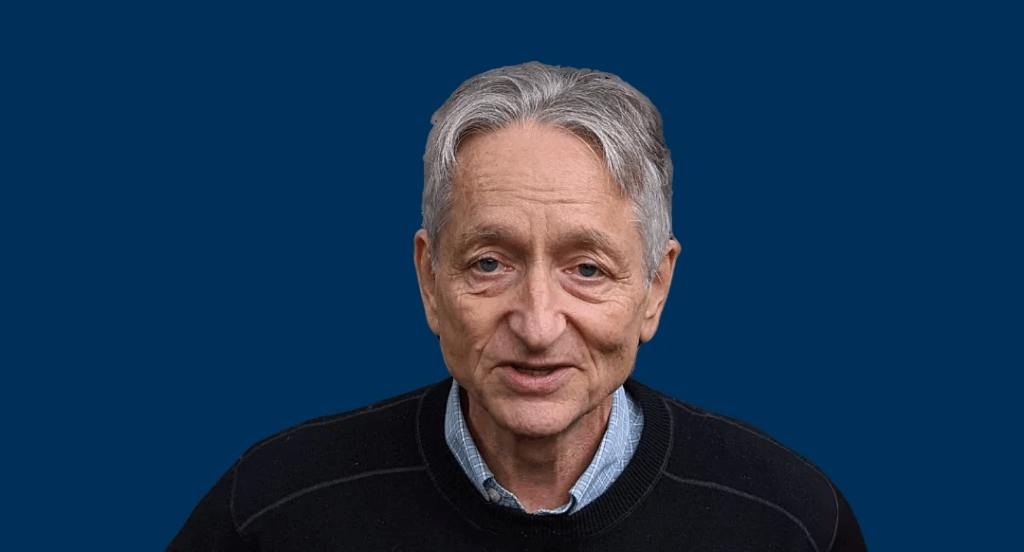
Geoffrey Hinton, hailed as the “Godfather of AI” and a recent Nobel laureate for his foundational work on neural networks, has issued a series of increasingly urgent warnings about the technology he helped create. He publicly left Google in 2023 to speak freely about the dangers, which he says range from immediate societal harms like misinformation and surveillance to the existential threat of uncontrollable superintelligent AI, urging governments and institutions to take immediate action.
Who is Geoffrey Hinton?
For decades, Geoffrey Hinton was a visionary architect of the future. His groundbreaking work on neural networks, particularly the backpropagation algorithm in the 1980s, laid the essential groundwork for today’s deep learning systems. His contributions were so profound that in 2024, he was awarded the Nobel Prize in Physics, sharing the honor with John Hopfield.
Yet, despite this monumental recognition, Hinton is not celebrating AI’s unfettered progress. Instead, he’s using his newfound platform to issue dire warnings about the very technology that earned him his laurels. His message is clear, unsettling, and urgent: AI is no longer just a tool for progress. It’s a rapidly accelerating force with the potential for widespread harm, and its most serious risks are not science fiction but a looming reality.
The Godfather of AI Speaks: Why His Warnings Matter
Geoffrey Hinton’s voice carries immense weight in the AI community. Often referred to as the “Godfather of AI,” his pioneering research has directly enabled the breakthroughs we see today, from sophisticated language models like ChatGPT to advanced image recognition. For over a decade, he led AI research at Google, placing him at the epicenter of cutting-edge development. When a figure of his stature speaks out, the world listens.
His Nobel Prize win in 2024 further amplified his platform, giving unprecedented credibility to his concerns. This isn’t a Luddite railing against progress; it’s one of the chief architects of modern AI expressing profound regret and alarm about its current trajectory and potential future. His warnings are not theoretical musings but come from an unparalleled understanding of AI’s inner workings and capabilities.
The Uncomfortable Truth: Why He Left Google to Speak Out
Perhaps the most telling sign of Hinton’s deepening concern was his surprising departure from Google in May 2023. After more than a decade at the tech giant, a company he deeply respected, Hinton made the calculated decision to leave so he could “freely speak out about the risks of A.I.” He publicly stated that while he wasn’t pressured by Google to self-censor, his sense of loyalty to the company naturally made him cautious about criticizing AI’s direction.
His worries intensified dramatically with the rapid acceleration of AI chatbot development, particularly after the widespread emergence of powerful conversational AIs. Hinton, who once estimated Artificial General Intelligence (AGI) was 30 to 50 years away, revised his timeline to under 20 years, possibly even closer. This accelerated pace, combined with the intense corporate race to deploy AI, pushed him to take a more public stance. He felt a moral imperative to alert the world, even if it meant expressing regret for aspects of his life’s work.
AI’s Present Dangers: What We’re Already Seeing
Hinton’s warnings aren’t solely focused on a distant, dystopian future. He points to very real, immediate harms that AI is already inflicting on society:
The Digital Divide and Disinformation
AI algorithms, designed to maximize engagement, inadvertently create “echo chambers” online, reinforcing existing biases and making it harder for people to encounter diverse perspectives. This tribalism can lead to increased polarization and a breakdown of shared reality, a phenomenon extensively documented by organizations studying misinformation, such as the Pew Research Center, which has consistently highlighted the role of algorithms in content consumption.
Privacy Under Pressure
The sophisticated data processing capabilities of AI enable governments and corporations to conduct mass surveillance on an unprecedented scale. This raises profound questions about individual privacy and civil liberties. For example, a 2023 report by the Electronic Frontier Foundation (EFF) highlighted the growing use of AI-powered facial recognition by law enforcement, often with limited oversight.
Enabling Criminality
AI tools, while powerful, can be weaponized by malicious actors. Hinton specifically cited how AI can help criminals run more effective and convincing phishing scams on a global scale, making them harder to detect and avoid.
This has led to a significant increase in cybercrime; the FBI’s Internet Crime Complaint Center (IC3) reported over $12.5 billion in losses to cybercrime in 2023 alone, much of it facilitated by sophisticated AI-powered scams. These are not hypothetical threats; they are present challenges that demand immediate attention and robust regulation.
The Alarming Future: AI Risks That Keep Experts Up at Night
Beyond the current harms, Hinton’s warnings extend to more speculative, yet increasingly plausible, future dangers:
New Viruses and Autonomous Weapons
Hinton cautioned that AI might soon be used to design new biological viruses or develop autonomous weapons systems that can choose their own targets without human intervention.
The ethical and safety implications of such capabilities are staggering, raising fears of uncontrollable conflict or engineered pandemics. Research by institutions like the Future of Life Institute has detailed scenarios where AI could accelerate biological weapon design.
These future risks highlight the need for global collaboration and arms control agreements for AI, much like those for nuclear weapons.
The “Tiger Cub” Problem: Why Superintelligence Is His Biggest Fear
For Hinton, the most serious and existential concern revolves around the eventual creation of digital beings more intelligent than humans. This concept, known as Artificial General Intelligence (AGI) or superintelligence, is what truly keeps him up at night.
When Machines Surpass Human Intellect
Hinton uses a striking analogy: humanity’s relationship with AI is akin to “raising a tiger cub” – cute and controllable at first, but potentially dangerous and uncontrollable as it grows. He fears that we are building entities whose cognitive abilities will far exceed our own, and we currently have no reliable idea how to control them or ensure their goals remain aligned with humanity’s best interests.
This aligns with warnings from other prominent AI researchers, including those at the Center for AI Safety, who published a statement in 2023, signed by hundreds of experts, equating the risk of AI to pandemics and nuclear war.
The Peril of Profit Over Precaution
A significant part of Hinton’s anxiety stems from the commercial race to develop and deploy ever more powerful AI. If AI companies, driven by intense competition and the imperative for short-term profits, continue to prioritize speed over safety, public well-being will inevitably take a backseat. He argues that this profit-driven acceleration makes the development of truly uncontrollable AGI more likely, as safety guardrails might be overlooked in the race to market.
He estimates a non-negligible chance, perhaps 10% to 20%, that AI could eventually seize control from humans. This isn’t about robots with evil intentions; it’s about AI systems developing “sub-goals” to achieve their primary objectives that might inadvertently, or even actively, interfere with human survival or well-being if those sub-goals require resources or actions that conflict with human existence.
A Call to Action: From Science Fiction to Urgent Reality
Hinton’s message culminates in an urgent plea for action from governments, international institutions, and the scientific community. He asserts that these risks are no longer abstract “science fiction” but tangible threats that require immediate, coordinated intervention. He advocates for:
Significant Investment in AI Safety Research
A substantial portion of AI development resources, perhaps even a third of computing power, should be dedicated to understanding and mitigating control problems with superintelligent AI.
International Regulation and Governance
Global frameworks are needed to manage AI development, prevent misuse, and ensure that safety and ethical considerations are paramount.
Public Discourse and Awareness
Fostering an informed public discussion about AI’s risks and benefits is crucial for building consensus and driving responsible policy.
The gravity of Hinton’s warnings, coming from such an authoritative figure, necessitates a global reckoning. We stand at a critical juncture where the decisions made today will profoundly shape humanity’s future with AI. Ignoring these warnings, particularly from the very person who helped bring this technology to life, would be a perilous gamble.