
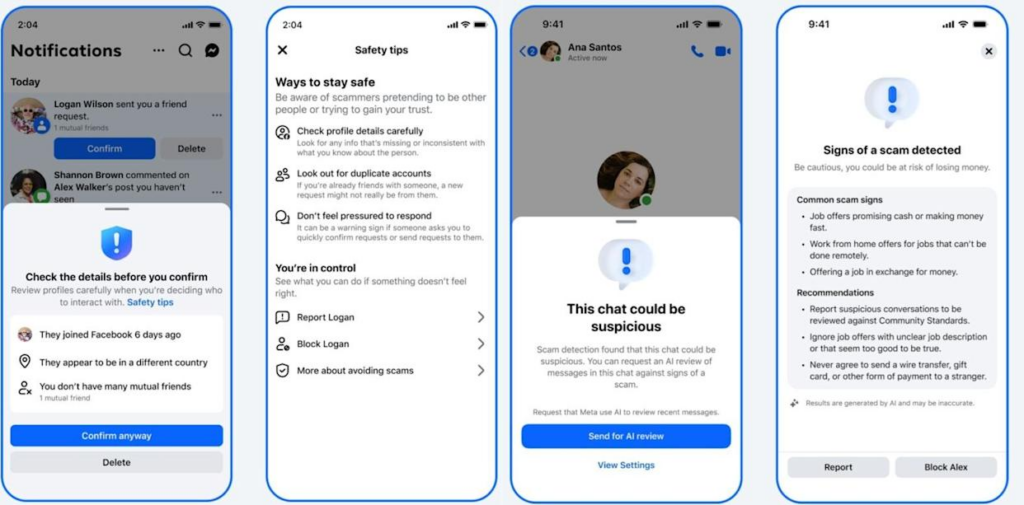
Meta Platforms has introduced new tools designed to help creators report impersonation and protect their original content on Facebook.
The update comes after growing complaints from creators about fake accounts reposting their work or posing as them online. Many users have also criticized the platform for being flooded with low-quality AI-generated content.
Meta says the new reporting tools are part of a broader effort to prioritize original content and reduce spam across its platforms.
Why Meta introduced new impersonation reporting tools
The move reflects increasing pressure on social media platforms to protect creators’ intellectual property.
In recent years, influencers, journalists, and digital creators have reported that impersonators frequently:
• copy their videos or reels
• repost content without credit
• create accounts pretending to be the original creator
According to Meta Platforms, the rise of generative AI has made this problem worse, as automated tools can easily produce large amounts of low-effort or duplicated content.
The new tools aim to give creators more direct control over reporting impersonation and stolen content.
How the new Meta impersonation reporting tools work
Meta is currently testing a feature that allows creators to report impersonation cases from a single dashboard.
Centralized reporting dashboard
Instead of submitting multiple reports across different pages, creators will be able to:
• identify posts or reels copied by impersonators
• flag them directly from one reporting interface
• track reports in one place
This streamlined process is meant to make enforcement faster and less frustrating for creators.
Flagging copied reels
Another key feature focuses on short-form video.
If a creator’s reel appears on Facebook after being reposted by an impersonator, the new tools will allow them to quickly report the content for review.
Meta says original content is gaining more visibility
Meta says its previous moderation and ranking changes are already producing results.
According to the company, views and watch time for original content nearly doubled in the second half of 2025 compared with the same period in 2024.
This suggests that Facebook’s algorithm is increasingly prioritizing unique creator content rather than duplicated material.
The company also says it removed around 20 million accounts last year as part of efforts to reduce spam and fake profiles.
How Meta is redefining “original content”
Alongside the new tools, Facebook is updating its content guidelines to clarify what qualifies as original content.
What Meta considers original
Under the revised definition, original content includes:
• videos filmed or produced directly by the creator
• reels that remix existing clips in creative ways
• content that adds commentary, overlays, or new storytelling elements
What will be deprioritized
Meta says certain types of content may receive lower distribution in feeds.
This includes:
• videos that are simply reposted from another creator
• minor edits of someone else’s work
• duplicated clips with no meaningful changes
The company’s goal is to ensure creators who invest time in producing unique content are rewarded with better visibility.
Why impersonation is a growing problem online
Impersonation is one of the fastest-growing issues on major social platforms.
Fake accounts can cause serious problems for creators, including:
• loss of revenue from stolen content
• damage to personal reputation
• audience confusion about official accounts
In some cases, impersonators also use fake profiles to promote scams or misleading advertisements.
Because of this, platforms such as Instagram and YouTube have also introduced stricter rules against impersonation.
What the new tools mean for creators
If widely rolled out, the new features could make it easier for creators to protect their digital identity and intellectual property.
Creators may benefit from:
• faster reporting of impersonators
• improved visibility for original content
• stronger moderation against spam accounts
However, the success of the system will likely depend on how quickly Meta responds to reports and whether enforcement keeps pace with the scale of the problem.
What comes next for Meta’s content moderation strategy
The impersonation reporting tools signal a broader shift by Meta Platforms toward cleaning up low-quality or automated content on social media feeds.
With AI-generated material becoming more common online, tech companies are under pressure to maintain trust among creators and audiences.
If Meta’s new system works as intended, it could become a key step in improving how original content is protected on large social media platforms.
TL;DR
Meta Platforms is testing new tools that allow creators to report impersonators and copied reels more easily on Facebook.
The update includes a centralized reporting dashboard and revised guidelines that prioritize original content while reducing visibility for duplicated posts.