
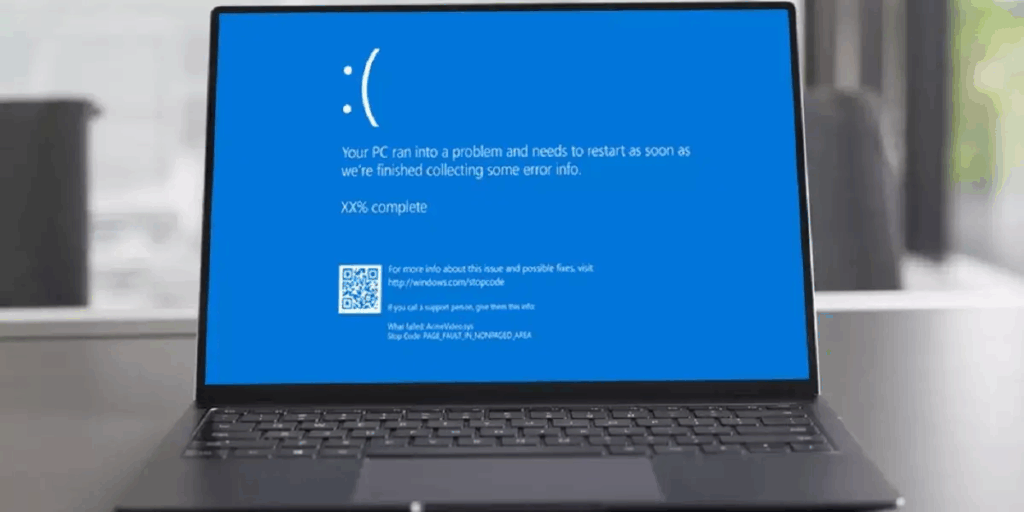
For millions of PC users, few things induced more dread than the appearance of the infamous “blue screen of death.” But after nearly four decades, Microsoft is officially pulling the plug on the bright blue error screen, replacing it with a new, more efficient recovery interface.
Starting with Windows 11 version 24H2, rolling out this summer, the dreaded blue screen will be replaced by a minimalist black screen featuring a stop code and relevant technical details. It’s a symbolic and practical shift in how Microsoft wants users to think about system crashes: less panic, more problem-solving.
What was the blue screen of death?
Nicknamed the “BSOD,” the blue screen of death first appeared in Windows 1.0, launched in 1985. Over the years, it became synonymous with sudden crashes, lost work, and cryptic lines of code that only system administrators could decipher.
It typically signaled a fatal system error, often tied to memory corruption, driver failures, or hardware issues. For non-tech-savvy users, it was a dead end. For IT pros, it was a necessary evil, a diagnostic snapshot of what went wrong.
In later versions of Windows, the BSOD became a little friendlier, with the addition of a frowny face emoji and simplified messages. But its essence, a warning that something had gone terribly wrong, remained unchanged.
What’s replacing it?
Microsoft says the new black screen is part of a broader shift toward resilience and user-focused recovery tools. Officially described as a “simplified UI for unexpected restarts,” it delivers a stop code and pinpoints the relevant system driver or process that caused the crash.
Key upgrades:
- No emoji or fluff — just useful information.
- System recovery improvements — in some cases, recovery time could shrink to as little as 2 seconds, Microsoft claims.
- Cleaner design — the black screen is easier to read and parse for technicians and support staff.
While the visual change may seem small, it reflects a deeper redesign in how Windows handles critical errors. It’s not just about appearance; it’s about making recovery faster, smarter, and less terrifying.
Why now? CrowdStrike outage highlighted weaknesses
The timing of this change is no coincidence. Microsoft’s announcement comes less than a year after a massive CrowdStrike-related outage crippled more than 8 million computers worldwide on July 19, 2024. The failure, traced back to a faulty system update, affected everything from 911 emergency services to airline operations and government networks.
That event exposed the weaknesses in current error-handling systems. In critical situations, long recovery times can cost lives — or at the very least, millions of dollars.
Microsoft’s new “resiliency program” aims to prevent those kinds of cascading failures by:
- Reducing error ambiguity
- Improving driver visibility
- Speeding up troubleshooting and reboots
In short, the change isn’t just cosmetic. It’s a technical response to a global wake-up call.
What does this mean for users?
For everyday users, the switch to a black screen might not make much of a difference — until it does. The cleaner error message and better diagnostic info mean less downtime and faster fixes, whether you’re handling it yourself or calling IT support.
For enterprise systems, where reliability and recovery time are paramount, this is a bigger win. Microsoft wants to make sure one faulty driver doesn’t bring down an entire fleet of machines or disrupt essential services like transportation or healthcare.
And yes, for those wondering: the black screen doesn’t mean your PC is dead. In fact, it’s designed to get you back up and running faster than the old BSOD ever could.
The end of an era (and a meme)
The blue screen of death has become a meme, a punchline, and even a Halloween costume. It showed up during Windows presentations. It embarrassed developers. It haunted tech support calls.
Its retirement at 40 marks the end of an iconic—if frustrating—chapter in computing history.
But in 2025, system crashes should be rare, not paralyzing. Microsoft is betting that users don’t need theatrics. They need results.