
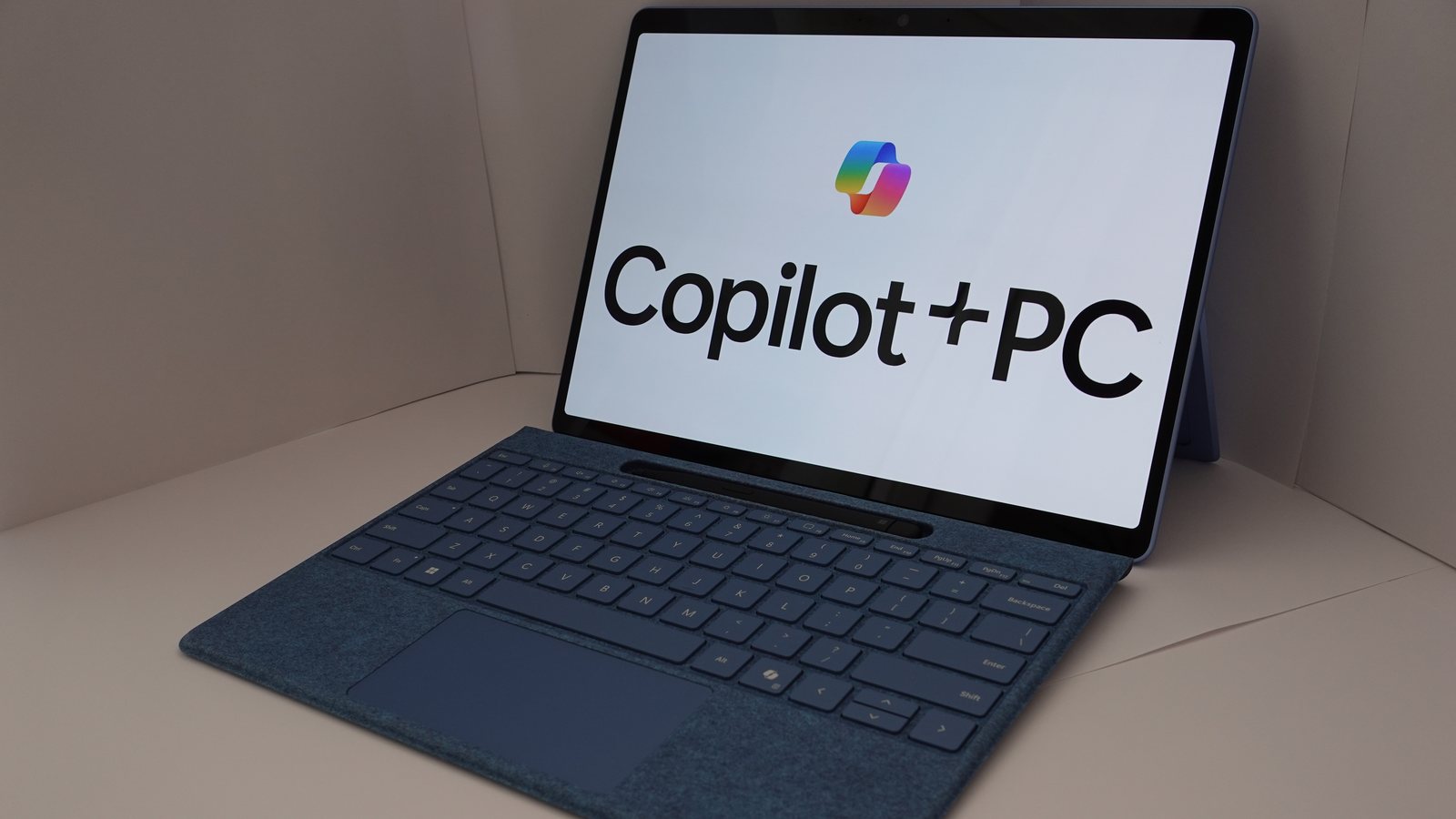

A neural processing unit, or NPU, is a small engine inside a laptop’s main chip. It runs AI tasks on very little power. Every major laptop chip sold this holiday season has one, from Intel, AMD, Qualcomm and Apple.
For a Windows buyer, the number attached to it matters more than the name. Microsoft reserves a set of Windows features for PCs with an NPU rated at 40 trillion operations per second (TOPS) or more. Macs work differently, and for many people the NPU is not the deciding spec at all.
An NPU does one kind of math, cheaply
A CPU handles general work, from opening apps to running the operating system. A GPU handles graphics and other jobs that split into thousands of parallel calculations. Both can run AI models, but neither suits doing it all day on battery.
An NPU handles inference. That is the step where a trained model turns your voice into text or picks your face out of a webcam frame. That work is mostly the same multiplication repeated at huge scale. A dedicated engine can do it with less power than the CPU or GPU would use. Intel’s own glossary defines it as “a processor built for handling AI & machine learning tasks.”
TOPS, trillions of operations per second, is the headline rating. It is a peak figure set by the chipmaker. Intel’s Core Ultra product brief calls its numbers “up to” and approximate. A higher TOPS rating does not guarantee a faster app, because memory and software also decide real speed.
The NPU ratings for this year’s laptop chips
We pulled the NPU figure each company publishes for its current laptop chips. Where a family has several models, the range runs from the base part to the top one.
| Chip family | NPU rating, per the chipmaker | Source |
|---|---|---|
| Qualcomm Snapdragon X2 Elite | 80 to 85 TOPS, by model | Qualcomm |
| Qualcomm Snapdragon X2 Plus | 80 TOPS | Qualcomm |
| AMD Ryzen AI 400 series | 50 TOPS (Ryzen AI 7 450) to 60 TOPS (Ryzen AI 9 HX 475) | AMD |
| AMD Ryzen AI 300 series | 50 TOPS (Ryzen AI 9 HX 370, Ryzen AI 7 350) | AMD |
| Intel Core Ultra Series 3 (Panther Lake) | Up to 50 TOPS on top models | Intel |
| Intel Core Ultra 200V (Lunar Lake) | Up to 48 TOPS | Intel |
| Qualcomm Snapdragon X Elite (2024) | 45 TOPS | Qualcomm |
| Apple M4 | 38 TOPS | Apple |
| Apple M5 and M6 | No TOPS figure published | Apple |
Two things stand out. Every Windows chip family in the table reaches Microsoft’s 40 TOPS line, at least in its higher models. So the NPU rarely separates two new Windows laptops on a shelf this year.
Apple, meanwhile, has stopped quoting the number. Its M6 announcement in August describes a “Dual 16-core Neural Engine” with “up to 2x the peak compute over previous generations.” It gives no TOPS figure.
What Microsoft’s 40 TOPS line unlocks in Windows
Microsoft calls machines that meet its bar Copilot+ PCs. Its Windows 11 specifications page sets the bar at an NPU “capable of performing 40+ TOPS.” Machines also need 16GB of RAM and 256GB of storage. The RAM rule catches people out. Microsoft says a laptop with a 40 TOPS chip but less than 16GB of memory is not a Copilot+ PC.
Three features show what the NPU actually does today.
- Windows Studio Effects. Background blur, automatic framing, standard eye contact and voice focus run on any Windows 11 PC with an NPU of 10 TOPS or more, Microsoft says. Portrait light, teleprompter-style eye contact and creative filters need a Snapdragon Copilot+ PC, says Microsoft’s Studio Effects page.
- Live Captions. Every Windows 11 PC from version 22H2 can caption audio, and Microsoft says “all processing” happens on the device, even offline. Translation into English from more than 40 languages needs a Copilot+ PC, per its Live Captions guide.
- Recall. This searchable history of what was on your screen requires a Copilot+ PC, at least 50GB of free space, BitLocker or device encryption, and a fingerprint or face sign-in. It is off until you turn it on, and Microsoft’s Recall page says snapshots stay encrypted on the local drive.
Not every “AI” feature runs locally. Microsoft says Paint’s Cocreator needs an internet connection and a Microsoft account to reach its cloud services.
The Copilot+ name itself is fading. Microsoft’s new Snapdragon X2 Surface Pro and Surface Laptop “are no longer called Copilot+ PCs,” Windows Central reported on September 24. They still support every Copilot+ feature.
Microsoft’s own launch post never uses the term. So look for the chip and the RAM on the spec sheet, not a sticker.
Macs don’t gate features on TOPS
Apple sets no NPU threshold. Its Apple Intelligence page lists every MacBook Air and MacBook Pro with M1 or later. Apple rated the M1’s Neural Engine at 11 trillion operations per second in 2020, about a quarter of Microsoft’s bar.
That makes TOPS useless for comparing a Mac with a Windows laptop. Apple decides which Macs get a feature and spreads AI work across the Neural Engine and the GPU. Its M5 announcement puts a “Neural Accelerator” in each GPU core.
Weighing a new MacBook Pro? Our guide to Apple’s touchscreen MacBook Pro covers who should wait.
Who should pay for a bigger NPU
For browsing, documents and streaming, you will not notice the NPU. Any Windows laptop chip in the table above is enough, and RAM, battery life and the screen matter more.
The NPU earns its place if you spend hours on video calls, rely on captions or translation, or want Recall. In that case, check two lines on the spec sheet.
The chip should be on Microsoft’s Copilot+ list. It names AMD Ryzen AI 300 and 400, Intel Core Ultra 200V and 300V, and Snapdragon X series chips. And the laptop needs 16GB of RAM.
A bigger TOPS number past 40 buys little in Windows today. Microsoft ties most features to the threshold, not the top score. The exceptions are a few Snapdragon-only extras, such as some Studio Effects.
One caution for deal hunters. A cheaper laptop with an older Intel Core Ultra chip or 8GB of memory can carry “AI” marketing and still miss Microsoft’s bar. Check the model number against Microsoft’s list before the Black Friday sales peak on November 27.