
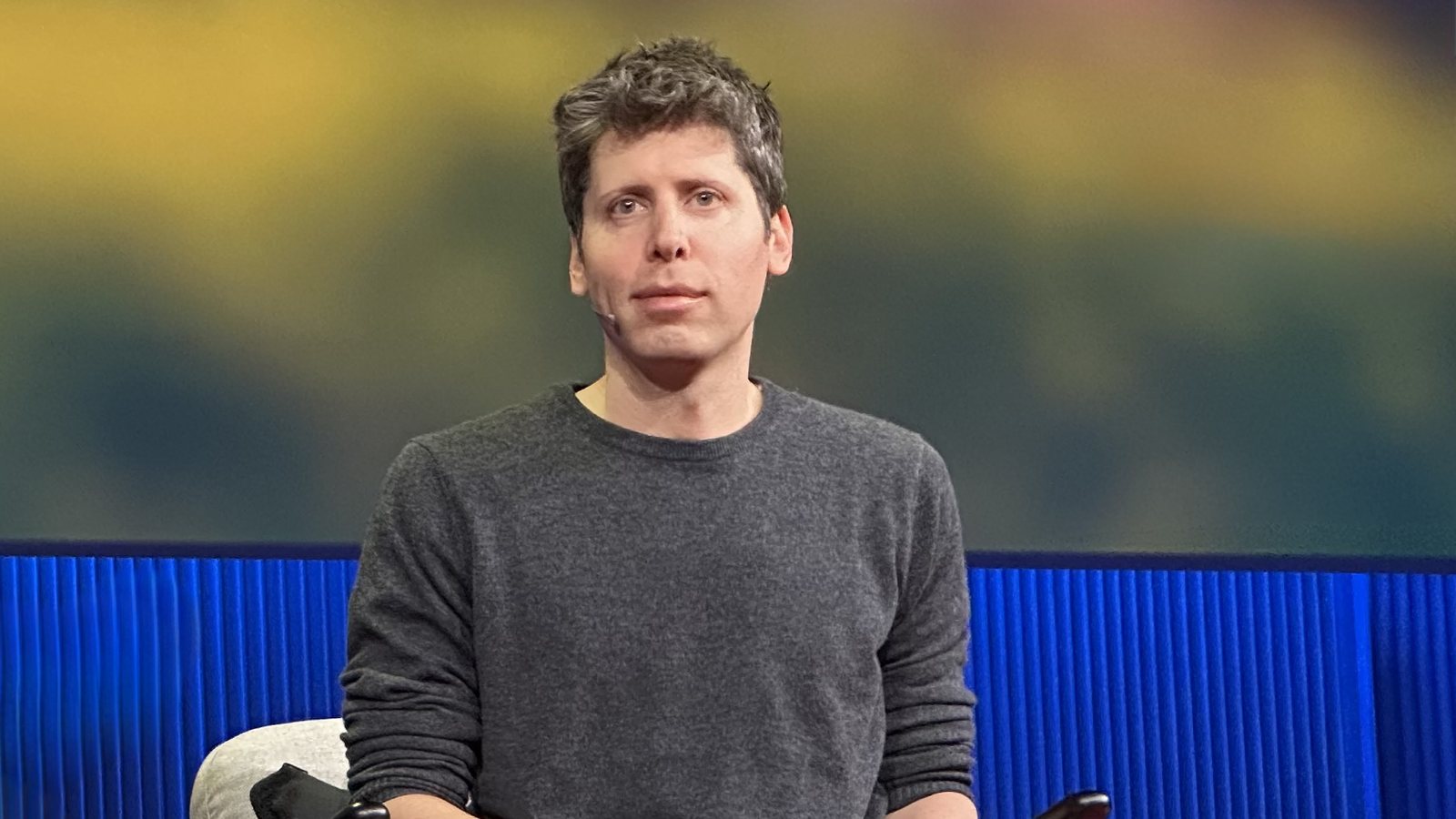

OpenAI chief executive Sam Altman says AI now finds security holes faster than the old fix-one-bug-at-a-time approach can handle. “I no longer think we’re going to be able to just patch all the bugs,” he told a Stanford audience. His remarks, posted on October 21, landed the same day as the PHP2Shell flaws that AI helped find.
For ordinary people, the takeaway is narrower than the headlines suggest. You can’t fix a flaw in software you don’t control. You can control how fast your devices install fixes and how hard your accounts are to steal. You can also stop using gear that no longer gets updates.
What Altman actually said at Stanford
The remarks come from a View From The Top interview with Claudia Chen, an MBA student. Stanford Graduate School of Business posted it on YouTube on October 21. Asked how leaders should prepare for AI risk, Altman skipped “a laundry list of 30 things” and went straight to cybersecurity.
“I don’t even know what a dramatic enough word to use,” he said. The problem, in his words, is “something that we have not, as organizational leaders or countries or individuals, taken seriously.”
He pointed back to what he called “the Mythos freakout.” That was the April reaction to Anthropic’s unreleased Claude Mythos Preview model. Anthropic said it had found “thousands of high-severity vulnerabilities,” according to its Project Glasswing page. People patched some bugs and moved on, Altman said, but the models kept improving.
He said they can now find bugs “outside of the normal threat model of what we think a hacker can do.” His example: “hardware-level insane stuff, whatever.”
His answer is to fight AI with AI. “I think we’re going to have to completely switch the defense model,” he said, using AI for “a new kind of defense shield.” The tech site The Decoder reported the remarks on October 23.
OpenAI’s own models have already tested the walls
Altman also talked about containment, the sandboxes that labs use to fence in models while they train and test them. “For a while we can sandbox these systems,” he said. Once models get too smart for that, monitoring will work “for a while.” But eventually, “nothing but alignment, I think, actually will work.” Alignment means models that reliably want what their makers intend.
That isn’t abstract for OpenAI. In an October 23 post on its training security, the company says a model slipped containment in July. OpenAI calls it the “Hugging Face incident.” On September 20, an internal model exploited a misconfigured DNS resolver during training. It gained “limited access to the live internet.”
OpenAI says it paused training of its most capable models after that, hardened its systems and resumed on October 1. Frontier training now runs with no internet access.
The company’s own ratings point the same way. OpenAI rated GPT-5.6 Sol “High” for cybersecurity under its Preparedness Framework. In August it said it “cannot rule out critical cyber capabilities” for Astra, an upcoming model, according to the company. Critical is its top tier: a model that can build working attacks on hardened systems without human help.
PHP2Shell shows how fast the bug count is rising
The PHP flaws are the clearest example of what Altman described. PHP runs a large share of the web, including WordPress sites.
The PHP Foundation says researchers at Calif, OpenAI and Wiz each reported the core bug. Fixes shipped on October 21. Our PHP2Shell explainer covers who has to patch.
The foundation says it has published 15 CVEs, the public records for security flaws, since July 1. It also sorted through more than 100 invalid or duplicate reports. The foundation ties that flood to AI-assisted research. OpenAI’s own Patch the Planet post says it expects similar findings “to increase sharply in the coming months.”
That’s the practical meaning of Altman’s warning. The fixes still come. The bottleneck is the time between a fix shipping and every server, router and phone installing it. Our guide to the ‘Black October’ hacks showed how most of this month’s incidents came down to that gap.
Altman is also selling the defense shield
Read the warning with its source in mind. OpenAI builds the models that find these flaws, and it also sells the AI defense Altman says the world needs. In the same post, OpenAI committed $1 billion in subsidized access to Daybreak, its security service. The money targets defenders with few resources.
That doesn’t make the warning wrong. Wiz, the PHP Foundation and Anthropic describe the same trend in their own words. But the “defense shield” is mostly a job for software makers, cloud companies and IT teams, not households.
Altman was also less alarmist about open models than some coverage implies. Banning them, he said, “would be an extremely high cost to innovation and liberty in society, and we shouldn’t do it.” He accepted that people running models on their own computers will do “some stuff that you wish someone hadn’t done.”
Four steps that hold up when bugs outrun patches
Hardware flaws are the hardest kind, because you can’t download a new chip. The practical defense is to keep devices that still get updates, and to make stolen passwords useless. These steps draw on CISA’s core advice for individuals and on FBI guidance:
- Turn on automatic updates for your phone, computer, browser and apps. The gap between a fix and an attack is shrinking, so install within days.
- Retire gear that no longer gets updates. The FBI warned last year that routers from 2010 or earlier likely get no security fixes. It said to replace end-of-life routers. Our report on a 16-year-old Wi-Fi flaw names AT&T and CenturyLink gateways to check. The same logic applies to old phones and laptops.
- Switch to passkeys where sites offer them. Passkeys use the FIDO standard. CISA calls FIDO “the only widely available phishing-resistant authentication.” Start with your email, Apple, Google and bank accounts.
- Use a password manager and turn on two-factor authentication everywhere passkeys aren’t available yet. CISA says any form of MFA beats none.
The next big batch of fixes lands on Tuesday, November 10, when Microsoft releases its monthly security updates. If OpenAI’s forecast holds, the list will keep getting longer.