
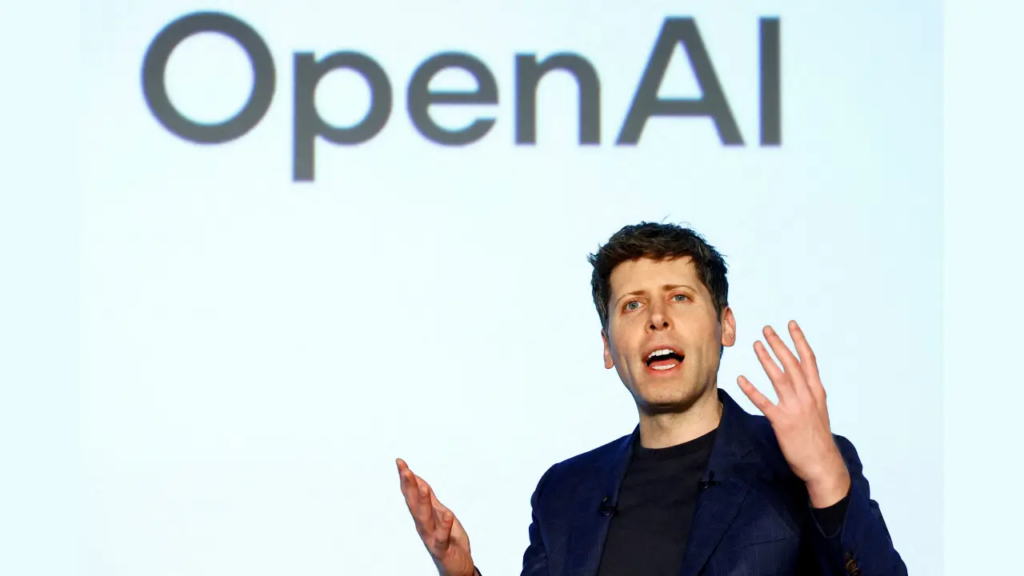
For years, social media platforms have promised to curb bots. None has truly succeeded. Now, reports suggest OpenAI may be exploring a far more radical solution: a new social network designed from the ground up to verify that every user is human.
According to reporting first published by Forbes, OpenAI is quietly developing an early-stage social media platform that could rely on biometric identity verification, including iris scans or facial recognition, to prevent bots from flooding the system. If accurate, this would mark one of the boldest experiments yet in online identity and trust.
The idea raises obvious questions. How would it work? Why would OpenAI build a social network at all? And would users accept biometric checks in exchange for cleaner, bot-free conversations?
What is OpenAI’s secret social media project?
Reports describe the OpenAI secret social media project as a small, tightly held initiative still in its infancy. Fewer than ten people are said to be working on it, with no public product roadmap or launch timeline.
What stands out is not the scale, but the ambition.
A bot-free alternative to existing platforms
The proposed platform is reportedly positioned as a response to a growing problem across today’s social media landscape:
- Automated accounts amplifying misinformation
- AI-generated replies are drowning out real conversations
- Declining trust in what—and who—users see online
In some online communities, researchers believe automated accounts may already rival or exceed genuine human users. The result is a digital environment that feels noisy, manipulated, and increasingly artificial.
OpenAI’s reported goal is simple in theory, difficult in practice: design a social network where bots cannot exist at scale.
Why is OpenAI even building a social network?
At first glance, a social app might seem like a strange move for an AI research company. But there are strategic reasons this idea keeps resurfacing.
Social data is the internet’s most valuable raw material
Modern AI systems learn from human interaction. Social platforms generate:
- Real-time conversations
- Cultural context and language shifts
- Signals about trust, credibility, and influence
By running its own platform, OpenAI could study how humans interact when bots are removed from the equation, a dataset that currently doesn’t exist at a meaningful scale.
A philosophical argument about authenticity
Sam Altman and other AI leaders have repeatedly warned that as generative AI improves, distinguishing humans from machines online will only get harder.
A social network that verifies personhood could serve as:
- A testing ground for identity systems
- A proof-of-concept for a more trustworthy internet
- A counterweight to engagement-driven platforms optimized for virality, not truth
How would OpenAI verify users are human, not bots?
This is where the project becomes controversial.
According to reports, OpenAI is considering biometric “proof of personhood” systems—methods designed to confirm that an account belongs to a unique, real human being.
Possible verification methods under discussion
Sources cited by Forbes suggest several approaches are being explored:
- Iris scanning, similar to systems used by World Network
- Facial recognition, comparable to smartphone Face ID
- One-person, one-account limits to block mass account creation
The objective is not to identify who you are publicly, but to ensure that you are a real person, only once.
What is the possible link between World Network and Worldcoin?
Speculation around this project intensified because of OpenAI’s leadership connections.
World Network’s role in digital identity
World Network (formerly known for its association with the Worldcoin cryptocurrency) operates a system that uses a physical device—called an Orb—to scan a person’s iris and generate a unique, privacy-focused digital ID.
Key points about the system:
- The iris scan creates a cryptographic identifier
- The system is designed to confirm uniqueness, not store personal data
- Millions of users have reportedly already been verified worldwide
Sam Altman was a co-founder of the Worldcoin project and currently serves as chair of Tools for Humanity, the company behind World Network.
No confirmed partnership yet
There is no official confirmation that OpenAI is partnering with World Network. However:
- World Network’s technology aligns closely with OpenAI’s reported needs
- Market speculation surged after the reports
- The Worldcoin (WLD) token saw a noticeable price increase following the news
Why bots are such a hard problem to solve
Social media companies have spent billions trying to control bots using:
- CAPTCHA tests
- Behavioral analysis
- Account limits and moderation teams
Yet none of these methods scale cleanly against AI-generated accounts that can now mimic human behavior with startling accuracy.
The AI arms race problem
As detection improves, so does evasion. AI systems can already:
- Generate realistic profile photos
- Maintain long-term conversational consistency
- Coordinate activity across thousands of accounts
Biometric verification attempts to break this cycle entirely by tying each account to a physical human body—something AI cannot fake remotely.
Why biometric social media is controversial
Even if the technology works, adoption is not guaranteed.
Privacy concerns remain central
Critics raise valid questions:
- Who stores biometric data—and for how long?
- What happens if the system is compromised?
- Can governments or third parties demand access?
While World Network and similar projects emphasize privacy-preserving designs, public skepticism around biometrics is high, especially after years of data breaches and surveillance scandals.
Accessibility and global equity
Another challenge: biometric hardware is not evenly distributed worldwide.
- Would users need physical scanners?
- Could this exclude users in developing regions?
- How would the system handle accessibility needs?
These questions could determine whether such a platform remains niche or scales globally.
Why this matters beyond one social media app
Even if OpenAI never launches this platform publicly, the implications are significant.
A test case for the future of online identity
Governments, platforms, and researchers are all grappling with the same question: How do you prove someone is human online without destroying privacy?
If OpenAI finds a workable model, it could influence:
- Online voting systems
- Financial fraud prevention
- AI content regulation
- Digital citizenship frameworks
What we still don’t know
At the time of writing:
- OpenAI has made no public announcement
- No product name, timeline, or beta has been confirmed
- It is unclear whether the project will ever leave the research phase
Tech history is full of experimental projects that never shipped. But the conversation this one has sparked—about bots, trust, and identity—is unlikely to fade.
TL;DR
- OpenAI is reportedly developing a bot-free social media platform
- Biometric verification, including iris scans, may be used to confirm users are human
- The project could draw on technology similar to World Network’s identity system
- Privacy, accessibility, and adoption remain major open questions
- Even if it never launches, the idea could shape how the internet handles identity in the AI era