
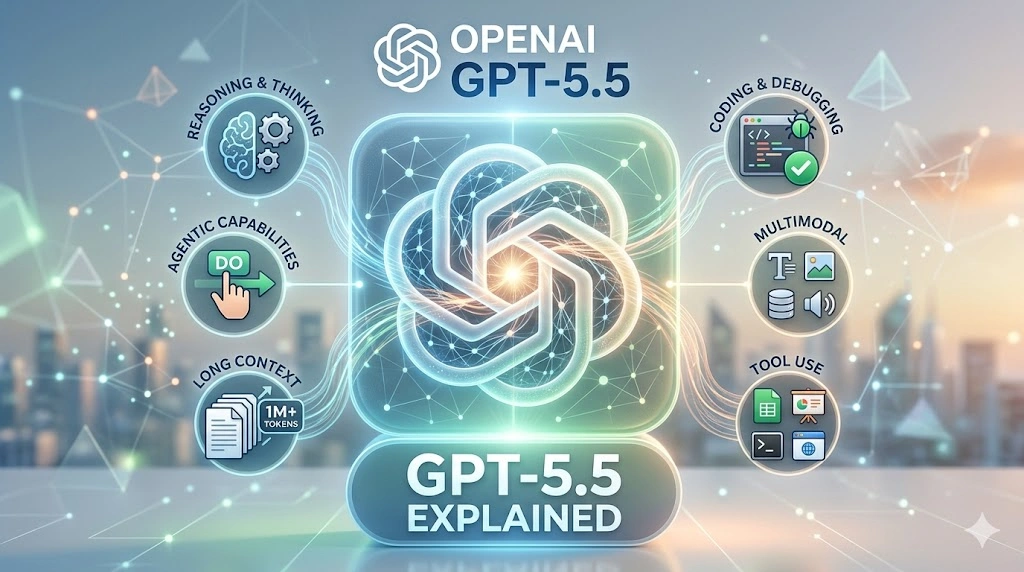
In a move that underscores how quickly artificial intelligence is reshaping digital defense, OpenAI is preparing to roll out its latest model, GPT-5.5 Cyber. Positioned as a “frontier cybersecurity model,” the system is designed for high-stakes environments where speed, precision, and reliability are critical.
Announced by Sam Altman, the phased release reflects a growing tension in the AI industry: how to deploy powerful tools that can defend systems without enabling attackers. As cyber threats evolve—and increasingly leverage AI themselves, tools like GPT-5.5 Cyber may become essential infrastructure rather than optional upgrades.
What is GPT-5.5 Cyber?
GPT-5.5 Cyber is a specialized AI model built for cybersecurity operations. Unlike general-purpose AI systems, it focuses on defensive applications such as:
- Threat detection
- Vulnerability analysis
- Incident response
- Malware investigation
It builds on the capabilities of its predecessor, GPT-5.4 Cyber, but with tighter controls and a more targeted deployment strategy.
Why this model matters now
Cybersecurity teams are dealing with:
- Increasing attack sophistication
- Shorter response windows
- A growing shortage of skilled analysts
AI models like GPT-5.5 Cyber aim to augment human teams by automating analysis and surfacing risks faster than traditional tools.
How will GPT-5.5 Cyber be deployed?
A phased rollout with restricted access
OpenAI isn’t releasing GPT-5.5 Cyber broadly, at least not yet.
Instead, the company is using a phased approach:
- Initial access: Limited to vetted cybersecurity defenders
- Evaluation period: Feedback from real-world use cases
- Expanded rollout: Coordinated with governments and industry partners
This strategy is part of the Trusted Access for Cyber (TAC) program, designed to ensure that powerful AI tools are used responsibly.
Why restricted access is critical
Unlike most software launches, cybersecurity AI carries inherent risks. The same tool that identifies vulnerabilities could, in theory, be used to exploit them.
By limiting early access, OpenAI is trying to:
- Prevent misuse by malicious actors
- Study real-world impact before scaling
- Build guardrails alongside deployment
What did GPT-5.4 Cyber introduce?
To understand GPT-5.5 Cyber, it helps to look at its predecessor.
Advanced analysis tools for experts
GPT-5.4 Cyber focused on making complex cybersecurity techniques more accessible, including the following:
- Binary reverse engineering
- Analyze compiled software without source code
- Detect hidden vulnerabilities or malware
- Automated vulnerability discovery
- Improved malware classification
These features allowed cybersecurity professionals to work faster and more efficiently—but they also raised concerns.
Why was availability tightly controlled
Due to its flexibility, GPT-5.4 Cyber was distributed selectively:
- Only to vetted organisations
- Under strict usage guidelines
- With monitoring mechanisms in place
GPT-5.5 Cyber is expected to follow, and likely expand, this cautious approach.
Why are there concerns about AI in cybersecurity?
The “dual-use” problem
AI systems in cybersecurity are inherently dual-use, meaning they can be used for both:
- Defense (identifying vulnerabilities)
- Offense (exploiting those vulnerabilities)
This creates a dilemma for developers and policymakers.
Real-world risks
Security experts have flagged several concerns:
- Automated hacking tools powered by AI
- Highly convincing phishing attacks are generated at scale
- Faster vulnerability discovery by attackers
In short, AI is accelerating both sides of the cybersecurity arms race.
Consider adding an infographic here showing “Defensive vs Offensive AI Capabilities” to help readers visualize the dual-use challenge.
How AI is changing cyberattacks
Rise of AI-assisted attacks
Over the past year, organizations have reported a surge in AI-driven threats, including:
- Phishing emails that mimic real human tone
- AI-generated malware variants
- Automated scanning for system weaknesses
These attacks are:
- Faster
- Harder to detect
- More scalable than traditional methods
Why defenders need AI too
To keep up, cybersecurity teams are increasingly adopting AI tools for:
- Real-time anomaly detection
- Automated incident response
- Predictive threat modeling
GPT-5.5 Cyber fits directly into this shift, acting as a force multiplier for defense teams.
What makes GPT-5.5 Cyber different?
Focus on high-stakes environments
Unlike consumer AI tools, GPT-5.5 Cyber is designed for:
- Government agencies
- Critical infrastructure operators
- Enterprise security teams
These environments demand:
- High accuracy
- Strong safeguards
- Clear accountability
Built-in responsibility mechanisms
OpenAI’s approach suggests that GPT-5.5 Cyber will include:
- Usage restrictions
- Monitoring systems
- Access controls tied to verified users
This reflects a broader industry trend toward responsible AI deployment.
Why GPT-5.5 Cyber matters for the future
Cybersecurity is becoming an AI-first domain
The launch of GPT-5.5 Cyber signals a larger shift:
- AI is no longer just a tool—it’s becoming core infrastructure
- Security operations are increasingly automated
- Human analysts are being augmented, not replaced
A preview of what’s next
Expect future developments to include:
- Fully autonomous threat detection systems
- AI-to-AI defense mechanisms (AI defending against AI attacks)
- Tighter collaboration between tech companies and governments
Consider linking internally to your coverage on “AI in cybersecurity trends” or “how phishing attacks are evolving” for deeper context.
What should businesses and policymakers watch?
For businesses
- Evaluate AI-based security tools carefully
- Prioritize vendors with strong governance frameworks
- Train teams to work alongside AI systems
For policymakers
- Develop regulations around dual-use AI
- Encourage public-private collaboration
- Invest in AI literacy for cybersecurity professionals
TL;DR
- GPT-5.5 Cyber is OpenAI’s latest AI model focused on cybersecurity defense
- It will launch in phases under restricted access
- The model builds on GPT-5.4 Cyber’s advanced analysis tools
- AI is fueling both cyber defense and cyberattacks
- Controlled deployment is key to preventing misuse