
TL;DR
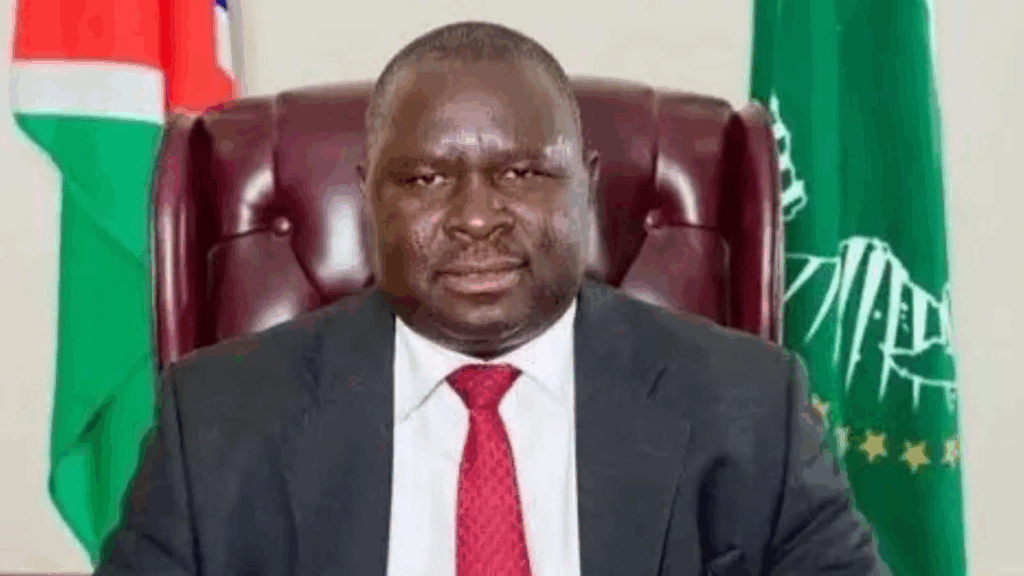
A Namibian politician named Adolf Hitler Uunona is poised to win yet another local election. Despite his unsettling name, which he inherited and has repeatedly distanced himself from, he remains a popular and longstanding representative in the Ompundja constituency. His story highlights Namibia’s complex colonial past and the cultural disconnect that allows certain names to persist without the same historical weight they carry elsewhere.
Why Is a Politician Named Adolf Hitler Making Headlines Again?
Yes, a Namibian politician is actually named Adolf Hitler Uunona, and yes, he continues to win elections.
The name alone grabs global attention because of its association with one of history’s most notorious figures. But in northern Namibia, specifically the Ompundja constituency he has represented since 2004, Uunona is known less for his name and more for his work as a local leader.
The story resurfaces every election cycle, mostly outside Namibia. Inside his constituency, his name has long since stopped being the headline.
Who is Adolf Hitler Uunona?
Adolf Hitler Uunona, 59, is a member of the South West Africa People’s Organisation (SWAPO), Namibia’s ruling political party since independence. He has held the Ompundja seat for more than two decades.
He’s repeatedly emphasised that he has no ideological connection to the former German dictator.
As he told The New York Post:
“My father gave me this name, but it does not mean I have Adolf Hitler’s character or resemble that Adolf Hitler of Germany.”
He has also explained that his father likely didn’t understand the weight the name carried in the West. In his 2020 interview with Bild, he said:
“As a child, I saw it as a totally normal name. Only as I grew up did I understand this man wanted to conquer the whole world.”
He says he “had no choice” in the name and has no plans to change it because it appears on all his legal documents.
How Common Are German Names in Namibia?
To understand why this name exists at all, you need the historical context.
Namibia was once a German colony (from 1884 to 1915), which means German-language names, like Adolf, Hermann, or Heinrich, are not unusual. But the combination “Adolf Hitler” is extremely rare and carries a level of infamy that doesn’t exist with other German names.
In 2020, a car in Uunona’s home region was photographed with “Adolf Hitler” and a Nazi swastika on its rear window. Uunona immediately distanced himself, saying he had nothing to do with it. The episode briefly reignited global interest in his story.
Why Do Voters Keep Electing Him?
Despite the controversy attached to his name globally, in the Ompundja constituency, Uunona is known for:
- Longstanding service since 2004
- Local development work
- Visibility and accessibility in his community
- Affiliation with SWAPO, which remains influential in rural regions
When he won the 2020 election with more than 85% of the vote, he told The Namibian that most locals simply know him as “Adolf,” and his reputation matters far more than his name.
His wife also calls him “Adolf,” though the “Hitler” is usually dropped in public settings.
Why Does This Story Matter?
This isn’t just a quirky election headline. The case of Adolf Hitler Uunona opens up larger questions worth exploring:
1. How do names carry different meanings across cultures?
In Namibia, “Adolf” can be just a name. Outside of Africa, it’s almost unusable because of its association with Nazi Germany.
2. What happens when colonial legacies intersect with modern politics?
German colonial rule left behind cultural, linguistic, and naming remnants that persist today — sometimes in unexpected ways.
3. How do global audiences interpret local stories?
Online, Uunona is often treated as a bizarre curiosity. Locally, his community sees him as a familiar public servant.
4. Should personal names impact electability?
Uunona’s case shows that for some voters, performance, trust, and party affiliation outweigh the symbolism of a name chosen decades ago by a parent.