
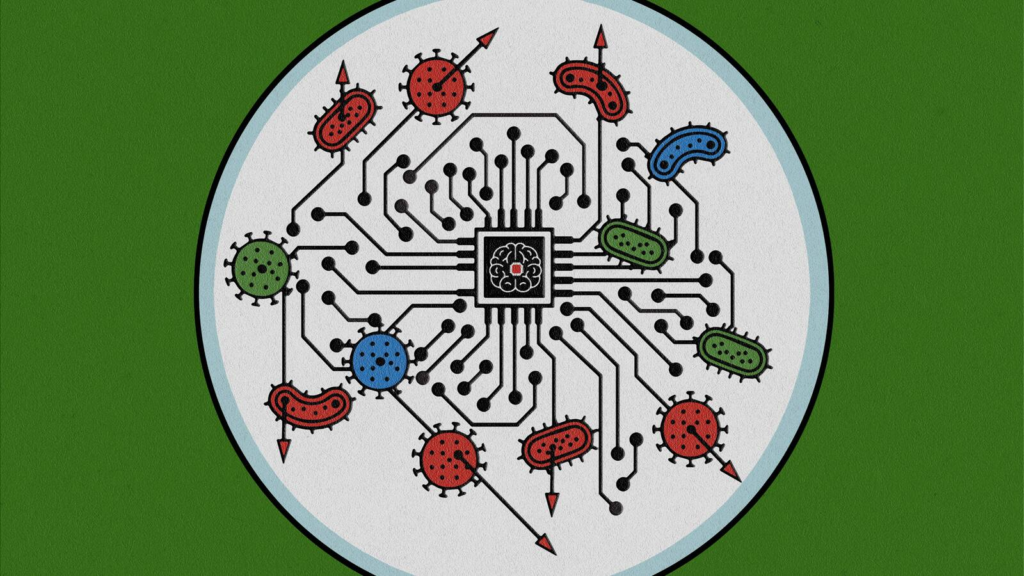
Artificial intelligence is rapidly transforming biology in ways that were once the stuff of science fiction.
AI systems can now help scientists design gene-editing tools, predict genetic outcomes, and accelerate drug discovery at unprecedented speed. But the same technology driving medical breakthroughs is also raising alarms among national security experts who fear it could lower the barrier to creating biological weapons.
That tension — between scientific progress and catastrophic misuse — is becoming one of the defining debates of the AI era.
And increasingly, the warnings are not coming from critics of artificial intelligence. They are coming from the leaders building it.
TL;DR
- AI is dramatically accelerating advances in gene editing and synthetic biology.
- Researchers recently developed what may be the first fully AI-designed gene editor, OpenCRISPR-1.
- Experts warn that the same AI tools could help bad actors design pathogens or biological weapons.
- An open letter signed by leading AI executives and biosecurity experts is calling for stronger oversight of synthetic DNA orders.
- The debate is shifting from whether AI can reshape biology to whether governments can regulate it fast enough.
AI Is Already Rewriting the Rules of Gene Editing
Artificial intelligence is no longer just assisting biological research. In some cases, it is actively designing biological tools that do not exist in nature.
One of the clearest examples is OpenCRISPR-1, reportedly among the first gene-editing systems created entirely through AI models trained on massive protein datasets.
Researchers used large language models trained on roughly 239,000 Cas9 proteins to generate a new gene editor containing hundreds of mutations not found in natural systems.
That marks a major shift in biotechnology.
Instead of scientists slowly modifying existing biological structures through trial and error, AI can now generate entirely new biological possibilities at machine speed.
What Makes AI-Powered Gene Editing Different?
Traditional gene editing relies heavily on years of laboratory expertise, biological intuition, and painstaking experimentation.
AI changes that equation by identifying patterns humans may never notice.
Deep-learning systems such as
- ABEdeepoff
- CBEdeepoff
can reportedly predict gene-editing outcomes with remarkable accuracy, helping researchers reduce unwanted genetic changes and improve precision.
In practical terms, this means:
- Faster development cycles
- More targeted therapies
- Reduced experimental costs
- Potentially safer genetic interventions
The implications for medicine are enormous.
Researchers hope AI-assisted biology could accelerate treatments for:
- Cancer
- Rare genetic disorders
- Neurological diseases
- Immune conditions
Some scientists believe it could eventually help personalise medicine at the genetic level.
Not Everyone Is Convinced
Even within the scientific community, there is disagreement over how far gene editing should go.
UC Berkeley geneticist Fyodor Urnov has criticized some forms of embryo editing, calling them “a solution in search of a problem.”
That criticism reflects broader ethical concerns around:
- Human embryo modification
- Genetic enhancement
- Designer babies
- Long-term unintended consequences
AI is intensifying those debates because it dramatically speeds up the pace of experimentation.
What once took years may soon take weeks.
The Same AI Tools Could Also Design Bioweapons
The darker side of the technology is what increasingly worries governments and biosecurity experts.
The same AI systems capable of designing therapies can also assist in designing harmful biological agents.
That concern was highlighted in a June 3 open letter organized by the Institute for Progress and the Foundation for American Innovation.
The signatories included an unusual coalition of AI leaders, scientists, national security officials, and biotechnology firms.
Among them were:
- Sam Altman of OpenAI
- Dario Amodei of Anthropic
- Demis Hassabis of Google DeepMind
- Mustafa Suleyman of Microsoft AI
- Alexandr Wang of Meta
DNA synthesis companies, including Twist Bioscience and Ansa Biotechnologies, also signed the letter.
The message was blunt: AI is eroding the expertise barriers that historically limited access to biological weapons development.
Why Experts Are Alarmed
Creating dangerous pathogens once required highly specialized scientific knowledge, access to advanced laboratories, and years of technical training.
AI could reduce some of those barriers.
Large language models can already:
- Summarize scientific literature
- Explain laboratory procedures
- Suggest experimental pathways
- Assist with molecular design
Biosecurity researchers worry that future systems could help users
- Design toxins
- Modify pathogens
- Identify vulnerabilities in screening systems
- Locate suppliers willing to fulfill risky orders
Stanford biosecurity expert David Relman recently warned that AI tools may eventually guide users toward DNA suppliers with weaker safeguards or help them alter orders to avoid detection.
Even if laboratory expertise is still required, the fear is that AI dramatically expands access to dangerous knowledge.
The Worst-Case Scenario: AI-Assisted Pandemic Design
The most serious concern is the possibility of an AI-assisted biological disaster.
That could involve:
- An intentionally engineered pathogen
- A laboratory accident
- A modified virus escaping containment
- Synthetic toxins developed faster than current oversight systems can detect
Unlike cyberattacks, biological threats can spread globally through human populations once released.
The COVID-19 pandemic demonstrated how vulnerable modern societies remain to infectious disease outbreaks. Experts fear AI could compress the timeline required to develop dangerous biological agents.
That possibility is why the current debate extends far beyond the tech industry.
What the Open Letter Is Asking Governments To Do
The signatories are urging the US Congress to strengthen oversight around synthetic biology.
Their proposals include mandatory screening of all synthetic DNA and RNA orders.
Currently, many screening systems remain voluntary.
The letter also calls for:
- Better record-keeping of genetic material orders
- Stronger investigative tools for biosecurity incidents
- Improved detection systems for suspicious sequences
However, experts acknowledge that current safeguards may still struggle to detect:
- Novel synthetic sequences
- Fragmented DNA orders
- Previously unknown pathogens
That highlights the central challenge regulators now face: biological innovation is moving faster than oversight systems were designed to handle.
AI Companies Are Warning About Risks While Racing Ahead
One of the more unusual aspects of the debate is who is sounding the alarm.
Many of the companies developing increasingly powerful AI systems are simultaneously warning that those systems could become dangerous if left unchecked.
That creates a complicated dynamic.
AI labs remain locked in intense competition to develop:
- More advanced models
- Autonomous AI agents
- Scientific reasoning systems
- Drug-discovery platforms
At the same time, many executives now publicly acknowledge that the technology carries serious dual-use risks.
In biology, the line between medical innovation and potential misuse can become dangerously thin because the same underlying tools power both.
Can Regulation Keep Up?
That remains uncertain.
Governments worldwide are still struggling to regulate:
- Generative AI
- Deepfakes
- Autonomous systems
- Data privacy
Synthetic biology introduces an even more difficult challenge because it intersects with
- Artificial intelligence
- National security
- Public health
- Biotechnology
- Global supply chains
Some experts argue that future regulation may need to cover all forms of:
- Gene editing
- Pathogen modification
- AI-assisted biological design
Others warn that overregulation could slow legitimate medical breakthroughs that save lives.
The balance between innovation and safety may become one of the defining policy battles of the next decade.
Why This Debate Matters Beyond Science Labs
AI-powered biology is no longer theoretical.
The technology is already reshaping medicine, pharmaceutical research, and biotechnology investment. At the same time, it is forcing governments to confront a new category of risk that blends digital intelligence with biological systems.
The promise is extraordinary:
- Faster cures
- Personalized medicine
- Precision therapies
- New treatments for previously untreatable diseases
The danger is equally significant:
- Engineered pathogens
- Easier access to bioweapon knowledge
- Accidental synthetic outbreaks
- Global biosecurity vulnerabilities
The same engine powering medical breakthroughs could also become a destabilizing force if safeguards fail.
That is why the conversation is rapidly shifting from “Can AI transform biology?” to “How do we prevent it from becoming uncontrollable?”