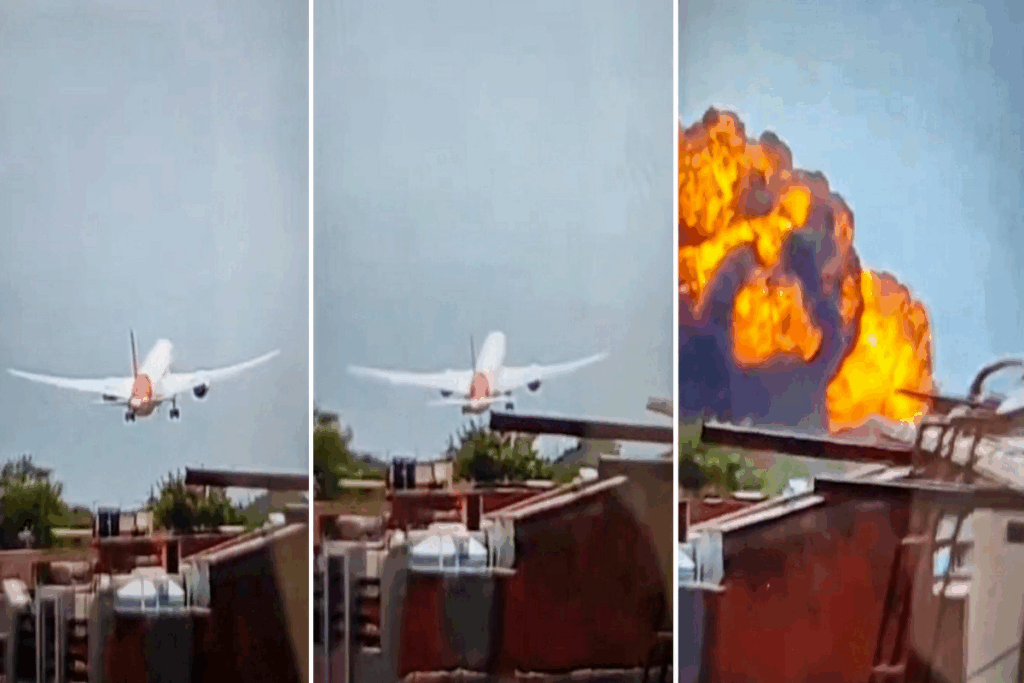
On June 12, 2025, a major aviation disaster struck India when Air India Flight AI171, a Boeing 787-8 Dreamliner carrying 242 people, crashed just minutes after takeoff from Sardar Vallabhbhai Patel International Airport in Ahmedabad. The flight, bound for London Gatwick, went down in the densely populated Meghani Nagar area, erupting in a massive fireball and sending thick black smoke over the city. Emergency services rushed to the scene, but the intensity of the fire and the chaos on the ground made rescue operations extremely challenging.
The Aircraft: Boeing 787-8 Dreamliner Explained
The Boeing 787 Dreamliner is one of the world’s most advanced commercial aircraft, designed for long-haul international flights. It uses lightweight composite materials for improved fuel efficiency and features advanced avionics and safety systems. The 787-8 variant typically seats around 242 passengers and is known for its quiet engines and ability to fly long distances without refueling.
Key technical features:
- Composite fuselage: Lighter than traditional aluminum, reduces fuel burn.
- Advanced avionics: Digital flight controls and automated safety systems.
- Slats and flaps: Movable surfaces on the wings that extend during takeoff and landing to increase lift at low speeds. Slats are on the front edge of the wing, flaps on the back. When extended, they allow the plane to take off and land at slower speeds, making these phases safer for both passengers and crew.
The Sequence of Events: What Failed and When
According to preliminary reports, the aircraft took off normally at 1:38 PM local time. Within minutes, however, the plane began to lose altitude at approximately 825 feet—well below the safe climb-out height for a heavy long-haul jet. Flightradar24 data shows that the plane started descending at a rate of 475 feet per minute after reaching just 625 feet, a clear sign that something had gone wrong with the aircraft’s ability to maintain lift and climb.
Mayday Call:
Shortly after takeoff, the pilots issued a “MAYDAY” distress call, indicating a serious emergency. After this call, all communication with air traffic control was lost134. Eyewitnesses and video footage show the plane flying at an abnormally low altitude and appearing to struggle to gain height, before crashing into the Meghani Nagar area and striking a doctors’ hostel attached to a medical college.
The Role of Flaps, Slats, and Aircraft Systems
In any takeoff, especially for a fully loaded long-haul flight, the proper deployment of slats and flaps is crucial. These surfaces extend from the wings to create extra lift at low speeds. If either system fails—due to a technical fault, pilot error, or computer malfunction—the aircraft may not generate enough lift to climb safely, especially when heavy with fuel.
How could this go wrong?
- Mechanical failure: If the slats or flaps did not deploy or retract properly, the wings would not create enough lift. This could cause the plane to lose altitude after takeoff, as appears to have happened here.
- Hydraulic or electrical failure: These systems are powered by hydraulics and electronics. A failure could prevent the pilot from controlling the wing surfaces.
- Automation or sensor error: Modern jets rely on sensors to tell the computers how to deploy these surfaces. A faulty sensor could mislead the system.
The Fuel Load: Why It Made Things Worse
Because Flight AI171 was headed to London, it was heavily fueled for the long journey—likely carrying over 20 tons of jet fuel. When the aircraft crashed, this massive fuel load ignited, causing an explosion and a fire that engulfed the wreckage and nearby buildings. Thick black smoke was visible for miles, and the fire’s intensity made it extremely difficult for firefighters to reach survivors quickly. In aviation, a heavy fuel load during takeoff is always a risk factor, as it increases the weight and the potential for catastrophic fire in the event of a crash.
Possible Causes: What Experts Are Saying
While the official investigation by India’s Directorate General of Civil Aviation (DGCA) and Air Accident Investigation Bureau (AAIB) is just beginning, several possible causes are being discussed by aviation experts:
- Engine failure: If one or both engines lost power after takeoff, the aircraft would not be able to climb. This is consistent with the rapid loss of altitude and the mayday call.
- Control surface malfunction: If the slats or flaps failed to deploy or retracted too soon, the wings would not generate enough lift, causing the plane to descend even with engines running at full power.
- Weight and balance issue: If the cargo or fuel was not properly distributed, the aircraft’s center of gravity could have been off, making it difficult to control.
- Bird strike or foreign object ingestion: Airports near urban areas are vulnerable to birds or debris entering the engines, which can cause sudden power loss.
- Pilot error or miscommunication: While less likely on a modern jet with experienced crew, human error can never be ruled out until the cockpit voice and flight data recorders are analyzed.
The Aftermath: Damage and Response
The crash site was a scene of devastation. The plane struck a hostel for doctors, with debris scattering into the dining area where residents were eating lunch. Emergency services arrived within minutes, but the fire and chaos made rescue difficult. As of the latest reports, at least 30 people have been confirmed dead, with many more injured and taken to local hospitals. The full extent of casualties is still being determined as rescue operations continue.
What Happens Next: The Investigation
The DGCA is leading the investigation, with possible assistance from Boeing technical teams and international aviation authorities. The focus will be on recovering the flight data recorders (“black boxes”), examining the wreckage for signs of mechanical failure, and analyzing air traffic control communications. The findings will be crucial for preventing similar tragedies in the future.
Conclusion: Why This Crash Matters
This Air India crash is a stark reminder of the complexity and risks of modern aviation. Even with advanced technology, a single failure—whether mechanical, electronic, or human—can lead to catastrophe, especially during the critical moments after takeoff. For passengers and the public, understanding terms like slats, flaps, fuel load, and mayday calls isn’t just technical jargon—it’s the language of safety in the skies. As the investigation unfolds, the world will be watching for answers and lessons that could save lives in the future.