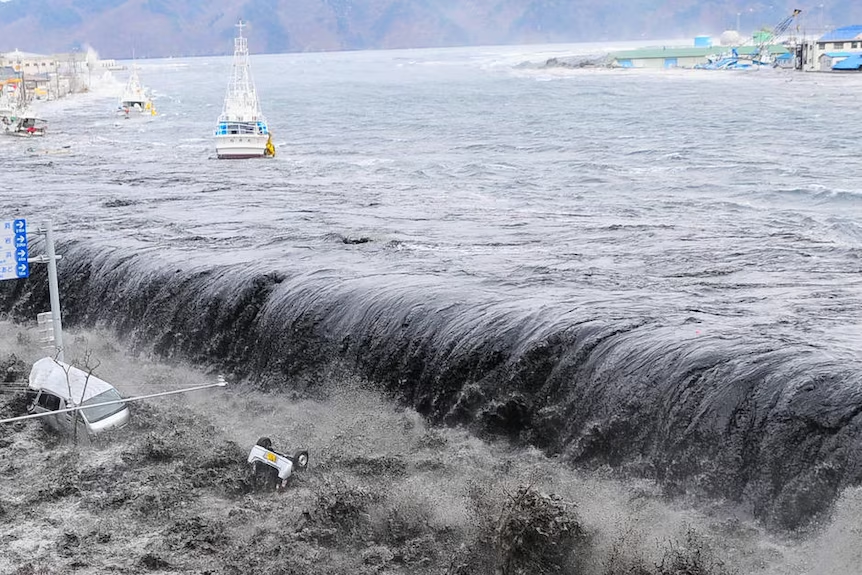
A powerful 7.4 magnitude earthquake struck off the coast of Iwate Prefecture on April 20, 2026, triggering tsunami warnings and a measured wave of about 80 centimeters along parts of northern Japan. The event, closely monitored by the Japan Meteorological Agency, once again highlights how quickly seismic shocks can ripple into coastal threats across the country.
While early warnings cautioned of waves as high as three meters, the actual tsunami observed was significantly lower. Even so, authorities treated the situation with urgency, ordering evacuations and activating emergency response systems within minutes.
What happened during the Japan earthquake and tsunami event?
At 4:53 pm local time, the earthquake struck in the Pacific Ocean, east of northern Honshu. Despite the offshore epicenter, tremors traveled far enough to shake buildings in Tokyo, hundreds of kilometers away.
Key facts at a glance
- Magnitude: 7.4
- Location: Offshore, near Iwate Prefecture
- Time: 4:53 pm local time (0753 GMT)
- Initial tsunami warning: Up to 3 meters
- Observed tsunami: Approximately 80 cm
- Impact zone: Northern coastal Japan
The gap between forecasted and actual tsunami height is not unusual. Tsunami predictions are designed to err on the side of caution, especially in densely populated coastal regions.
Why did authorities issue a high tsunami warning?
Tsunamis are shaped by a complex mix of variables that can’t be fully known in the first few minutes after an earthquake. The Japan Meteorological Agency bases its early warnings on seismic data, ocean depth, and fault movement patterns.
Three reasons warnings often exceed actual wave height
- Limited early data: Initial readings rely on seismic waves, not direct ocean measurements
- Worst-case modeling: Authorities prioritize safety over precision
- Wave amplification risks: Coastal geography can dramatically increase wave height in certain areas
How did Japan respond so quickly?
Japan’s disaster response system is often described as one of the fastest and most coordinated in the world. Within minutes of the quake, alerts were pushed to mobile devices, television broadcasts, and public loudspeaker systems.
The office of Prime Minister Sanae Takaichi activated a crisis management team, urging residents to move to higher ground immediately.
What evacuation guidance looked like
- Move away from coastlines and riverbanks
- Head to designated evacuation buildings or elevated terrain
- Stay put until official warnings are lifted
- Expect multiple waves, not just one surge
This layered communication system is designed to minimize hesitation, which can be deadly in tsunami scenarios where minutes matter.
Why is Japan so prone to earthquakes?
Japan sits atop the Pacific Ring of Fire, a vast horseshoe-shaped belt where several tectonic plates collide and slide past each other.
The science behind the risk
- The Pacific Plate is subducting beneath the Okhotsk Plate near northern Japan
- Tectonic stress builds over time and releases suddenly as earthquakes
- Undersea quakes can displace massive volumes of water, triggering tsunamis
Japan experiences roughly 1,500 earthquakes annually, accounting for about 18 percent of global seismic activity. Most are minor, but even moderate quakes can have outsized effects depending on depth and location.
How does this compare to past disasters?
Any major earthquake in Japan inevitably invites comparisons to the 2011 Tōhoku earthquake and tsunami, one of the deadliest natural disasters in modern history.
Key differences from 2011
- Magnitude: 9.0 in 2011 vs. 7.4 in 2026
- Tsunami height: Up to 40 meters in 2011 vs. under 1 meter observed now
- Impact: Massive loss of life and infrastructure damage in 2011; limited reported damage so far in 2026
The 2011 disaster also triggered the Fukushima nuclear crisis, reshaping global nuclear safety debates. Consider linking to your archive coverage of Fukushima’s long-term environmental and policy impact here.
What does an 80 cm tsunami actually do?
An 80-centimeter wave may not sound dramatic, but tsunami waves behave differently from regular ocean waves. Instead of breaking dramatically, they surge inland like a fast-moving flood.
Real-world impact of smaller tsunamis
- Flooding in low-lying coastal areas
- Strong currents that can sweep away vehicles or debris
- Damage to ports, fishing infrastructure, and seawalls
Think of it less as a crashing wave and more as a sudden, forceful rise in sea level with momentum behind it.
What should residents and travelers know?
Even when the immediate danger passes, authorities emphasize caution. Tsunami waves often arrive in multiple pulses, and the largest wave is not always the first.
Safety basics during tsunami alerts
- Do not return to coastal areas prematurely
- Monitor official updates from the Japan Meteorological Agency
- Avoid rivers and estuaries, where water can surge inland
- Follow local evacuation protocols strictly
Why this event still matters globally
Even with limited damage, this earthquake serves as a reminder of how interconnected seismic risks are across the Pacific. Tsunami warnings can extend across borders, affecting countries thousands of miles away.
It also underscores the importance of early warning systems, urban planning, and public awareness. Japan’s rapid response likely prevented casualties, offering a model for other earthquake-prone regions.
TL;DR
- A 7.4 magnitude earthquake struck off Iwate Prefecture on April 20, 2026
- Tsunami warnings initially predicted waves up to 3 meters
- Actual waves measured around 80 cm
- Japan’s rapid response helped minimize risk
- The event highlights ongoing seismic threats along the Pacific Ring of Fire