
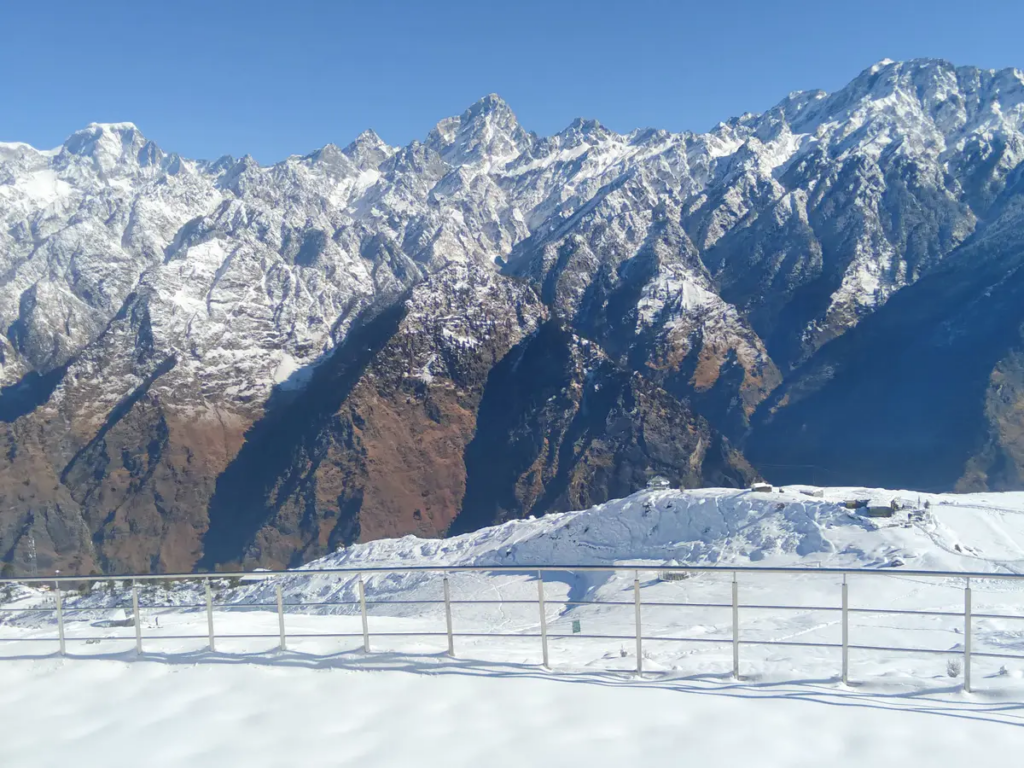
A dramatic decline in Himalayan snow cover is triggering fresh alarms about the future of water security for nearly two billion people across Asia. According to a new report from the International Centre for Integrated Mountain Development, snow persistence across the Hindu Kush Himalaya has fallen to its lowest level in more than two decades, intensifying concerns over climate change, glacier loss, and long-term water shortages.
The findings are more than a climate statistic. They point to growing pressure on agriculture, hydropower, drinking water systems, and regional stability across some of the world’s most densely populated areas.
What does the new Himalayan snow report reveal?
The latest HKH Snow Update 2026 presents one of the starkest warnings yet about changing conditions in the region often called “Asia’s water tower.”
Snow cover is at a historic low
The report found that snow persistence between November 2025 and March 2026 was:
- 27.8% below the long-term average
- The lowest level recorded in 24 years
The Hindu Kush Himalaya stretches across Afghanistan, Pakistan, India, Nepal, Bhutan, China, and Myanmar, feeding major river systems that sustain billions of people.
Why snow persistence matters
Seasonal snow functions like a natural reservoir. Snow accumulates during winter and melts gradually through spring and summer, providing stable water flow when rainfall is low.
That meltwater supports:
- Irrigation systems
- Hydropower generation
- Urban drinking water supply
- Ecosystems and wetlands
When snow levels decline sharply, downstream regions face a greater risk of drought and unstable water availability.
Which regions were hit hardest?
The impact was uneven, with some basins experiencing severe deficits while others saw temporary relief.
Mekong basin saw the steepest drop
According to the report:
- The Mekong basin recorded snow persistence 59.5% below normal
- The Tibetan Plateau experienced a 47.4% deficit
These are alarming figures because both regions play a major role in sustaining agriculture and freshwater systems across Asia.
A rare exception in the Ganges basin
The Ganges River Basin recorded snow persistence:
- 16.3% above normal
This provided short-term relief for parts of northern India. But scientists caution that one above-average season does not reverse the larger trend.
In fact:
- This was still the fourth consecutive winter with below-normal snowfall across the broader region
- Since 2003, the HKH has experienced 14 winters with major snowfall deficits
Why are glaciers and snowpacks so important?
The Himalayan system acts as a giant climate-regulated water bank.
Asia’s rivers depend on it
The HKH region feeds many of Asia’s major rivers, including:
- Ganges
- Indus
- Brahmaputra
- Mekong
- Yangtze
These rivers support:
- Food production
- Industrial activity
- Electricity generation
- Daily water access for cities and villages
Nearly one-fourth of annual runoff in these basins comes from seasonal snow.
What happens when snow declines?
Reduced snowpack creates a chain reaction:
- Less water stored naturally during winter
- Faster spring melt
- Reduced summer river flow
- Greater drought stress during hot months
This can destabilize farming cycles and increase groundwater extraction, worsening long-term sustainability.
How is climate change affecting the Himalayas?
The report reinforces what climate scientists have warned for years: the Himalayas are warming rapidly.
Glaciers are melting faster than before
Researchers say glaciers in the region are now melting at nearly double the rate observed before 2000.
That acceleration has several consequences:
- Increased risk of glacial lake outburst floods
- More erratic river flows
- Reduced long-term freshwater storage
At first, glacier melt can temporarily increase river flow. But over time, shrinking glaciers mean less water available during dry periods.
Why the Himalayas are especially vulnerable
Mountain ecosystems are highly sensitive to temperature changes. Even small warming shifts can dramatically alter:
- Snowfall patterns
- Ice accumulation
- Seasonal melt timing
This makes the HKH one of the world’s most climate-sensitive regions.
What could this mean for India and South Asia?
For countries like India, Pakistan, Nepal, and Bangladesh, the stakes are enormous.
Agriculture faces rising uncertainty
Millions of farmers rely on predictable river systems fed by Himalayan snowmelt.
Declining snow cover could lead to:
- Lower crop yields
- Water stress during summer
- Increased irrigation competition
Cities may also face pressure
Urban areas already struggling with water management could experience:
- Greater seasonal shortages
- Increased dependence on groundwater
- Rising costs of water infrastructure
The issue is not just environmental. It is economic and geopolitical.
What solutions are scientists recommending?
Experts say adaptation is still possible, but delays will make the crisis harder to manage.
Key recommendations from researchers
Scientists are calling for:
- Improved early warning systems
- Better cross-border water coordination
- Smarter groundwater management
- Expanded climate monitoring networks
Why regional cooperation matters
The rivers originating in the HKH cross multiple national borders. That means climate stress in one region can quickly affect neighboring countries.
Future water security will increasingly depend on:
- Shared data systems
- Coordinated drought planning
- Long-term climate adaptation strategies
Why this report matters globally
The Himalayan snow crisis is not a regional footnote. It is one of the clearest signals of how climate change can reshape essential natural systems.
The world often focuses on sea-level rise and extreme weather. But shrinking snowpacks may become just as disruptive because they affect food, electricity, migration, and economic stability simultaneously.
For billions of people, the Himalayas are not distant mountains. They are the source of everyday survival.
TL;DR
- Himalayan snow persistence has fallen to its lowest level in 24 years
- The HKH region recorded snow levels 27.8% below average
- The Mekong basin saw the sharpest decline at nearly 60% below normal
- Glaciers are melting at almost double their pre-2000 rate
- Nearly two billion people depend on water systems fed by Himalayan snow and ice
- Scientists are warning of worsening drought and water security risks across Asia