
Quick Summary
A probe into the December Jeju Air crash in South Korea, the country’s deadliest aviation disaster, has found “clear evidence” that pilots shut off the less-damaged engine after a bird strike. Families and unions are pushing back against the findings, demanding a broader examination of contributing factors. This article explores what happened, key investigation findings, and why the debate matters.
What Happened in the Jeju Air Crash?
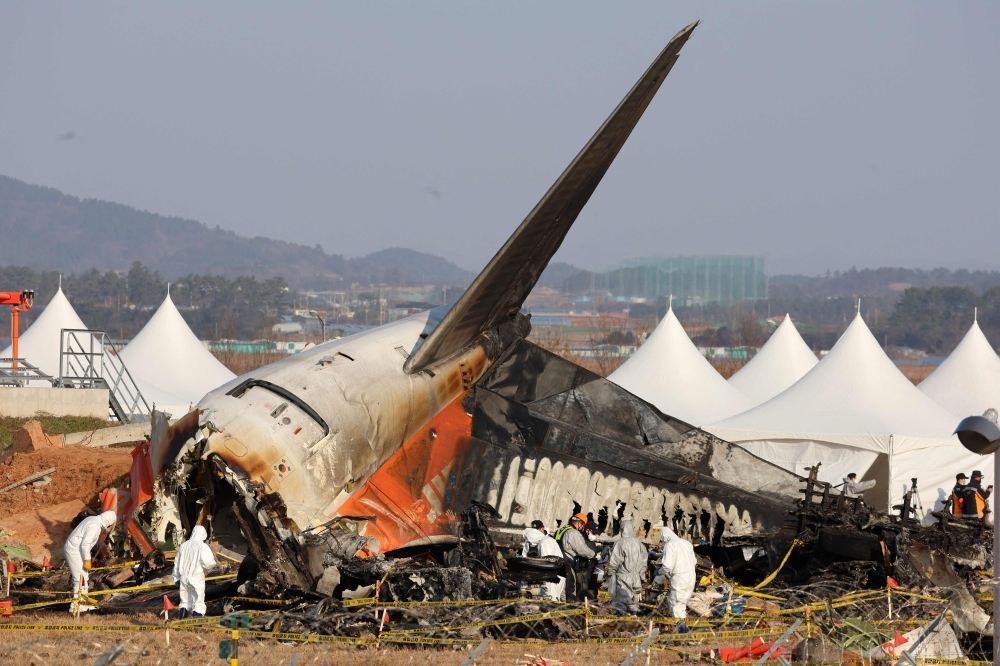
On December 29, 2024, a Jeju Air Boeing 737-800 flying from Bangkok crashed on landing at Muan Airport, South Korea. Out of 181 passengers and crew, only two survived, making it the deadliest crash on South Korean soil to date.
Key Timeline:
- Prior to landing, the jet encountered a bird strike.
- Both engines ingested duck remains, with more damage found in the right engine.
- During emergency actions, pilots reportedly shut down the left (less damaged) engine.
- With one engine out, the plane overshot the runway, crashed into a navigation equipment embankment, and caught fire.
What Does the Probe Reveal About the Shut-Off Engine?
The Core Finding
South Korean investigators, supported by cockpit voice recorders, flight data, and an engine switch discovered in the wreckage, say there is “clear evidence” that the pilots shut off the left engine instead of the more-damaged right engine after the bird strike.
- The right engine had sustained severe damage from the bird strike.
- The left engine, still operational, was turned off—leaving the plane without full thrust as it attempted an emergency landing.
A government source said post-crash exams revealed no defects in either engine prior to the bird impact.
Consider Adding a Visual
An infographic illustrating engine damage and the switch-off sequence would help clarify the technical scenario for readers.
Why Are Families and Pilots’ Unions Objecting?
Immediate Backlash
The investigation’s interim findings were supposed to be released to the public, but strong objections from victims’ families—who were briefed privately beforehand—led to the report’s cancellation.
Concerns Raised:
- The findings allegedly place undue blame on the pilots without fully exploring other contributing causes.
- Families and unions argue that infrastructure—specifically, the embankment the plane struck—needs examination as a factor in the high fatality count.
- Pilots’ unions claim the investigation downplays the presence of bird remains in both engines and lacks scientific analysis proving the aircraft could have landed safely on a single engine.
The families’ lawyers articulate a need for a more “just and transparent inquiry,” cautioning that public statements could prematurely frame the tragedy as clearly caused by pilot error before all evidence is released and weighed.
Example Comparison:
Similar air accidents, such as the Kegworth air disaster (UK, 1989), involved crews shutting down the wrong engine, highlighting the importance of crew training and cockpit resource management under pressure.
How Are Investigators Responding?
South Korea’s Aviation and Railway Accident Investigation Board (ARAIB) is leading a multi-agency probe, including the U.S. NTSB and France’s BEA. The investigation uses data from:
- Cockpit voice and flight data recorders.
- Engine disassembly and forensic analysis abroad.
- Wreckage site inspections at Muan Airport.
Authorities have said their conclusions are supported by “clear evidence and backup data,” but they have struck a cautious note, noting a final report is due within a year by international standards.
What Do Pilots’ Unions and Victims’ Families Want?
Calls for Broader Accountability
- Inclusion of organizational and infrastructure issues—not solely pilot actions.
- Examination of airport safety structures (such as concrete embankments) that may have magnified losses.
- Review of Jeju Air and regulatory risk management practices, especially for wildlife hazards near airports.
In May, bereaved families filed a complaint naming 15 people, including the transport minister, airline chief, and airport officials—as potentially responsible for failures in risk management and safety oversight.
Why Does This Jeju Air Crash Investigation Matter?
Aviation disasters nearly always stem from multiple, compounding factors. If investigations focus narrowly on actions inside the cockpit, broader systemic vulnerabilities can remain hidden—and uncorrected.
Key Reasons for Broad Inquiry:
- Ensuring future safety reforms address infrastructure, policy, and emergency procedures.
- Balancing the quest for accountability with the need for comprehensive truth.
- Maintaining public trust in official investigations.
The Path Forward
- A final, official report is expected within a year of the crash.
- Families and unions continue to call for transparency, accountability, and a multi-factor analysis that looks beyond pilot actions.
- Regulatory bodies are under pressure to review airport infrastructure safety practices nationwide.