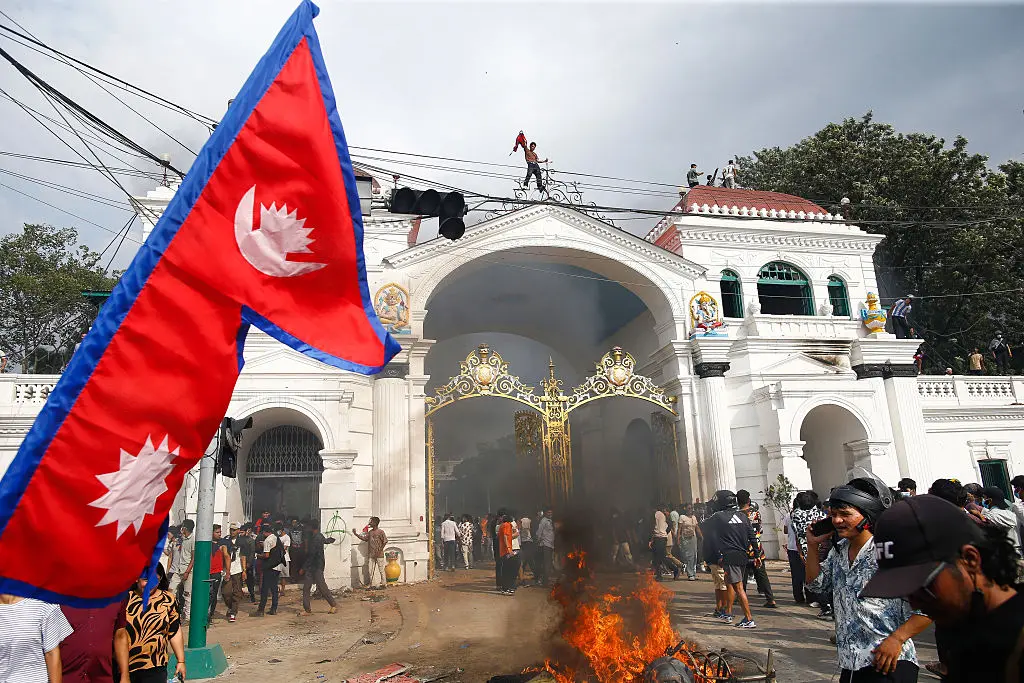
Nepal is reeling from one of the largest waves of prison escapes in its history, with more than 15,000 inmates fleeing from over two dozen jails during violent nationwide protests. But in an unusual twist, one prisoner in the western city of Dhangadhi chose to return—literally knocking on the prison gate to be let back inside.
How did the mass jailbreaks happen?
The unrest began as Gen Z-led protests spread across Nepal, triggered by anger at corruption and the government’s decision to ban popular social media platforms. As demonstrations intensified, protesters stormed multiple prisons, setting administrative buildings on fire and smashing open gates.
By Wednesday evening:
- Over 15,000 inmates had fled from more than 25 jails, according to The Kathmandu Post.
- Major breakouts included 3,300 inmates from Kathmandu Valley’s Central Jail, 1,400 from Lalitpur’s Nakkhu Prison, and 1,100 from Dillibazar Prison.
- In western Nepal, the Banke Juvenile Reform Centre (122 inmates) and Banke District Prison (436 inmates) also saw mass escapes.
At least eight prisoners died during clashes with security forces. The Nepalese army said Thursday it has recaptured around 200 fugitives, a small fraction of those on the run.
The prisoner who came back
At Dhangadhi Jail in Kailali district, 697 prisoners were housed before the clashes. When protesters stormed the compound, all but five inmates fled. Among them was one prisoner who, after a night of freedom, reconsidered his decision.
The man, whose identity has not been disclosed, arrived at the prison gate the next morning with two family members, requesting that the guards let him back in.
Why did he return?
According to relatives, the prisoner feared harsher consequences if caught later:
- He worried about being charged with jailbreaking, which could add years to his sentence.
- He hoped that by surrendering voluntarily, a future government might view him as reformed and even grant a pardon.
- As one family member told NDTV: “The next government might see him as a reformed citizen and grant a pardon.”
At first, prison guards ignored his calls from outside the locked gate. Eventually, an officer agreed to lodge him back inside.
Why this matters for Nepal’s crisis
The jailbreaks underscore the scale of the chaos gripping Nepal after the resignation of Prime Minister KP Sharma Oli earlier this week. With the government dissolved, the army has imposed curfews, but security forces are stretched thin trying to manage protests, restore order, and hunt down escaped prisoners.
The prison crisis compounds a political breakdown already fueled by:
- Generational anger over inequality and corruption.
- Public outrage at political elites and their families’ lavish lifestyles.
- A ban on social media platforms, seen as a crackdown on free expression.
For ordinary Nepalis, the return of a single prisoner is a rare story of restraint in a week dominated by violence and lawlessness.