
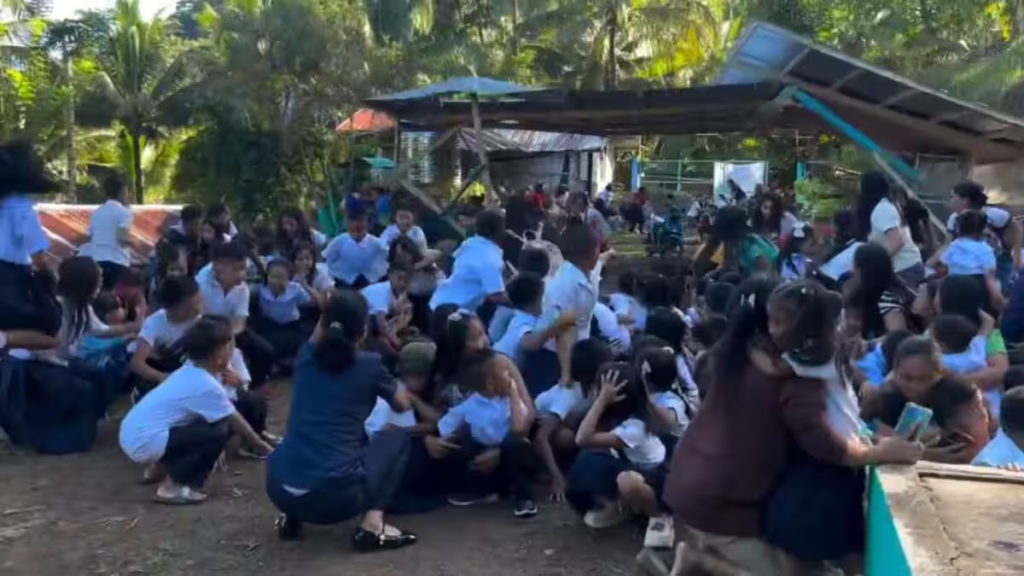
A powerful earthquake that struck the southern Philippines on June 8 left scenes of panic, destruction, and extraordinary courage. Among the most widely shared images from the disaster was a video showing teachers rushing to protect frightened schoolchildren as classrooms shook violently during the tremors.
The 7.8-magnitude offshore earthquake has killed at least 16 people and injured more than 200, according to the Associated Press. Authorities have also warned of aftershocks and tsunami risks as emergency teams assess damage across affected regions.
While collapsed structures and damaged infrastructure have dominated headlines, the emotional footage from an elementary school has become a powerful symbol of resilience amid the disaster.
What happened during the Philippines earthquake?
The earthquake struck off the southern coast of the Philippines on Monday morning, sending strong tremors across several provinces.
Authorities said the quake was powerful enough to trigger structural damage in some areas and generate tsunami waves along nearby coastlines.
Emergency agencies were immediately mobilized as reports of injuries, damaged buildings, and evacuations began emerging from affected communities.
The earthquake was later followed by tsunami waves measuring approximately one meter (three feet) along some coastal areas.
Why is the school video attracting global attention?
One of the most widely shared videos from the disaster came from Mahayahay Elementary School in Davao Occidental.
The footage reportedly captured students gathered during a morning prayer session when the earthquake struck.
As the building shook, children could be seen crying and scrambling for safety while teachers rushed to calm and protect them.
Moments later, a nearby structure appeared to collapse as the shaking continued.
Despite the frightening scenes, local reports indicated that no injuries were recorded at the school.
A glimpse into disaster preparedness
The video has resonated with viewers not only because of the fear visible on the children’s faces but also because of the swift response from teachers.
Disaster preparedness drills are common in earthquake-prone countries such as the Philippines, Japan, and New Zealand.
Safety training can help reduce panic and improve survival during major seismic events.
How severe was the earthquake?
A magnitude 7.8 earthquake is considered a major seismic event.
Earthquakes of this strength can cause:
- Significant structural damage
- Building collapses
- Landslides
- Coastal flooding from tsunamis
- Long-lasting aftershocks
The actual impact often depends on factors such as:
- Depth of the earthquake
- Distance from populated areas
- Building quality
- Local geological conditions
Seismologists described the June 8 earthquake as one of the strongest to hit the region in recent years.
Which areas were affected?
The strongest impacts were reported in southern parts of the Philippines.
General Santos City
Authorities reported damage to buildings and infrastructure in General Santos City, one of the largest urban centers in the region.
Coastal communities
Emergency warnings were issued for residents living near shorelines due to concerns about tsunami activity.
People in vulnerable areas were advised to move to higher ground as a precaution.
Regional effects
Smaller tsunami waves were also observed in neighboring countries and territories, including:
- Japan
- Indonesia
- Palau
While these waves were relatively modest, they highlighted the regional reach of the earthquake.
What measures are authorities taking?
Philippine emergency agencies activated disaster response protocols shortly after the earthquake.
Evacuations
Authorities initiated evacuations across multiple provinces.
Residents in coastal communities were instructed to leave low-lying areas and seek safer locations.
Search and rescue operations
Emergency responders have been deployed to:
- Assess structural damage
- Search for trapped individuals
- Deliver medical assistance
- Coordinate temporary shelters
Monitoring aftershocks
Seismologists continue monitoring the region for aftershocks, which often follow major earthquakes and can pose additional risks.
Why is the Philippines vulnerable to earthquakes?
The Philippines sits along the Pacific Ring of Fire, one of the world’s most active seismic zones.
This region contains numerous tectonic plate boundaries where earthquakes and volcanic eruptions occur frequently.
As a result, the country experiences:
- Thousands of earthquakes each year
- Frequent volcanic activity
- Elevated tsunami risks
Most earthquakes are too small to be felt, but larger events can cause significant damage and loss of life.
How did people react online?
The school footage generated widespread reactions on social media.
Many users praised the teachers for their quick actions and composure during the crisis.
Others expressed concern for the emotional impact such experiences can have on children.
Several comments focused on the importance of emergency preparedness and the role educators play during disasters.
The video quickly spread across multiple platforms, becoming one of the defining images of the earthquake’s human impact.
What happens next?
In the coming days, authorities will focus on:
- Damage assessments
- Recovery efforts
- Infrastructure inspections
- Continued tsunami monitoring
- Support for displaced residents
The death toll and injury count may also change as rescue and assessment operations continue.
For many communities, recovery will extend well beyond the immediate emergency response.
Why this story matters
Natural disasters are often measured in statistics, but moments like those captured at Mahayahay Elementary School reveal the human side of such crises.
The images of teachers protecting terrified students serve as a reminder that resilience during disasters often comes from ordinary people making extraordinary decisions in moments of danger.
As the Philippines begins recovery efforts, those scenes have become a powerful symbol of courage amid one of the country’s most significant seismic events of the year.
TL;DR
- A 7.8-magnitude earthquake struck the southern Philippines on June 8.
- At least 16 people have been reported dead and more than 200 injured.
- A viral video showed teachers protecting frightened students during the quake.
- The footage came from Mahayahay Elementary School in Davao Occidental.
- A tsunami of about one meter was reported along nearby coastlines.
- Authorities launched evacuations and emergency response operations across multiple provinces.
- The Philippines remains highly vulnerable to earthquakes because of its location on the Pacific Ring of Fire.