
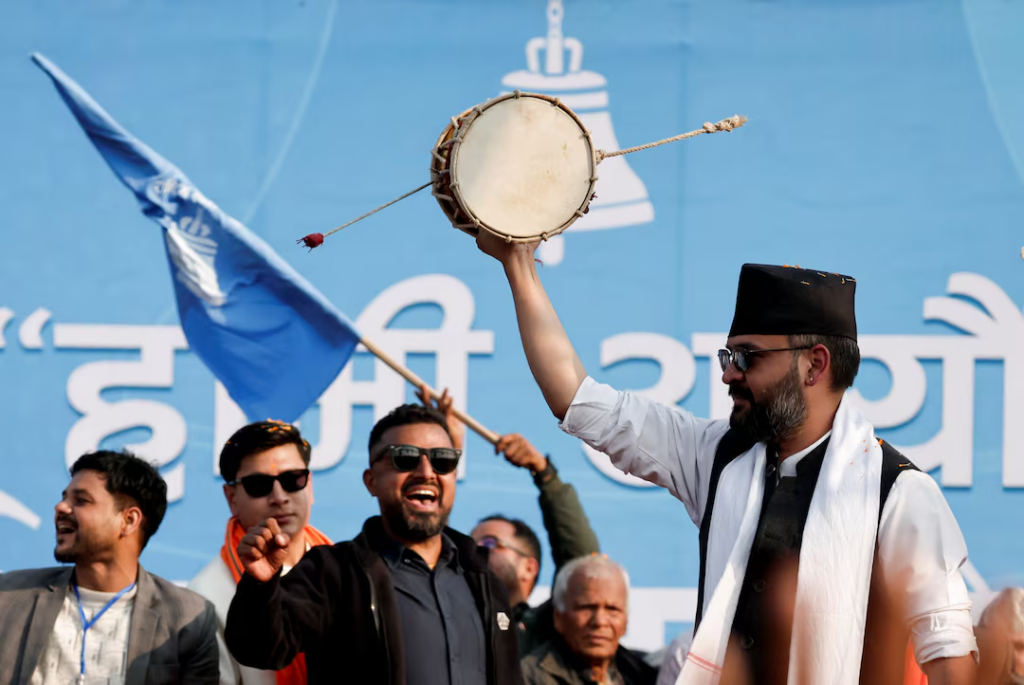
Balendra Shah, once known for his rap lyrics and outsider politics, has taken the oath as Nepal’s Prime Minister, marking one of the most unconventional political ascents in South Asia. At 35, he becomes the youngest leader to hold the office, riding a wave of youth-driven change that reshaped the country’s political landscape.
His rise is not just a personal milestone. It reflects a broader shift in Nepal’s politics, where frustration with traditional parties has opened the door for new voices and movements.
Who is Balendra Shah, Nepal’s new prime minister?
Balendra Shah, often called “Balen,” first gained recognition as a rapper before pivoting to public life. Over time, he transformed from a cultural figure into a political force.
From music to municipal leadership
Before stepping onto the national stage, Shah built his political credibility at the local level. His earlier success in public office helped him craft an image of a reformist outsider who could challenge entrenched systems.
A symbol of generational change
Shah’s appeal lies largely with younger voters. His communication style, shaped by his background in music and digital culture, resonates with a demographic that has long felt sidelined in Nepal’s politics.
How did Balendra Shah come to power?
Shah’s victory follows a period of significant political upheaval in Nepal.
After the uprising: a political reset
The election came after a youth-led uprising that toppled the previous government, creating space for new leadership. Voters, particularly younger ones, turned toward alternatives to traditional political parties.
The rise of the Rastriya Swatantra Party
Shah’s party, the Rastriya Swatantra Party (RSP), secured the largest mandate in Nepal’s modern electoral history.
Key factors behind the win:
- Strong anti-establishment messaging
- Focus on governance reform and accountability
- Mobilization of youth voters and first-time participants
This was not just an electoral victory. It was a political reset.
What happened during the swearing-in ceremony?
The oath ceremony blended Nepal’s deep-rooted traditions with the arrival of a new political era.
A ceremony steeped in symbolism
Shah was sworn in by President Ram Chandra Poudel at Sheetal Niwas, the presidential residence.
The event featured:
- Chanting Hindu priests
- Buddhist monks in red robes
- A formal oath pledging loyalty to the constitution
Shah’s attire—an all-black outfit paired with his signature dark sunglasses, stood out, subtly reinforcing his unconventional persona even in a formal setting.
What does Balendra Shah’s leadership mean for Nepal?
Shah’s ascent carries multiple layers of significance, both symbolic and practical.
1. The youngest Prime Minister in Nepal’s history
At 35, Shah represents a generational shift in leadership. His rise signals that political power in Nepal is no longer confined to older, established figures.
2. A historic first for the Madheshi community
Shah is the first Prime Minister from the Madheshi community, marking a milestone in representation for a group that has historically sought greater political inclusion.
3. A test for outsider politics
Like many outsider leaders globally, Shah now faces the challenge of converting popularity into policy.
Key expectations include:
- Tackling corruption
- Improving governance efficiency
- Delivering economic stability
How are regional leaders reacting?
Shah’s appointment has drawn attention beyond Nepal’s borders, particularly in India.
Narendra Modi’s message
Narendra Modi congratulated Shah and expressed optimism about strengthening bilateral ties.
In his message, Modi emphasized:
- Continued cooperation between India and Nepal
- Strengthening diplomatic and economic relations
- Mutual benefits for both nations
Given the close cultural and economic ties between the two countries, Shah’s leadership will be closely watched in New Delhi.
What challenges lie ahead for Shah?
The transition from disruptor to head of government is rarely smooth.
Immediate hurdles
Shah must quickly address:
- Political stability in a post-uprising environment
- Public expectations for rapid reform
- Balancing populist promises with institutional realities
Long-term tests
Sustaining momentum will require:
- Building consensus across political factions
- Delivering measurable governance outcomes
- Maintaining credibility with a demanding youth base
Why Balendra Shah’s rise matters globally
Shah’s journey reflects a broader global pattern: the rise of unconventional leaders fueled by public dissatisfaction with traditional systems.
From entertainers to activists, new-age politicians are:
- Leveraging digital platforms
- Building direct connections with voters
- Challenging institutional norms
Nepal now becomes a key case study in whether such leaders can transition from disruption to durable governance.
TL;DR
- Balendra Shah, a former rapper, is now Nepal’s Prime Minister at 35
- His party won a historic mandate after a youth-led uprising
- He is the first Madheshi leader to hold the office
- His leadership represents a major political shift in Nepal
- The real test begins as he moves from outsider to governing authority