
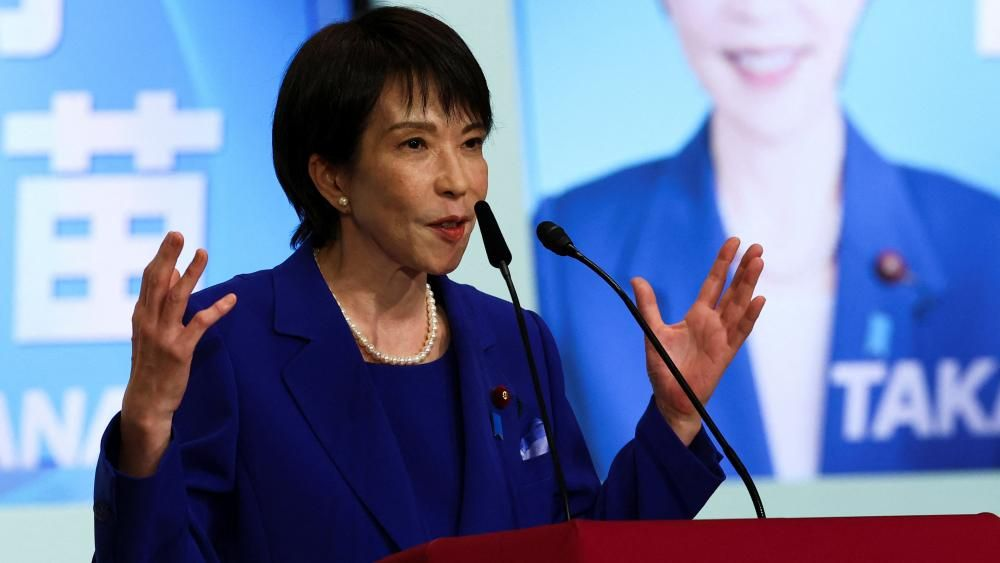
Japan is preparing for a historic political shift as Sanae Takaichi, the newly elected leader of the Liberal Democratic Party (LDP), is set to become the country’s first female prime minister. At 64, she has broken through a political ceiling that has persisted for decades in a country where women’s representation in government remains strikingly low.
But despite the symbolic breakthrough, Takaichi’s ultra-conservative views, deep ties to male party heavyweights, and resistance to gender equality reforms have left many Japanese women questioning whether her leadership will truly advance their rights.
Who is Sanae Takaichi?
- Early career: First elected to parliament in 1993 from her hometown of Nara.
- Political roles: She has held ministerial positions in internal affairs, economic security, and gender equality.
- Leadership milestone: On October 4, 2025, she became the first female president of the LDP, a party that has governed Japan for most of the postwar period.
- Influences: She admires Margaret Thatcher and has championed former Prime Minister Shinzo Abe’s conservative vision.
Beyond politics, Takaichi has an unconventional past: she was once a heavy-metal drummer and motorbike enthusiast, an image that contrasts sharply with her traditionalist political views.
Why are women not celebrating her rise?
In a nation ranked among the lowest in global gender equality indices, Takaichi’s rise could have been seen as a breakthrough moment. Yet many women remain unconvinced.
1. Limited representation in politics
- Women account for just 15% of Japan’s lower house, the more powerful chamber of parliament.
- Only two of Japan’s 47 prefectural governors are women, underscoring systemic underrepresentation.
- Female lawmakers within the LDP often receive minor roles and face barriers when pushing for diversity or equality.
2. Conservative views on women’s roles
Takaichi has consistently opposed reforms aimed at improving women’s status in society. Among her positions:
- Rejecting legal changes that would allow married couples to keep separate surnames.
- Opposing same-sex marriage and maintaining male-only imperial succession.
- Supporting the belief that women should serve primarily as mothers and wives.
These stances align more closely with traditional male-dominated politics than with feminist aspirations.
3. Loyalty to party power brokers
Critics fear her reliance on LDP’s male heavyweights will limit her ability—or willingness—to challenge entrenched inequalities. Instead of driving reform, she may reinforce the party’s traditional structures.
Has she ever advocated for women’s issues?
Despite her conservative positions, Takaichi has occasionally acknowledged challenges unique to women. She has spoken publicly about experiencing menopausal symptoms and urged better education for men on female health issues to improve workplace and school environments.
However, such statements are rare, and her broader record suggests limited support for systemic reforms on gender equality.
What are her key political positions?
Beyond gender issues, Takaichi is known for her hawkish, nationalist policies and strong economic stances:
- Foreign policy: She is a China hawk and regularly visits the Yasukuni Shrine, a memorial seen as controversial in South Korea and China due to its wartime associations.
- Defense: Advocates for a stronger military and tougher security measures.
- Economy: Supports increased fiscal spending to boost growth and backs nuclear fusion research and cybersecurity advancements.
- Immigration: Calls for stricter immigration controls, aligning with her nationalist outlook.
- Political alliances: While cautious about the LDP’s coalition with the moderate Komeito party, she has shown openness to working with far-right groups.
Why does her leadership matter?
Sanae Takaichi’s ascent is historic—Japan has never had a female prime minister in its postwar history. Her victory underscores both the gradual opening of opportunities for women in politics and the persistence of male-dominated party structures that enabled her rise.
Yet, the concerns raised by women’s groups and political analysts highlight a paradox: her leadership may mark a symbolic milestone without delivering substantive change for gender equality.
If her policies continue to prioritize nationalism and conservative values over reform, she risks becoming a figurehead of representation rather than a driver of transformation.
TL;DR
- Sanae Takaichi, 64, is set to become Japan’s first female prime minister after winning the LDP leadership.
- Despite the milestone, women are skeptical due to her ultra-conservative views and loyalty to male power brokers.
- She opposes reforms such as same-sex marriage, separate surnames for married couples, and female succession in the imperial line.
- Known for hawkish policies on China and strong nationalist positions, she supports military expansion, nuclear fusion research, and stricter immigration.
- Her leadership represents a symbolic breakthrough but may not deliver real progress on gender equality.