
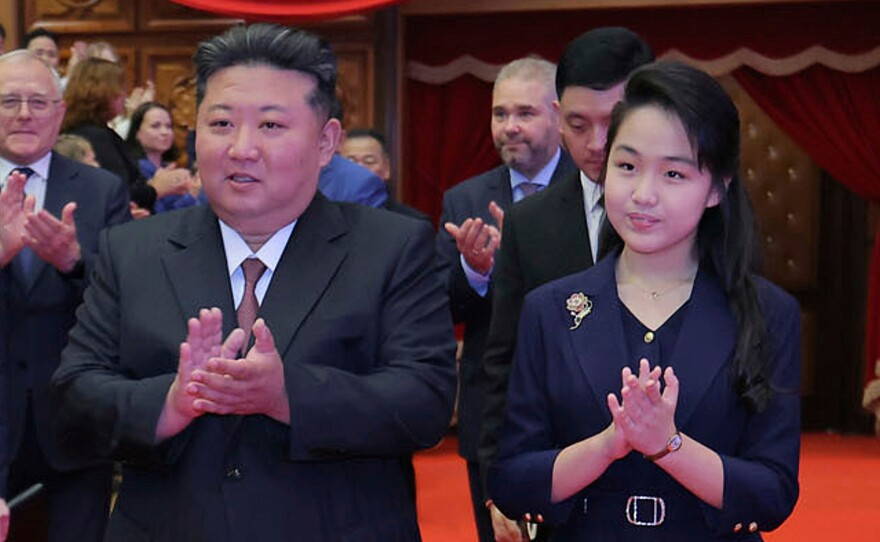
Speculation about Kim Ju-ae has moved from rumor to serious geopolitical discussion. South Korea’s intelligence agency now believes the teenage daughter of North Korean leader Kim Jong Un may be entering what it calls a “successor-designate stage.”
If accurate, that assessment signals more than palace intrigue. It could mark the first time North Korea prepares a female heir to the Kim dynasty—an unprecedented shift in one of the world’s most rigid political systems.
So who is Kim Ju-ae, and what does her growing visibility really mean?
Who Is Kim Ju-ae?
Kim Ju-ae is widely believed to be the second child of Kim Jong Un. South Korean intelligence estimates she was born in 2013, making her around 13 years old.
She first appeared publicly in November 2022 at a long-range missile test. Since then, her appearances have steadily increased at weapons launches, military parades, factory visits, and major state ceremonies.
North Korean state media has referred to her as
- The leader’s “most beloved” child
- A “respected” daughter
- In some reports, a title translated as “General Morning Star”
Notably, state media rarely uses her name directly. The name “Kim Ju-ae” became widely known after former NBA player Dennis Rodman claimed in 2013 that he had held Kim Jong Un’s baby daughter during a visit to Pyongyang.
What We Know and Don’t Know
Confirmed details about Kim Ju-ae remain limited. Intelligence officials in Seoul believe Kim Jong Un has:
- An older son
- Kim Ju-ae (believed to be the second child)
- A younger third child
However, North Korea has never officially confirmed the children’s identities or birth order.
This uncertainty is intentional. In Pyongyang, ambiguity is often part of the political strategy.
Why Is South Korea Calling Her a “Successor-Designate”?
According to lawmakers briefed by South Korea’s National Intelligence Service (NIS), the agency now believes Kim Ju-ae may be transitioning from “successor training” to a “successor-designate stage.”
That shift in terminology matters.
“Training” suggests preparation among several possibilities. “Successor-designate” implies narrowing options—and potentially signaling to elites where loyalty should flow.
The timing is also significant. North Korea is preparing for a major conference of the Workers’ Party of Korea, where Kim Jong Un is expected to outline five-year policy priorities. If Kim Ju-ae appears before thousands of party delegates, it would reinforce her elevated status.
Why Does Her Public Image Matter So Much?
In North Korea, symbolism is policy.
From Missile Tests to Mausoleum Visits
One of Kim Ju-ae’s most striking appearances came on New Year’s Day at the Kumsusan Palace of the Sun. The site houses the embalmed bodies of her grandfather, Kim Jong Il, and great-grandfather, Kim Il Sung.
That visit was more than ceremonial. It visually linked her to the lineage that has ruled North Korea since 1948.
Other carefully staged appearances include:
- Standing beside her father during intercontinental ballistic missile tests
- Attending military parades with senior generals
- Sitting front row at cultural performances
- Visiting industrial facilities tied to defense production
Each setting reinforces a message: she is associated with military strength, party authority, and dynastic continuity.
A Long-Term Loyalty Strategy
Kim Jong Un himself was publicly designated successor in his mid-20s and assumed power abruptly after Kim Jong Il died in 2011. He had limited time to build independent loyalty within the military and party elite.
By contrast, Kim Ju-ae’s early exposure suggests a different approach:
- Gradual normalization of her public role
- Early introduction to senior officials
- Long runway to cultivate elite support
If this is the plan, it reflects lessons learned from Kim Jong Un’s own succession experience.
Would a Female Leader Break North Korean Tradition?
Since North Korea’s founding, power has passed strictly through male members of the Kim family:
- Kim Il Sung
- Kim Jong Il
- Kim Jong Un
A female successor would represent a historic shift.
North Korea remains socially conservative and male-dominated at senior military levels. Early skepticism from South Korean analysts centered on whether a woman could realistically command elite loyalty in such a system.
Yet two counterpoints complicate that assumption:
- The Kim family’s bloodline matters more than gender.
- North Korea’s propaganda apparatus can reshape ideological norms when necessary.
If Kim Ju-ae is formally elevated, state media would likely recast her role as natural and inevitable within the revolutionary lineage.
Why Is Kim Ju-ae Appearing So Young?
In authoritarian systems, time is leverage.
By introducing Kim Ju-ae at age 9 or 10, Kim Jong Un may be:
- Testing elite reaction
- Conditioning the public to accept her visibility
- Sending a message to rivals that succession planning is underway
Early exposure reduces the shock factor of eventual designation.
It also strengthens internal deterrence. Clear succession signals discourage power struggles within the military or party apparatus.
For international observers, this matters because leadership stability directly affects:
- Nuclear policy
- Missile testing decisions
- Relations with South Korea, China, and the United States
How Does This Affect North Korea’s Future?
It’s too early to declare Kim Ju-ae the confirmed heir. No formal announcement has been made.
However, several indicators point to an elevated status:
- Repeated high-profile appearances
- Association with strategic military events
- Shifts in intelligence language
- Placement at symbolic dynasty sites
If she does become the designated successor, the transition could reshape how North Korea presents itself to the world.
A female leader would not necessarily signal policy moderation. The regime’s strategic priorities—nuclear deterrence, military modernization, and regime survival—are institutional, not personal.
But leadership style and generational framing could evolve.
What Should Watchers Look For Next?
The next key signals include:
- Her role at the upcoming Workers’ Party conference
- Any formal titles announced in state media
- Changes in seating hierarchy during official events
- Direct references linking her to “revolutionary leadership”
In North Korea, optics often precede formal declarations.
TL;DR
- Kim Ju-ae is believed to be Kim Jong Un’s 13-year-old daughter.
- South Korea’s intelligence agency says she may be entering a “successor-designate stage.”
- Her growing presence at missile tests, party events, and dynasty sites suggests long-term grooming.
- A female successor would break precedent but not necessarily alter regime policy.
- No official designation has yet been made, but signals are intensifying.