
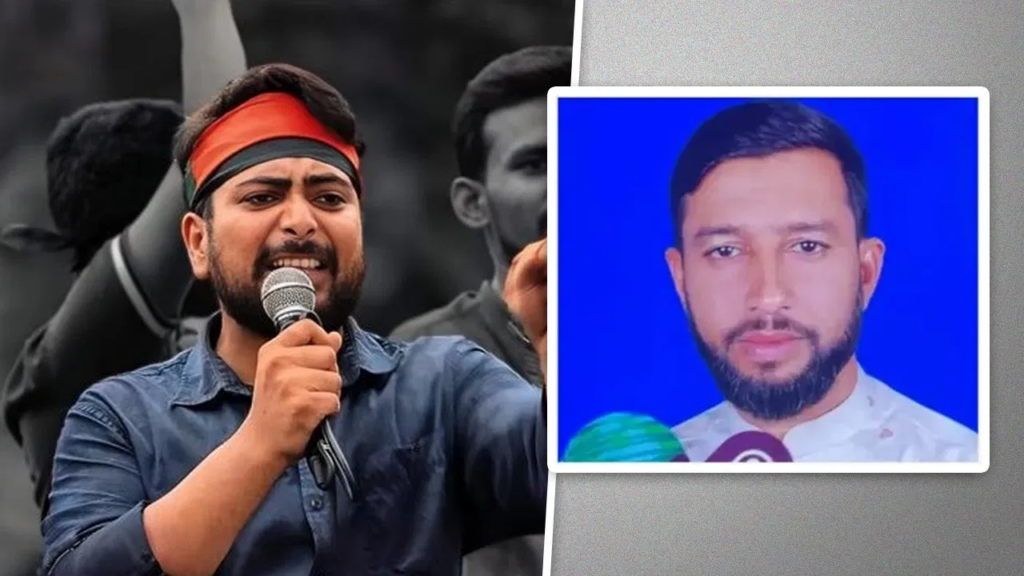
Political violence in Bangladesh has flared again after unidentified gunmen shot a senior youth leader, just days after the killing of another prominent student activist.
stabilized.The attack has raised fresh concerns about the safety of political organizers ahead of national elections—and about a wider pattern of targeted violence against student leaders. On Monday, assailants opened fire on Motaleb Sikder, a leader of the National Citizen Party (NCP), in the southwestern city of Khulna. The shooting came less than a week after Sharif Osman Hadi, a radical student leader and election candidate, died in a Singapore hospital after being shot in Dhaka. Together, the incidents underscore a tense and increasingly volatile political moment in Bangladesh.
What happened to Motaleb Sikder in Khulna?
The shooting and immediate aftermath
According to Bangladeshi media reports, Motaleb Sikder was shot around 11:45 a.m. near Gazi Medical College Hospital in Khulna. Witness accounts cited by police say the attackers aimed at his head before fleeing the scene.
Sikder was rushed to Khulna Medical College Hospital in critical condition. Doctors later said he was out of immediate danger after receiving emergency treatment.
Hospital officials told local outlets that:
- The bullet entered through one side of Sikder’s ear
- It pierced the skin and exited through the other side
- Despite heavy bleeding, no vital organs were critically damaged
By Monday evening, doctors indicated that his condition had stabilised.
Who is Motaleb Sikder?
A senior figure in the National Citizen Party
Motaleb Sikder, 42, is a prominent organizer within the National Citizen Party (NCP), a relatively new political force in Bangladesh. According to a statement posted by the party on Facebook, Sikder serves as
- Khulna Division head of the NCP
- Central coordinator of the party’s workers’ front
The party confirmed the shooting in a public post, describing it as a targeted attack and calling for accountability.
His political background
Sikder is not a fringe figure. Local reporting describes him as a key participant in Bangladesh’s violent student-led uprising in 2004, a movement that still shapes the country’s student politics today. He is also a longtime resident of Sheikhpara Palli in Sonadanga, a neighborhood in Khulna.
That history, combining student activism and grassroots organizing, has made him both influential and vulnerable in a political landscape where student leaders often double as power brokers.
How does this connect to the killing of Sharif Osman Hadi?
A deadly attack days earlier in Dhaka
The shooting of Motaleb Sikder comes on the heels of another high-profile attack. On December 12, masked gunmen shot Sharif Osman Hadi in Dhaka’s Bijoynagar area during an election campaign event.
Hadi, 32, was the spokesperson for Inqilab Mancha, a student-led platform that played a central role in protests last year. Those protests ultimately contributed to the ouster of the Sheikh Hasina–led Awami League government.
Despite being airlifted to Singapore for advanced treatment, Hadi died last Thursday from his injuries.
Why Hadi’s death matters
Hadi was not only a protest leader but also:
- A candidate in the February 12 general elections
- A visible symbol of last year’s student-led political movement
His killing sent shockwaves through activist circles and intensified fears that student leaders are being systematically targeted.
Why are student and youth leaders being targeted?
Student politics as a power centre
In Bangladesh, student organizations are not peripheral—they are deeply embedded in national politics. Many mainstream parties rely on student wings to:
- Mobilize voters
- Control campuses and neighborhoods
- Assert street-level influence
As a result, student leaders often hold real power, making them strategic targets during political transitions.
A climate of impunity
Analysts point to several structural issues that may be fueling the violence:
- Weak enforcement against politically motivated crimes
- Slow or stalled investigations into past attacks
- High stakes ahead of national elections
Without swift accountability, attackers may believe they can act without consequences.
What does this mean for Bangladesh’s upcoming elections?
Rising fears ahead of February 12 polls
The February 12 general elections were already expected to be contentious. Now, the shootings have added a new layer of uncertainty.
Key concerns include:
- Security at campaign events, especially for opposition and youth candidates
- Voter intimidation, particularly in urban political hotspots
- Reduced participation by young activists afraid of retaliation
Election observers are watching closely to see whether authorities can prevent further attacks.
Pressure on law enforcement
Police in Khulna have confirmed an investigation is underway, but no arrests have been announced. Human rights groups and opposition parties are calling for:
- Independent probes
- Transparent updates on progress
- Protection for political organizers
Without visible action, critics warn that violence could escalate as election day approaches.
How has the National Citizen Party responded?
Public condemnation and calls for justice
The NCP moved quickly to confirm Sikder’s shooting and condemn the attack. In its Facebook statement, the party emphasized that the incident was not random and urged authorities to ensure accountability.
Party leaders have also framed the shooting as part of a broader pattern, pointing to Sharif Osman Hadi’s killing as evidence that youth leaders are under sustained threat.
Why this matters beyond Bangladesh
Regional and international implications
Bangladesh is one of South Asia’s most populous countries and a key regional player. Political instability there has ripple effects, including:
- Disruptions to trade and supply chains
- Concerns for foreign investors
- Increased scrutiny from international human rights organizations
The fact that Sharif Osman Hadi died while receiving treatment abroad has already drawn international attention.
What to watch next
In the coming weeks, several developments will be critical:
- Whether police identify and arrest suspects in either shooting
- How political parties adjust campaign strategies
- Whether election authorities increase security measures
These signals will help determine whether Bangladesh can navigate its election season without further bloodshed.
TL;DR
- Motaleb Sikder, an NCP youth leader, was shot in the head in Khulna but is now out of danger.
- The attack follows the killing of Sharif Osman Hadi, a student leader and election candidate, earlier this month.
- Both incidents highlight escalating political violence targeting youth and student leaders in Bangladesh.
- With elections set for February 12, concerns are growing about security, accountability, and democratic participation.