
Quick Summary
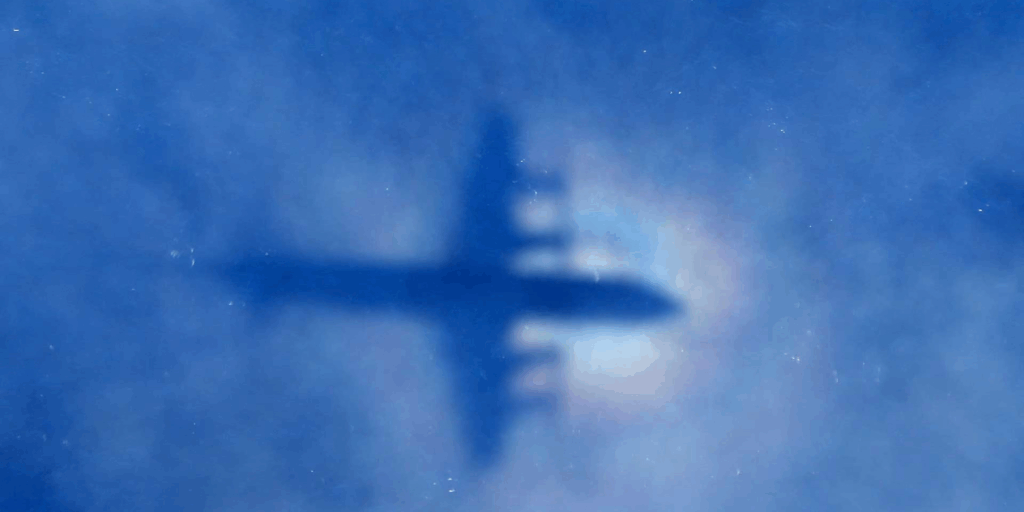
A small plane carrying two people and a dog vanished over Australia’s Bass Strait on August 2, 2025. After 20 days, no distress signals, wreckage, or clues have been found. The case has drawn comparisons to MH370 and reignited concerns about aviation safety, especially for private flights in remote regions.
A routine flight turns into a mystery
On August 2, 2025, a small Australian aircraft carrying two passengers and their dog disappeared over the Bass Strait. Nearly three weeks later, search teams remain empty-handed—no wreckage, no distress signal, and no trace of those on board. The baffling disappearance has drawn parallels with the infamous Malaysia Airlines MH370 case, reigniting questions about aviation safety and search protocols.
The missing plane, a recently purchased light aircraft, took off from George Town Airport in Tasmania at 12:45 pm. On board were 72-year-old pilot Gregory Vaughan, his partner Kim Warner, 66, and their dog Molly. Their plan was straightforward: stop in Victoria before heading to Hillston Airport in New South Wales. But by 5 pm, with no word from the couple, worried family members alerted authorities.
What do we know about the missing flight?
Despite an extensive search operation, investigators have uncovered no solid clues.
- Flight path: The aircraft was last known to be flying over the Bass Strait, a notoriously challenging stretch of water for pilots due to unpredictable weather and strong winds.
- Search efforts: The Australian Maritime Safety Authority (AMSA) deployed police boats, a helicopter, and even a ferry to scour northern Tasmania, the Bass Strait, and parts of southern Victoria. So far, nothing has been found.
- No distress signal: Authorities confirmed the plane sent no mayday call or automatic alert. Its emergency satellite beacon, designed to activate during crashes, never triggered.
- Pilot profile: Vaughan was an experienced member of his local flying club, though he had been flying this specific plane for only four months.
Why is the lack of a distress signal so unusual?
In modern aviation, even small planes are equipped with safety mechanisms that should automatically transmit signals in case of an accident. Aviation experts say the absence of such alerts raises two unsettling possibilities:
- A catastrophic failure: The plane could have suffered a sudden, violent event that destroyed communication equipment before signals could be sent.
- A water impact scenario: If the aircraft ditched into the ocean, the beacon may have been damaged or submerged before activating.
Eugene Reid, a flight instructor at George Town, pointed out a critical vulnerability: smaller regional airports don’t actively track private planes. Pilots are expected to notify air services before leaving the coast. Without that, authorities may not even know a plane is missing until much later.
How does this compare to past aviation mysteries?
The Australian case echoes the disappearance of Malaysia Airlines Flight MH370 in 2014. That Boeing 777 vanished with 239 people on board, and despite the largest search operation in aviation history, only fragments of wreckage have ever been recovered. Like Vaughan’s flight, MH370 transmitted no distress call.
Other smaller but equally puzzling cases include:
- The disappearance of Steve Fossett (2007): The American aviator vanished while flying a single-engine aircraft over Nevada. His wreckage was discovered a year later.
- Frederick Valentich (1978): A 20-year-old pilot disappeared over the Bass Strait while reporting a UFO sighting. Neither he nor his aircraft was ever found.
These cases show that while commercial aviation is statistically one of the safest modes of travel, mystery still lingers in private and small-scale aviation.
Why does the Bass Strait have a reputation for danger?
The Bass Strait, separating Tasmania from mainland Australia, has a long history of aviation and maritime disappearances. Its volatile weather, strong crosswinds, and limited radar coverage make it particularly treacherous for smaller aircraft.
Pilots often describe the strait as “unforgiving.” Poor visibility, sudden turbulence, and the sheer remoteness of the area complicate both flying and search operations. In many ways, it acts as Australia’s equivalent of the Bermuda Triangle—a place where equipment failure, human error, and natural conditions can collide.
What happens next in the search?
Authorities say they are committed to continuing their search, but resources are finite. Without debris or signals to guide them, teams face the daunting task of combing vast stretches of ocean and rugged coastline.
Possible next steps include:
- Widening the search zone to cover areas beyond the presumed flight path.
- Using sonar technology to scan the seabed for wreckage.
- Appealing to the public for any sightings of unusual debris along coastal regions.
Families of Vaughan and Warner, meanwhile, remain in limbo, torn between hope and despair as each passing day lowers the chances of survival.
Why this mystery matters
The disappearance raises critical questions for aviation safety, particularly in private flying:
- Should small planes be required to have more robust, tamper-proof tracking systems?
- Is the reliance on voluntary flight path updates outdated in today’s technology-driven world?
- How can authorities close the gaps in radar and communication coverage over remote regions?
For Australians, the story is not just about one missing plane but about the larger vulnerability in aviation oversight. For the global audience, it is a stark reminder that even in 2025, with satellites and advanced communication systems, planes can still vanish without a trace.