
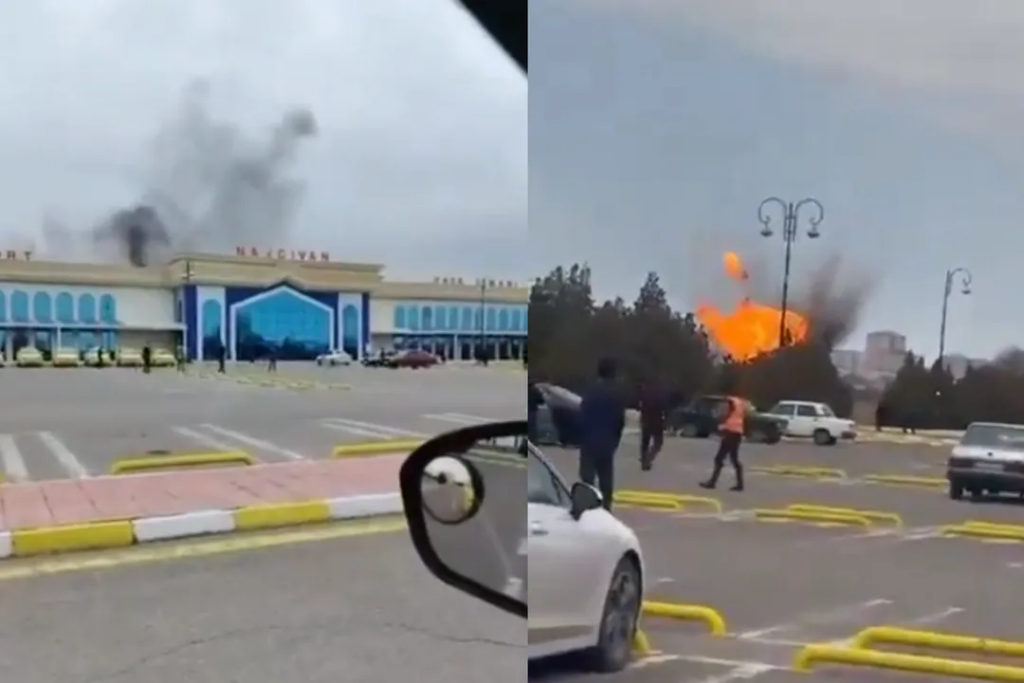
A fresh flashpoint may be emerging in the South Caucasus after Azerbaijan accused Iran of launching drone strikes that hit an airport building in the Nakhichevan region. The Azerbaijani government condemned the incident and warned Tehran of possible retaliation, raising fears that tensions between the two neighbors could escalate into a broader conflict.
Videos circulating online appear to show smoke rising from the airport complex, though independent verification of the footage remains limited. The alleged strike injured two civilians and damaged infrastructure, according to Azerbaijani authorities.
The incident comes amid a fragile security environment in a region already shaped by rivalry, territorial disputes, and geopolitical competition.
What Happened at the Nakhichevan Airport?
Azerbaijan says drones launched from Iranian territory struck an airport building in Nakhichevan, an Azerbaijani exclave that borders Iran, Turkey, and Armenia.
According to official statements from Baku:
- A drone struck part of the airport structure, causing visible damage.
- Two civilians were injured in the blast.
- Another drone reportedly crashed near a school in the village of Shakarabad.
Officials condemned the incident in strong terms, saying attacks originating from Iranian territory targeted civilian infrastructure.
“We strongly condemn these drone attacks launched from the territory of the Islamic Republic of Iran,” the Azerbaijani government said in a statement.
Authorities have not yet provided full details on the type of drones involved or whether air defenses were activated.
Where Is Nakhichevan and Why Is It Important?
Nakhichevan is a landlocked Azerbaijani exclave separated from mainland Azerbaijan by Armenian territory.
Its strategic significance comes from several factors:
- It shares a long border with Iran.
- It has a short but critical border with Turkey, Azerbaijan’s closest ally.
- It sits near key transport and energy corridors linking the South Caucasus to Europe and Central Asia.
Because of this geography, any military escalation involving Nakhichevan risks drawing in regional powers.
Azerbaijan’s Warning to Iran
Following the alleged drone strikes, Azerbaijan warned Tehran that it would respond if such attacks continue.
While the government did not immediately outline specific military steps, the warning signals a sharp escalation in rhetoric between the two countries.
Officials said the attack targeted civilian infrastructure and violated Azerbaijani sovereignty.
Diplomatic tensions between Baku and Tehran have been simmering for years, but direct cross-border attacks would mark a significant escalation.
What Evidence Exists So Far?
Videos circulating on social media appear to show smoke rising from the airport area after the alleged strike.
However, several important details remain unclear:
- The exact origin of the drones has not been independently confirmed.
- The type of drone used has not been publicly identified.
- Iran has not yet issued a full public response to the allegations.
Because of the fog of conflict and the spread of misinformation online, independent verification remains limited.
Why Iran and Azerbaijan Have a Complicated Relationship
Relations between Iran and Azerbaijan have been strained by several geopolitical and ideological factors.
Armenia–Azerbaijan conflict
Iran has historically maintained ties with Armenia, Azerbaijan’s rival in the long-running Nagorno-Karabakh conflict.
Israel factor
Azerbaijan has strong defense ties with Israel, including purchases of Israeli drones and weapons. Tehran has repeatedly criticized this relationship.
Ethnic politics
Millions of ethnic Azerbaijanis live in northern Iran, which has sometimes raised concerns in Tehran about nationalist sentiment.
These tensions have led to periodic diplomatic crises, military exercises near borders, and accusations of espionage.
Could This Lead to a Wider Conflict?
While the drone incident raises tensions, a full-scale war between Iran and Azerbaijan remains unlikely in the short term.
However, several risks could push the situation toward escalation:
- Retaliatory strikes by Azerbaijan
- Border skirmishes along the Iran–Azerbaijan frontier
- Involvement of regional allies such as Turkey
- Miscalculation or accidental escalation
Security analysts often warn that drone incidents can trigger rapid military responses because they blur the line between surveillance and attack.
Why the Incident Matters Globally
The South Caucasus is a strategic corridor connecting Europe, Russia, the Middle East, and Central Asia.
Escalation between Iran and Azerbaijan could affect:
- Energy routes transporting Caspian oil and gas to Europe
- Regional military alliances
- Trade routes linking Asia and Europe
- Stability near NATO member Turkey
Any confrontation would also draw attention from global powers already involved in regional geopolitics.
What to Watch Next
Several developments could clarify the situation in the coming days:
- Iran’s official response to the accusations
- Satellite confirmation of damage at Nakhichevan airport
- Azerbaijan’s potential military or diplomatic response
- Statements from regional powers such as Turkey or Russia
If evidence confirms the attack originated from Iranian territory, the incident could become one of the most serious military confrontations between the two countries in years.
TL;DR
- Azerbaijan says Iranian drones struck an airport in Nakhichevan, injuring two civilians.
- Another drone reportedly crashed near a school in Shakarabad village.
- Azerbaijan condemned the attack and warned Tehran of possible retaliation.
- The origin of the drones has not been independently verified.
- Rising tensions could destabilize the South Caucasus region.