
A near-disaster on a Tokyo-bound flight raises fresh concerns about Boeing 737 safety
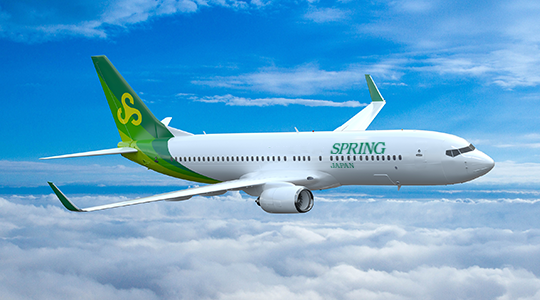
A Spring Airlines Japan flight from Shanghai to Tokyo turned terrifying when a suspected cabin pressure failure forced the aircraft to plummet nearly 26,000 feet in under ten minutes. The Boeing 737-800, operating as Flight JL8696/IJ004, made an emergency landing in Osaka, leaving passengers shaken — but alive.
What happened onboard Spring Airlines Japan Flight JL8696?
According to Japan’s Ministry of Land, Infrastructure, Transport and Tourism, the aircraft was cruising at 36,000 feet (11,000 meters) when an alert signaled a loss of cabin pressure. Within minutes, the jet dove to 9,800 feet (3,000 meters), triggering emergency oxygen masks and cabin-wide panic.
- Flight path: Shanghai → Tokyo Narita
- Aircraft: Boeing 737-800
- Emergency landing site: Kansai International Airport, Osaka
- Passengers onboard: 191
- Injuries: None reported
Passengers remained on the plane for over an hour post-landing before being allowed to disembark, adding to the ordeal.
What did passengers experience during the emergency?
The psychological impact was immense. One passenger, identified only as Wang, told local media that as oxygen masks deployed and flight attendants teared up, “I felt I was going to die.” Several others described a chilling calm, broken only by the sound of gasping and sobs.
One woman shared that she wrote a farewell note to her husband mid-flight, believing she wouldn’t survive. Another posted on social media: “My body is here, but my soul is still up there.”
The descent was described as “violent and abrupt” by several on board, with many claiming they now fear flying.
How did the airline respond?
Following widespread backlash online, Spring Airlines Japan announced a compensation package of ¥15,000 (~$104) per passenger. However, critics say this amount hardly reflects the trauma endured.
Key details:
- Compensation offered: ¥15,000 per passenger
- Must be claimed directly through the airline
- Flight JL8696 is under formal investigation by Japanese authorities
The airline is a joint venture partially owned by Japan Airlines, and not directly affiliated with China’s Spring Airlines, which issued a statement to clarify its non-involvement.
Why is the Boeing 737-800 under renewed scrutiny?
This incident has once again spotlighted ongoing safety concerns tied to the Boeing 737 family.
While the 737-800 is not part of the embattled 737 MAX series, it has a checkered past:
Notable Boeing 737-800 incidents:
| Year | Flight | Country | Description |
|---|---|---|---|
| 2022 | MU5735 | China | Crashed midair, 132 dead |
| 2024 | Jeju Air | South Korea | Mechanical failure, emergency landing |
| 2025 | Spring Airlines Japan | Japan | Cabin pressure failure, emergency landing |
Aviation experts have noted that while rapid descents from high altitude are part of standard emergency protocols, the frequency of such events in 737 variants is concerning.
What happens next?
Japan’s aviation regulator has launched a formal investigation into the incident, focusing on:
- The aircraft’s pressurization system
- Spring Airlines Japan’s maintenance and inspection records
- Crew response to emergency conditions
No official cause has been confirmed yet.
TL;DR: What to know about the Boeing 737 Osaka emergency
- Flight JL8696/IJ004, a Boeing 737-800, plunged nearly 26,000 feet due to a suspected cabin pressure failure.
- All 191 onboard survived, though passengers were left emotionally shaken.
- The airline is offering ¥15,000 in compensation.
- The incident renews safety scrutiny of Boeing aircraft, especially the 737-800 model.