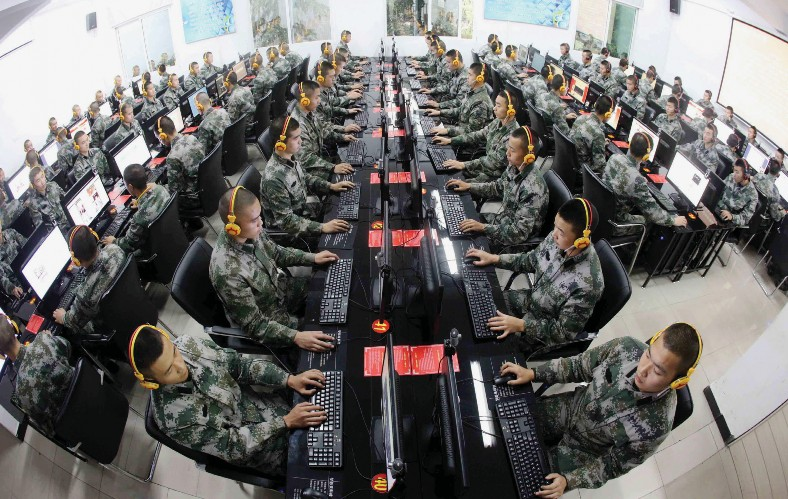
China’s military says it is developing more than 10 quantum warfare weapons, some of which are already being tested on front-line missions. The disclosure, reported by China’s official Science and Technology Daily, offers one of the clearest windows yet into how the People’s Liberation Army (PLA) sees quantum technology reshaping future conflict.
The announcement matters not just because of the number of projects involved, but because it signals a shift in how modern militaries plan to collect intelligence, process battlefield data, and defend against advanced threats. Quantum warfare weapons are no longer a distant research concept. According to the PLA, they are moving into real-world use.
Below is a clear look at what the Chinese military says it is building, how these systems could work, and why defense planners around the world are paying close attention.
What are quantum warfare weapons?
Quantum warfare weapons are military systems that rely on principles of quantum physics rather than classical computing or sensing. Instead of processing information in binary bits, quantum systems use quantum bits, or qubits, which can represent multiple states at once.
In practical military terms, this can translate into:
- Much faster data analysis
- New ways to detect objects that evade conventional sensors
- Navigation systems that do not rely on GPS
- Cyber tools capable of handling massive data streams in real time
The PLA says it is combining quantum computing with cloud infrastructure and artificial intelligence to create a new generation of cyber and intelligence tools.
How many quantum warfare weapons is China developing?
According to the Science and Technology Daily report, the Chinese military is developing more than 10 experimental quantum cyber warfare tools. Several of these systems are reportedly being tested in front-line scenarios rather than confined to laboratory research.
That detail stands out. Military technologies often spend years in controlled testing environments before being deployed in operational settings. Front-line testing suggests the PLA believes at least some of these tools are mature enough to provide immediate tactical value.
The research effort is being led by a supercomputing laboratory at the National University of Defence Technology, a key institution in China’s military research ecosystem.
How does the PLA plan to use quantum technology?
Quantum computing for battlefield decision-making
One of the PLA’s stated goals is to use quantum computing to process vast amounts of battlefield data within seconds. Modern warfare generates enormous data streams, including:
- Satellite imagery
- Drone feeds
- Radar and sensor data
- Cyber intelligence from public and private networks
Traditional systems can struggle to fuse and analyze this information quickly enough for real-time decision-making. Quantum computing, in theory, could dramatically shorten the time between detection and action.
For commanders, this could mean faster targeting decisions, better allocation of resources, and improved coordination across air, land, sea, space, and cyber domains.
A good place for an infographic here would be a timeline showing how data moves from sensor to decision-maker in classical systems versus a quantum-enabled system.
Quantum cyber warfare tools
The PLA says it is using quantum technology to gather high-value military intelligence from public cyberspace. While details are limited, this points to advanced cyber tools designed to:
- Analyze massive volumes of open-source data
- Identify patterns or anomalies faster than conventional systems
- Support cyber defense and offense simultaneously
An unnamed PLA officer told the newspaper that “speed and change” were the core drivers behind the development of these new cyber weapons. In cyber warfare, milliseconds matter, and adaptability can be more important than raw firepower.
Quantum sensing and stealth detection
One of the most closely watched applications of quantum technology is sensing. Quantum sensors can, in theory, detect minute changes in electromagnetic fields, gravity, or other physical signals.
The PLA suggests that quantum sensing and positioning could improve air defenses by detecting stealth aircraft that conventional radar might miss. This has significant implications for countries that rely on stealth platforms to penetrate air defenses.
While experts caution that practical quantum radar systems face major engineering hurdles, even incremental improvements in detection capability could alter air power calculations.
This would be a strong place to suggest a comparison chart showing conventional radar limitations versus potential quantum sensing advantages.
Navigation without GPS
Another application mentioned is highly accurate navigation systems that resist spoofing or jamming. GPS interference has become a common feature of modern conflicts, affecting everything from missiles to civilian aircraft.
Quantum navigation systems could rely on internal measurements rather than external signals, allowing forces to navigate accurately even in contested electronic environments.
For militaries planning for high-end conflict, this capability is increasingly seen as essential rather than optional.
Why is China investing so heavily in quantum warfare weapons?
A response to information-heavy warfare
Modern warfare is as much about information as it is about firepower. China’s military doctrine has long emphasized information dominance as a path to victory.
Quantum technologies align well with that goal by promising:
- Faster intelligence cycles
- Greater resilience against electronic attack
- Superior data fusion across domains
From Beijing’s perspective, quantum warfare weapons could help offset advantages held by more established military powers in areas like global basing or alliance networks.
Reducing reliance on vulnerable systems
Many existing military systems depend on technologies that can be jammed, hacked, or disrupted. GPS, traditional radar, and classical computing networks all have known weaknesses.
Quantum-based alternatives could reduce reliance on these vulnerable systems, making military operations more robust in contested environments.
Strategic signaling
Publicly acknowledging front-line testing of quantum tools also sends a message. It signals technological confidence and may be intended to shape perceptions among rivals.
Even if some systems remain experimental, the perception of rapid progress can influence defense planning elsewhere.
How credible are these claims?
As with any military announcement, especially one released through state media, caution is warranted. Independent verification of frontline testing is limited, and terms like “quantum cyber warfare tools” can cover a wide range of maturity levels.
Experts note that while quantum technology has made real advances, many applications remain difficult to scale and deploy reliably in harsh operational conditions.
That said, China has invested heavily in quantum research for more than a decade, including civilian projects in quantum communication and encryption. The military effort builds on that broader ecosystem rather than starting from scratch.
What does this mean for the United States and its allies?
A widening technology race
The PLA’s announcement reinforces the idea that quantum technology is becoming a new arena of strategic competition. The United States, Europe, and other advanced economies are also investing heavily in quantum research, but military integration remains uneven.
If China succeeds in deploying usable quantum warfare weapons sooner, it could gain temporary advantages in sensing, decision-making, or cyber operations.
Implications for defense planning
Defense planners may need to assume that future conflicts will involve quantum-enabled capabilities on both sides. That affects:
- Air defense planning
- Cyber resilience strategies
- Navigation and timing systems
- Command-and-control architectures
Ignoring quantum developments risks building forces optimized for yesterday’s technology.
The risk of overreaction
At the same time, analysts caution against assuming that quantum weapons will suddenly make existing systems obsolete. Many breakthroughs are incremental, and countermeasures evolve alongside new capabilities.
Balanced assessments, rather than hype-driven responses, will be key.
What should readers watch next?
Several indicators will help clarify how serious and mature China’s quantum warfare weapons really are:
- Peer-reviewed research tied to military institutions
- Patent filings related to quantum sensing or navigation
- Joint exercises or doctrinal changes referencing quantum systems
- Official budget allocations to quantum military programs
TL;DR
China’s military says it is developing more than 10 quantum warfare weapons, with some already tested on front lines. These systems aim to speed up battlefield decision-making, improve stealth detection, harden navigation against jamming, and enhance cyber operations. While technical hurdles remain, the announcement signals that quantum technology is moving from theory toward practical military use, with significant implications for global security.