
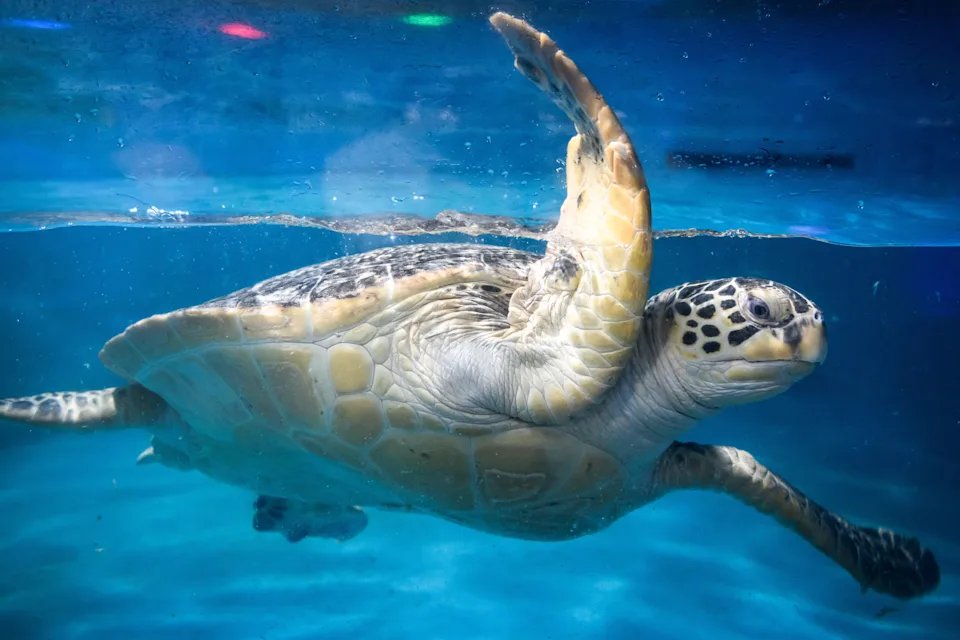
China has issued an unusual warning about what it describes as a new form of maritime espionage, claiming that foreign intelligence agencies are using sensor-equipped sea turtles and other marine animals to collect sensitive oceanographic data near its coastline.
The allegation, published by China’s Ministry of State Security, is part of a broader campaign highlighting what Beijing says are increasingly sophisticated foreign intelligence operations targeting the country’s military and coastal infrastructure.
While China has not publicly identified any foreign government responsible or presented evidence supporting the claims, the announcement has drawn attention because it combines real-world ocean-monitoring technologies with extraordinary allegations involving marine wildlife.
What did China claim about ‘spy turtles’?
The allegations appeared in a social media post published by China’s Ministry of State Security under the title “Under the Deep Blue, Undercurrents Are Surging.”
According to the ministry, authorities discovered relatively large marine animals fitted with electronic sensors operating in Chinese waters.
Officials alleged that these animals were collecting information such as:
- Water temperature.
- Salinity.
- Ocean currents.
- Other environmental measurements.
The ministry claimed the information was then transmitted overseas through satellite communications.
A section of the post referred to the animals as “spy turtles” and “spy fish,” although officials did not specify how many had allegedly been discovered or where the incidents occurred.
Why would ocean data matter?
Although the claims themselves remain unverified, oceanographic information can have legitimate military significance.
Modern naval operations rely heavily on environmental conditions.
Data about:
- Water temperature.
- Salinity.
- Ocean depth.
- Underwater currents.
- Seafloor geography.
can influence submarine movement, sonar performance, underwater navigation, and naval planning.
Military organizations around the world routinely collect such information using research vessels, underwater sensors, autonomous vehicles, and satellite observations.
“Relatively large marine animals with sensors attached have been discovered in certain waters of China,” the ministry said as qouted by news agency AFP, in a section titled “spy turtles, spy fish”.
China argues that combining these datasets could help foreign governments build detailed underwater maps capable of revealing vulnerabilities in coastal defenses.
What other surveillance technologies did China mention?
The ministry’s warning extended beyond marine animals.
Officials also highlighted several existing technologies they claimed could be used for maritime intelligence gathering.
These included:
Solar-powered wave gliders
Autonomous surface vehicles powered by wave motion and solar energy can remain at sea for months while collecting environmental measurements.
They are widely used in scientific research, weather monitoring, and oceanography.
Smart sensor buoys
Ocean buoys equipped with advanced sensors can continuously monitor marine conditions and transmit information remotely.
Such systems are commonly deployed for climate research, navigation safety, fisheries management, and disaster monitoring.
Cargo ship tracking devices
The ministry also warned that foreign actors could exploit commercial shipping information to monitor real-time port activity and maritime logistics.
China said these combined technologies could help construct detailed underwater maps with potential military applications.
Is there evidence supporting the claims?
At present, China has not released publicly verifiable evidence demonstrating that foreign intelligence agencies are attaching surveillance equipment to sea turtles or fish for espionage purposes.
The ministry:
- Did not identify any suspected country.
- Did not publish photographs or technical details of the alleged devices.
- Did not explain how authorities verified the intended purpose of the equipment.
Without independently verifiable evidence, the claims cannot be confirmed.
However, the broader use of autonomous ocean-monitoring equipment is well established and widely documented in both civilian and military contexts.
Have animals ever been used in military programs?
Yes, although in very different ways.
Several countries have explored the use of marine animals for defense-related purposes over the decades.
Examples include:
- Dolphins trained to detect underwater mines.
- Sea lions used to recover equipment.
- Marine mammals assisting naval security operations.
These programs rely on trained animals performing specific tasks rather than secretly carrying surveillance equipment over long distances.
The concept of wild sea turtles routinely transmitting intelligence data remains extraordinary and has not been independently documented in publicly available research.
Why is China making these claims now?
The warning comes amid heightened geopolitical tensions and increasingly public accusations of espionage between China and Western governments.
In recent years:
- China has accused foreign intelligence agencies of conducting cyberattacks and recruitment operations.
- Western governments have alleged that Chinese intelligence services conduct cyber espionage, industrial theft, and influence campaigns.
- Intelligence agencies on both sides have issued increasingly public security warnings.
China has also encouraged government workers and ordinary citizens to report suspicious foreign activities, expanding public participation in national security efforts.
Why are underwater maps strategically important?
Detailed maps of the ocean floor are valuable for both civilian and military purposes.
They can support:
- Safe navigation.
- Scientific research.
- Offshore energy exploration.
- Underwater cable installation.
- Naval operations.
For military planners, understanding underwater terrain helps improve submarine routing, sonar effectiveness, and surveillance capabilities.
Because of this dual-use nature, oceanographic research can sometimes become entangled in geopolitical disputes.
The bigger picture
Whether or not China’s specific allegations about “spy turtles” can be substantiated, the episode reflects the growing importance of maritime intelligence in an era of technological competition.
Autonomous underwater vehicles, satellite communications, artificial intelligence, and advanced ocean sensors are rapidly transforming how nations monitor the seas.
At the same time, intelligence accusations between major powers have become increasingly public, with governments on all sides warning about evolving surveillance methods.
Until additional evidence is released, China’s claims about sensor-equipped marine animals should be viewed as official allegations rather than independently verified facts.
TL;DR
- China’s Ministry of State Security claims foreign intelligence agencies are using sensor-equipped marine animals, including sea turtles, for surveillance.
- Beijing says the devices collect oceanographic data such as water temperature, salinity, and currents before transmitting it via satellite.
- Officials also warned about autonomous wave gliders, smart buoys, and ship-tracking devices gathering maritime information.
- China has not identified any country allegedly behind the operations or released publicly verifiable evidence.
- The warning comes amid escalating espionage accusations between China and Western governments.