Quick Summary
A Chinese research submersible has uncovered thriving animal life nearly 10 kilometers beneath sea level in the Mariana Trench, marking the deepest chemosynthesis-based ecosystem ever discovered. Thousands of worms, molluscs, and other invertebrates were found living off methane emissions in complete darkness, raising new questions about life’s resilience and the risks posed by rising interest in deep-sea mining.
What was discovered in the Mariana Trench?
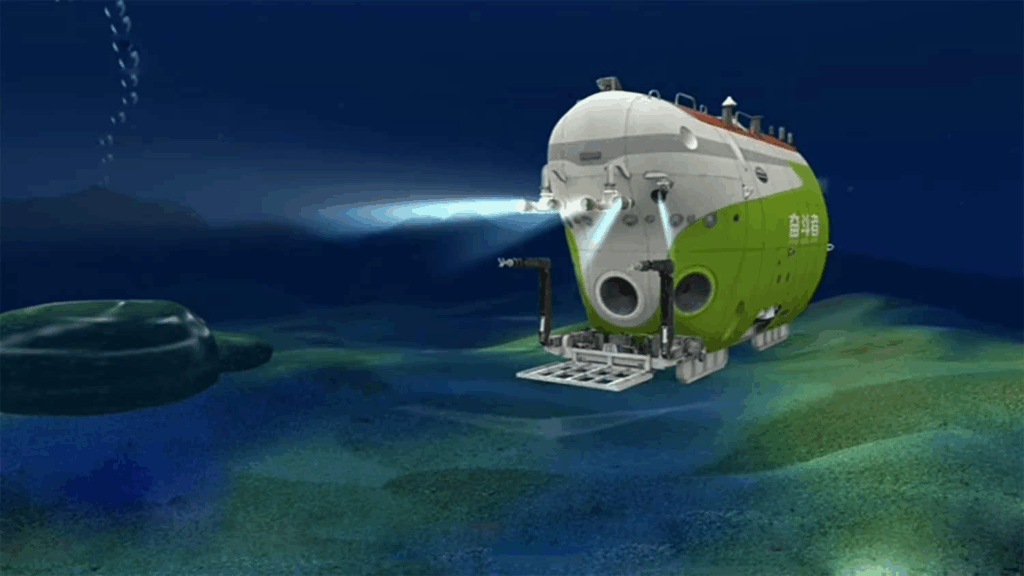
A Chinese-led research team using the “Fendouzhe” (Striver) submersible has identified the deepest-known colony of marine life to date — including:
- Thousands of tubeworms, up to 30 cm long
- Molluscs and clams (bivalves) in dense aggregations
- Spiky crustaceans, sea cucumbers, sea lilies, and other invertebrates
- Microbial mats that resemble snow, a potential source of energy for higher organisms
The animals were found at depths ranging from 2,500 to 9,533 meters (8,200 to 31,000 feet), approaching the absolute limits of Earth’s oceanic pressure.
How do these creatures survive without sunlight?
Unlike most life on Earth that relies on photosynthesis, these trench-dwelling organisms survive via chemosynthesis, a process where microbes convert methane or hydrogen sulfide into energy in total darkness.
- These microbes are often found in cracks in the seafloor, where chemicals seep out.
- Larger organisms such as tubeworms, cluster around microbial mats, forming entire ecosystems.
This discovery suggests that life can thrive in extreme, sunless environments, challenging assumptions about habitability on Earth — and possibly even on other planets or moons with similar conditions, like Europa or Enceladus.
Why is this discovery significant?
1. It extends the known limits of life on Earth
Until now, most known deep-sea ecosystems were found at hydrothermal vents or cold seeps far shallower than 10 km. This discovery sets a new benchmark for the deepest animal community ever observed.
2. It hints at hidden biodiversity
The researchers emphasized that other ocean trenches may also harbor similar ecosystems. That means Earth’s deep-sea biosphere could be far more extensive than currently documented.
3. It adds urgency to protect deep-sea environments
The findings come just as governments and corporations are eyeing the seafloor for mineral extraction, sparking fears that fragile and barely understood ecosystems could be wiped out before they’re even fully explored.
What is the geopolitical context behind the mission?
The timing of the study’s release is no coincidence. It arrives amid intensifying international debates over deep-sea mining, a contentious issue at global environmental summits.
- China has invested heavily in deep-sea technology, and the Fendouzhe submersible’s mission includes research on potential “deep-sea materials”.
- The United States and other nations have also expressed interest in extracting rare earth minerals and metals from the ocean floor.
- The International Seabed Authority (ISA) has yet to finalize mining regulations, despite growing urgency.
What are the environmental risks of deep-sea mining?
Oceanographers and conservationists have repeatedly warned that deep-sea mining could:
- Destroy habitats that take centuries or millennia to form
- Release toxins or sediments that disrupt marine food chains
- Endanger species that may exist nowhere else on Earth
Given that this study has found entire chemosynthetic communities at unprecedented depths, it underscores how much we don’t yet understand about the deep ocean — and why caution is critical.
A brief history of Mariana Trench exploration
- 1960: Jacques Piccard and Don Walsh became the first humans to visit the trench in the Trieste bathyscaphe.
- 2012: Filmmaker James Cameron makes the first solo dive to the bottom, describing the scene as “desolate” and “alien.”
- 2020–2024: China’s Fendouzhe submersible makes 23 dives in the Mariana Trench, culminating in the recent biological discoveries.
The trench, deeper than Mount Everest, remains one of the least explored frontiers on the planet.
What happens next?
With the discovery of complex life at record depths, scientists are urging the international community to:
- Prioritize further exploration and documentation of ocean trench ecosystems
- Enforce a moratorium on deep-sea mining until robust environmental safeguards are in place
- Fund more missions like Fendouzhe to explore other trenches such as the Kermadec, Tonga, and Philippine Trenches
This isn’t just a win for marine biology; it’s a powerful reminder that Earth’s final frontiers still hold secrets and that human action may determine whether we preserve or erase them.