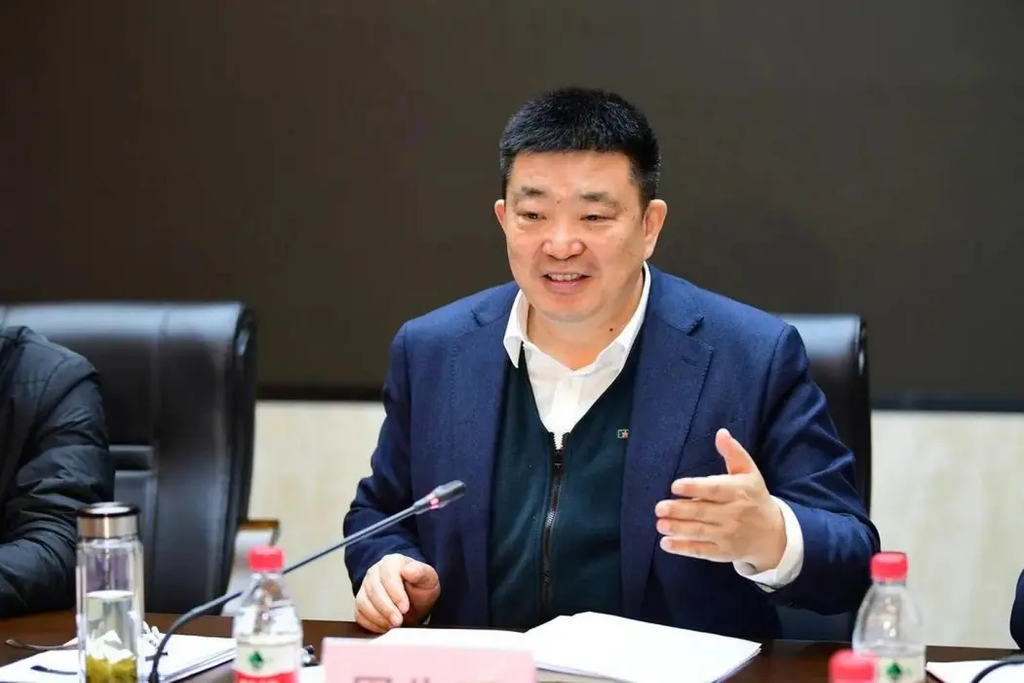
Former Wuhan mayor Zhou Xianwang, who faced intense criticism over the Chinese city’s response to the early COVID-19 outbreak, has been sentenced to 14 years in prison for bribery. A court in China’s Henan province found him guilty of accepting cash and property worth more than 60.5 million yuan, approximately $9 million, in exchange for helping businesses and individuals obtain contracts and government approvals.
The Shangqiu Intermediate People’s Court announced the sentence on October 10, 2026. In addition to the prison term, Zhou was fined 5 million yuan. The court said the amount involved was exceptionally large and noted that his cooperation with investigators and the recovery of most illicit proceeds helped reduce his sentence.
The conviction marks a new development in the case of a former senior official whose name became closely associated with Wuhan’s handling of the coronavirus outbreak in late 2019 and early 2020.
However, the court’s ruling focused on corruption committed during Zhou’s public service career. It did not identify his handling of the COVID-19 outbreak as a basis for the sentence.
Why Was Former Wuhan Mayor Zhou Xianwang Sentenced to 14 Years?
According to the court, Zhou used a series of government positions held between 2003 and 2025 to provide benefits to companies and individuals. These included helping them secure construction contracts, conduct business operations and obtain administrative approvals.
In return, he accepted cash and property valued at more than 60.5 million yuan, the court said.
Zhou’s public roles included serving as party secretary of Huangshi, mayor of Wuhan and vice-governor of Hubei province. Investigators alleged that he exploited the authority associated with these positions to facilitate private interests in exchange for illicit payments.
The court also ordered the recovery and confiscation of illegal proceeds, including returns generated from those proceeds, while authorities continue efforts to recover any outstanding amounts.
Why Did the Court Reduce His Sentence?
The court said Zhou confessed to his crimes, cooperated with the investigation and returned most of the illegal gains. These factors contributed to the reduced penalty.
The case illustrates the consequences Chinese authorities can impose on officials convicted of serious bribery, particularly where the sums involved are substantial.
The conviction is also part of China’s wider anti-corruption campaign, which has targeted officials across government institutions and state-linked organizations.
How Did Zhou Xianwang Become Associated With Wuhan’s COVID-19 Outbreak?
Zhou became Wuhan’s mayor in September 2018, after serving as the city’s deputy party secretary. Wuhan, the capital of Hubei province, became the center of the first recognized COVID-19 outbreak in late 2019.
As reports of an unexplained respiratory illness emerged, local authorities faced criticism over delays in publicly communicating information about the outbreak. Questions also arose about how local officials coordinated with higher levels of China’s government.
Zhou became one of the most visible officials defending the city’s response. In January 2020, he said local authorities could release information about infectious diseases only after receiving authorization. He also acknowledged that Wuhan had failed to provide sufficient warnings during the early stages of the outbreak.
The comments fueled public debate over the extent to which local officials could act independently and how information about the emerging virus was communicated.
The Controversy Over Wuhan’s Early Response
Wuhan’s early response attracted international scrutiny because timely information about a new infectious disease is critical to identifying transmission risks and taking public-health measures.
In late December 2019, authorities were investigating cases of pneumonia linked to an emerging coronavirus. As infections spread, concerns grew over the pace of public disclosure and the adequacy of early warnings.
On January 23, 2020, Wuhan entered a lockdown that restricted movement in and out of the city. The measures became one of the most consequential early interventions of the pandemic.
Zhou had also defended the decision to allow a large Chinese New Year gathering in Wuhan earlier that month, despite the emerging outbreak. His public statements and the city’s response made him a focal point of criticism as the crisis escalated.
Nevertheless, the corruption case must be distinguished from that controversy. The court convicted Zhou of bribery involving his official positions over more than two decades; it did not sentence him for the city’s pandemic response.
What Happened to Other Officials Linked to Wuhan’s COVID-19 Response?
Zhou was not the only senior official whose career was affected by the early outbreak.
Ma Guoqiang, then Wuhan’s party secretary, lost his position in February 2020 amid criticism of the city’s handling of the crisis. Jiang Chaoliang, the party secretary of Hubei at the time, was also removed from his post.
Zhou remained mayor until early 2021, when he stepped down. He subsequently held positions in political advisory bodies associated with Hubei and China’s national political system.
The differing outcomes for the officials reflected separate political and administrative developments. Their departures should not automatically be interpreted as evidence that each faced the same allegations or legal proceedings.
Jiang was later convicted of bribery and received a suspended death sentence in August 2026, according to contemporaneous reporting. His case forms part of the broader anti-corruption drive against senior officials.
When Did China Begin Investigating Zhou Xianwang for Corruption?
China’s Central Commission for Discipline Inspection, the country’s leading anti-corruption body, announced an investigation into Zhou in July 2025 over suspected serious violations of discipline and law. The announcement came several years after he left the Wuhan mayor’s office.
The investigation concerned alleged corruption linked to his official career, rather than the public criticism he faced during the pandemic.
The court’s findings cover conduct spanning multiple appointments, from 2003 through 2025. This timeline is significant because it shows that the bribery case extended well beyond Zhou’s tenure as Wuhan mayor.
The conviction therefore represents a legal judgment on alleged abuses of public office over a prolonged period, not a ruling limited to events during the COVID-19 outbreak.
What Does Zhou’s Conviction Reveal About China’s Anti-Corruption Campaign?
China’s anti-corruption campaign has been a major feature of President Xi Jinping’s leadership. Authorities have pursued officials accused of taking bribes, abusing public office and engaging in other forms of misconduct.
The campaign has reached multiple levels of government and state-linked institutions, including senior political figures.
Zhou’s sentence demonstrates that former officials can face criminal penalties for corruption associated with positions they held over many years. The size of the bribes cited by the court and the additional financial penalty underscore the seriousness with which the case was treated.
At the same time, the case should be viewed within its specific legal context. A conviction for bribery establishes the findings made in that proceeding; it does not independently resolve broader questions about government transparency or accountability during the pandemic.
Those questions remain part of the historical debate over Wuhan’s early response, including the timing of public warnings and the relationship between local authorities and central government officials.
What Happens Next in the Zhou Xianwang Case?
The immediate consequences are Zhou’s 14-year prison term, a 5 million yuan fine and the recovery of illicit proceeds identified by the court.
Authorities are also seeking to recover any remaining illegal gains, according to the reported ruling. Further developments in the case may clarify the status of the recovered assets and any subsequent legal proceedings.
For now, the central distinction remains clear: Zhou’s imprisonment follows a bribery conviction covering conduct across his public career. His association with Wuhan’s early COVID-19 response explains why the case has attracted international attention, but the court’s stated grounds for sentencing were corruption and the misuse of public office.