
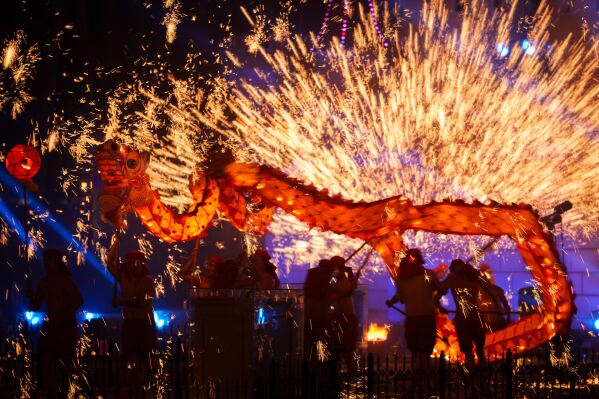
At least eight people were killed and two others injured after a powerful explosion and fire tore through a fireworks shop in eastern China on Sunday, just days before Lunar New Year celebrations begin.
Local authorities said the blast occurred in a village in Donghai County, Jiangsu Province, after a resident improperly set off fireworks near the store. The fire quickly spread, triggering a deadly chain reaction inside the shop, which was stocked with explosive materials.
The tragedy has cast a shadow over what is typically the most festive period on China’s calendar, and could reignite debate over fireworks bans nationwide.
What Happened in Jiangsu?
According to a statement from the Donghai county government, the explosion was triggered when an individual ignited fireworks near the store in violation of safety rules.
The shop, which stored fireworks for the upcoming holiday rush, erupted in flames shortly afterwards.
Authorities confirmed:
- Eight fatalities
- Two injuries
- The incident occurred on Sunday
- The blast happened in a village in Jiangsu province
Officials have not yet released the identities of the victims. Emergency crews responded quickly, but the intensity of the fire made rescue efforts difficult.
For verification, coverage should link to official statements from the Donghai county government and reports from state media such as Xinhua News Agency or China Daily.
Why Fireworks Are Central to Lunar New Year
Fireworks and firecrackers are deeply embedded in Lunar New Year traditions across China.
The Lunar New Year, also known as the Spring Festival, marks the start of the new year on the traditional lunisolar calendar. This year, celebrations begin on Tuesday, February 17, ushering in the Year of the Fire Horse.
At midnight on New Year’s Eve, families traditionally set off firecrackers to:
- Ward off evil spirits
- Symbolize prosperity and renewal
- Celebrate the arrival of the new year
The practice is centuries old. However, modern safety and environmental concerns have complicated the tradition.
A visual timeline comparing fireworks policies over the last decade would help readers understand how regulation has shifted in response to safety and pollution concerns.
Have Fireworks Been Banned in China?
Yes, but unevenly.
In recent years, many major Chinese cities imposed strict fireworks bans, citing:
- Severe air pollution
- Fire hazards
- Urban safety risks
Cities like Beijing and Shanghai introduced restrictions aimed at reducing smog levels during the holiday season.
However, some regional governments have eased those restrictions recently, responding to public pressure and efforts to revive traditional customs.
This latest explosion could prompt renewed scrutiny of those policy rollbacks.
Ministry of Emergency Management Orders Urgent Measures
China’s Ministry of Emergency Management of the People’s Republic of China convened an emergency meeting following the blast.
The meeting was presided over by Vice-Minister Xu Jiaai.
In its statement, the ministry ordered all regions to:
- Strengthen supervision of fireworks production
- Tighten oversight during transport
- Enhance monitoring of retail sales
- Enforce safe usage practices
Officials emphasized that authorities “must resolutely prevent similar incidents from recurring.”
The ministry also instructed regional governments and fireworks businesses to conduct comprehensive safety risk assessments ahead of the peak holiday period.
This directive signals concern that additional accidents could occur as millions of people prepare to celebrate.
Why This Incident Raises Alarm
Timing is critical.
The Lunar New Year period triggers what is often described as the world’s largest annual human migration.
Over a 40-day travel window, known in China as “Chunyun,” nearly 9.5 million journeys are expected as people return to their hometowns for family reunions.
The influx of travelers increases:
- Fireworks purchases
- Rural celebrations
- Temporary storage of explosives
- Informal retail activity
Village-level shops, like the one involved in Sunday’s explosion, often see a sharp spike in demand.
When combined with improper handling, the risk multiplies.
A Recurring Safety Challenge
Fireworks-related accidents are not new in China.
In previous years, authorities have reported warehouse explosions, transport mishaps, and injuries linked to improper storage.
Common contributing factors include:
- Poor ventilation
- Overloaded inventory
- Proximity to residential homes
- Ignition sources near storage areas
Given the cultural importance of fireworks, enforcement can be uneven, particularly in rural areas.
An infographic explaining the supply chain, from manufacturing to retail, could clarify where oversight failures tend to occur.
Will This Lead to Renewed Fireworks Bans?
It’s too early to say.
However, history suggests major accidents often lead to temporary crackdowns.
Local governments may respond by:
- Reinstating stricter bans in urban centers
- Limiting retail licenses
- Increasing inspection frequency
- Penalizing unauthorized fireworks sales
Whether those measures persist beyond the holiday season remains uncertain.
Balancing cultural tradition with public safety and environmental concerns continues to challenge policymakers.
The Environmental Angle
Beyond safety risks, fireworks significantly affect air quality.
Studies have shown sharp increases in particulate matter (PM2.5) during Lunar New Year celebrations.
In heavily populated regions, this can worsen respiratory conditions and strain hospitals.
China’s earlier bans were partly aimed at mitigating these spikes.
If officials decide to revisit restrictions, environmental data will likely factor into the debate.
Editors should cite peer-reviewed research or official pollution monitoring data when discussing air quality impacts.
What Happens Next?
Authorities are expected to continue investigating:
- Whether the fireworks shop complied with safety regulations
- Whether storage limits were exceeded
- If additional violations contributed to the explosion
The Ministry of Emergency Management’s directive suggests nationwide inspections could follow in the coming days.
For now, communities across China are proceeding with holiday preparations under heightened scrutiny.
TL;DR
- Eight people were killed and two were injured in a fireworks shop explosion in Jiangsu province.
- Officials say the blast was triggered by improper fireworks use near the store.
- The incident occurred just days before the Lunar New Year celebrations begin.
- China’s Ministry of Emergency Management has ordered urgent nationwide safety checks.
- The explosion may reignite debate over fireworks bans and regulation.
Final Note on Reporting
All casualty figures, official statements, and regulatory actions should be verified through government releases or reputable news agencies such as Xinhua or Reuters before publication.
Given the sensitivity of fatal incidents, reporting should remain factual and avoid speculation until investigations conclude.