China has taken another major step toward AI self-sufficiency. Meituan, the country’s food delivery giant, has unveiled LongCat-2.0, a massive artificial intelligence model trained entirely using domestically developed computing hardware. The announcement is significant because it demonstrates China’s growing ability to build frontier AI systems without relying on advanced US-made chips.
With 1.6 trillion parameters and a one-million-token context window, LongCat-2.0 ranks among China’s most capable large language models (LLMs). More importantly, it is believed to be the country’s largest AI model trained completely on home-grown hardware, underscoring Beijing’s push to reduce dependence on foreign semiconductor technology.
What is LongCat-2.0?
LongCat-2.0 is Meituan’s latest flagship large language model designed to handle complex reasoning, coding, long-form document analysis, and AI assistant tasks.
According to the company, the model features the following:
- 1.6 trillion parameters
- One-million-token context window
- Training conducted entirely on Chinese-developed AI hardware
- Large-scale deployment using domestic AI computing infrastructure
Its specifications place it alongside some of China’s leading frontier AI models, including DeepSeek’s V4-pro.
Why is LongCat-2.0 a major milestone?
The announcement is notable not only because of the model’s size but also because of how it was built.
Most advanced AI models rely heavily on Nvidia GPUs for training. However, US export controls have increasingly limited China’s access to cutting-edge AI chips.
LongCat-2.0 represents an alternative approach.
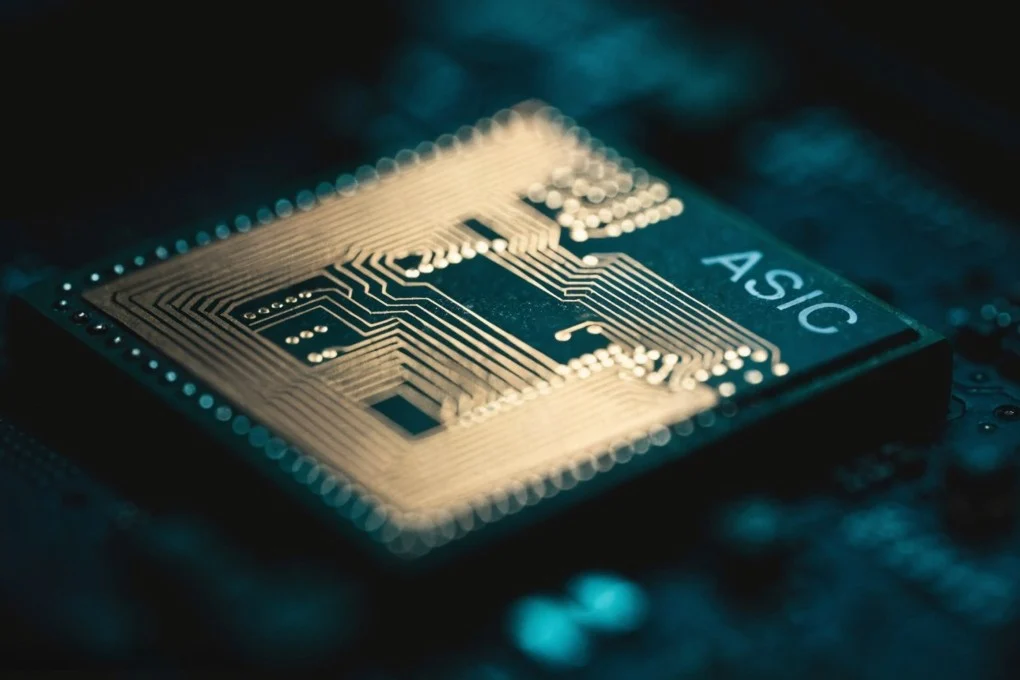
Meituan says the model was trained entirely using large-scale clusters of domestically developed AI ASIC (Application-Specific Integrated Circuit) superpods, demonstrating that China can carry out frontier-scale AI training using its own hardware ecosystem.
That makes the project a technological milestone in China’s efforts to build an independent AI supply chain.
How is LongCat-2.0 different from DeepSeek V4-pro?
While both models feature similar capabilities and a one-million-token context window, there is an important distinction.
DeepSeek V4-pro
- Domestic hardware used primarily for AI inference
- Training relied on a broader mix of computing resources
LongCat-2.0
- Domestic hardware is used for both pre-training and inference
- Entire training pipeline built on Chinese computing infrastructure
Pre-training is by far the most computationally demanding stage of AI development because it requires processing enormous datasets across thousands of accelerators over several weeks or months.
Completing that process without foreign chips represents a significant engineering achievement.
What is pre-training, and why does it matter?
Pre-training is the foundational phase during which an AI model learns language, reasoning patterns, coding knowledge, mathematics, and general world information from massive datasets.
During this stage, the model develops its core capabilities before undergoing later fine-tuning for specific applications.
Compared with inference, pre-training requires the following:
- Vast computing power
- High-speed chip-to-chip communication
- Stable distributed computing
- Efficient data synchronization across thousands of processors
This is precisely where advanced AI hardware has traditionally been dominated by Nvidia.
What role did Huawei play?
Although Meituan did not publicly identify the AI chips powering LongCat-2.0, the company confirmed it relied on Huawei’s Collective Communication Library (HCCL) during training.
HCCL is Huawei’s high-speed communication framework that enables thousands of AI processors to exchange data efficiently while training enormous neural networks.
Its role is similar to Nvidia’s widely used NCCL (NVIDIA Collective Communication Library), which has become a cornerstone of modern distributed AI training.
Using HCCL helped improve training stability across Meituan’s large AI computing clusters, highlighting the growing maturity of China’s domestic AI software ecosystem.
Why this matters beyond China
The launch of LongCat-2.0 reflects a broader shift in the global AI race.
As US export restrictions tighten access to advanced semiconductors, Chinese companies have accelerated efforts to build competitive alternatives using domestic chips and software.
If successful, these efforts could:
- Reduce China’s reliance on foreign AI hardware
- Strengthen domestic semiconductor manufacturers
- Increase competition in the global AI infrastructure market
- Encourage other countries to invest in independent AI ecosystems
Rather than slowing AI development, export controls appear to be accelerating China’s investment in locally developed computing platforms.
What comes next?
LongCat-2.0 demonstrates that Chinese companies are increasingly capable of building frontier AI systems using domestic infrastructure.
The next challenge will be proving that these home-grown platforms can match global leaders not only in model size but also in performance, efficiency, reliability, and commercial deployment.
If China continues advancing its AI hardware and software ecosystem, future flagship models may rely even less on foreign technology, reshaping the competitive landscape of artificial intelligence.
TL;DR
- Meituan has launched LongCat-2.0, China’s largest AI model trained entirely on domestic hardware.
- The model features 1.6 trillion parameters and a one-million-token context window.
- Unlike some previous Chinese models, LongCat-2.0 used local chips for both pre-training and inference.
- Meituan trained the model using large-scale domestic AI ASIC clusters.
- The company also used Huawei’s Collective Communication Library (HCCL) to improve distributed training.
- The launch highlights China’s growing ability to develop advanced AI despite restrictions on access to foreign chips.