
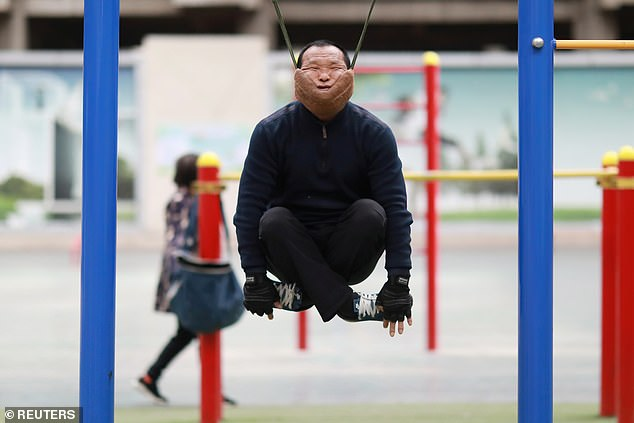
A disturbing wellness trend known as the Chinese neck-hanging exercise is going viral online, with videos showing people suspending themselves by the neck from trees in public parks. While some participants claim it relieves chronic neck pain, medical experts say the risks are severe—and potentially fatal.
The trend, widely circulated on Chinese social media and reported by outlets like, is rooted in a misunderstood version of a legitimate medical therapy. What’s spreading online, however, is far from safe.
What is the Chinese neck-hanging exercise?
The Chinese neck-hanging exercise involves individuals suspending their body weight using a rope or strap tied around the neck, typically attached to a tree branch or bar.
How it’s being practiced
- A strap or rope is looped around the neck
- The person leans forward or lifts their feet
- The body hangs partially or fully suspended
- Some individuals swing gently while hanging
The idea behind the trend is to mimic cervical traction therapy, a clinical treatment used for neck pain and spinal conditions.
Why are people trying this trend?
The popularity of the Chinese neck-hanging exercise is tied to a common health issue: cervical spondylosis, a condition caused by wear and tear in the neck’s spinal discs.
Claimed benefits
Supporters believe the exercise can:
- Relieve neck pain
- Improve blood circulation
- Reduce pressure on spinal discs
- Stretch stiff muscles
Some participants say they feel immediate relief, which has helped fuel the trend’s rapid spread online.
The DIY health culture factor
This trend also reflects a broader pattern:
- People seeking low-cost alternatives to medical treatment
- Social media amplifying anecdotal success stories
- Visual “shock value” driving engagement and imitation
In short, it’s a mix of desperation, curiosity, and viral momentum.
How is this different from real cervical traction therapy?
This is where the trend becomes dangerous.
What happens in a medical setting
Cervical traction therapy is:
- Performed under professional supervision
- Carefully calibrated to 10–15% of body weight
- Done with the patient in a controlled, stationary position
Doctors adjust:
- Angle of pull
- Duration of treatment
- Force applied to the neck
What happens in the viral version
The Chinese neck-hanging exercise:
- Uses full body weight, not controlled force
- Lacks medical supervision
- Involves movement (swinging, twisting)
- Applies uneven pressure on the spine
This difference is critical, and potentially life-threatening.
What are the risks of the neck-hanging exercise?
Medical professionals have issued strong warnings against attempting this trend.
Immediate physical risks
- Cervical spine fractures
- Dislocation of neck vertebrae
- Spinal cord injury
- Nerve damage
Severe outcomes
- Paralysis (including high-level paralysis)
- Loss of motor function
- Death
A reported fatality in 2024 involved a man attempting a similar exercise, underscoring how quickly things can go wrong.
Why is it so dangerous
The human neck is not designed to bear full body weight. When suspended:
- The spine experiences extreme compression and strain
- Sudden movements can cause catastrophic injury
- Blood flow and nerve signals can be disrupted
Even a slight miscalculation can lead to irreversible damage.
Why experts are sounding the alarm
Medical professionals, including rehabilitation specialists in China, have been vocal about the dangers.
Key warnings from experts
- The therapy must be precisely controlled
- DIY versions lack safety mechanisms
- The risks far outweigh any potential benefit
One therapist noted that while traction can stimulate nerves and blood vessels, improper execution can lead to spinal cord injury or paralysis.
Why did this trend go viral
The Chinese neck-hanging exercise didn’t spread randomly—it follows a familiar pattern seen in many viral health trends.
Factors driving virality
1. Visual shock value
The imagery is striking and unsettling, making it highly shareable.
2. Simple concept
No equipment beyond a rope or strap is needed.
3. Pain relief appeal
Millions suffer from neck pain, creating a large audience willing to try unconventional solutions.
4. Social proof
Seeing others attempt it reduces perceived risk—even when that perception is false.
Is there any safe way to relieve neck pain?
Yes—and it doesn’t involve hanging from trees.
Safer alternatives
- Physical therapy guided by professionals
- Prescribed cervical traction devices
- Posture correction exercises
- Strengthening and mobility routines
When to seek medical help
- Persistent or worsening neck pain
- Numbness or tingling in the arms
- Reduced mobility
- History of spinal issues
Attempting extreme DIY methods can delay proper treatment and worsen the condition.
“It’s truly frightening, my blood runs cold just watching it.” Another commenter added, “Even hearing about this neck-hanging exercise is scary.” As SCMP reports,
What this trend reveals about modern health behavior
The rise of the Chinese neck-hanging exercise highlights a deeper issue: the growing gap between medical science and online wellness culture.
Key takeaways
- People are increasingly turning to viral solutions for chronic problems
- Social media often prioritizes visibility over accuracy
- “Natural” or DIY methods can carry hidden risks
This isn’t just about one trend—it’s about how health information is consumed and acted upon in the digital age.
TL;DR
- The Chinese neck-hanging exercise involves suspending the body by the neck to relieve pain
- It mimics cervical traction therapy but lacks medical safety controls
- Experts warn it can cause severe injury, paralysis, or death
- The trend has gone viral due to social media and demand for quick pain relief
- Safer, medically supervised alternatives are strongly recommended