
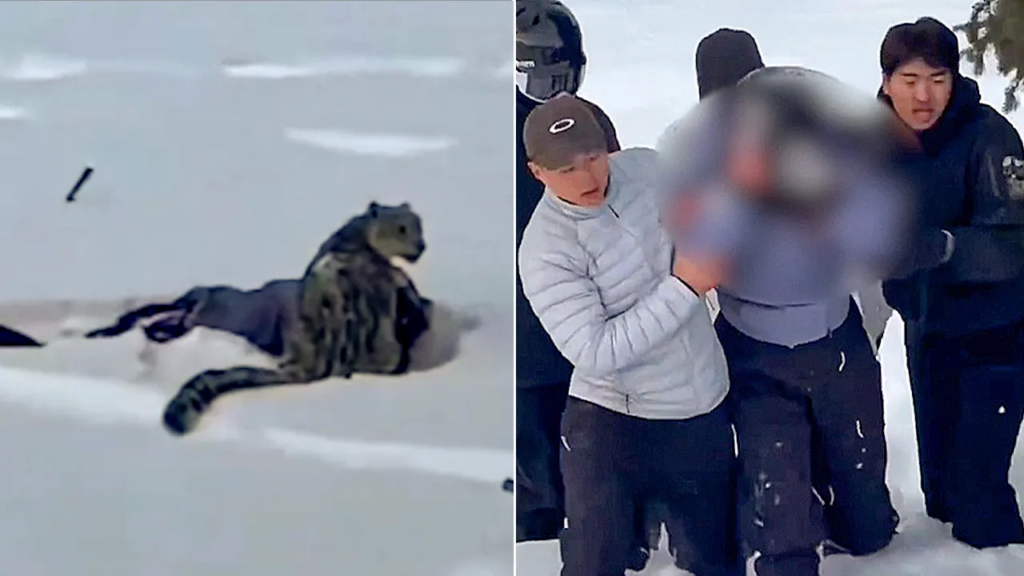
A female skier was seriously injured after being mauled by a snow leopard when she approached the animal to take a photograph in northern China. The incident, captured in chilling video footage, highlights the risks of close encounters with wildlife and has renewed warnings from authorities about animal sightings near tourist areas.
The attack took place in Fuyun County, near China’s border with Mongolia, an area known for its rugged terrain and wildlife habitats. While the woman survived, officials say the incident underscores the dangers of ignoring safety advisories in regions where large predators roam.
TL;DR
- A skier was mauled by a snow leopard in northern China after approaching it for a photo
- The incident occurred in Fuyun County near the Keketuohai area
- Video shows the woman badly injured but alive
- Authorities had issued prior warnings about snow leopard sightings
- Officials urge tourists to keep a distance from wildlife
What happened during the snow leopard attack
The incident occurred around 7 pm as the woman was returning to her hotel after skiing. According to local reports cited by Jam Press, she noticed a snow leopard near the path and attempted to photograph it.
After failing to get a clear angle, she moved closer to the animal, coming within roughly 10 feet. Moments later, the leopard pounced, mauling her and leaving her face severely bloodied. Video footage circulating online shows the woman lying unconscious in the snow while the animal lingered nearby.
After several tense moments, the leopard retreated, allowing bystanders to rush to her aid.
How the skier survived the attack
Despite the severity of the attack, the woman survived and was transported to a nearby hospital, where she remains in stable condition. Local reports suggest that her helmet played a crucial role in preventing fatal head injuries.
A ski instructor at the scene reportedly chased the animal away by waving ski poles, an action that likely prevented further harm. The woman suffered significant facial injuries but remained alive even as blood poured from her wounds.
Authorities had warned of snow leopard sightings
Local authorities had issued multiple warnings in the days leading up to the attack after reports of snow leopard activity near tourist facilities.
Here’s a breakdown of what officials warned visitors about:
| Advisory | Details |
|---|
| Recent sightings | Snow leopards detected in Gem Valley, Keketuohai |
| Safety guidance | Do not approach animals or take photos |
| Movement advice | Move quickly, avoid lingering |
| Group travel | Avoid walking alone |
Officials stressed that while snow leopards are typically shy and elusive, they can display aggressive behaviour when threatened or approached too closely.
Why are snow leopards appearing near tourist areas
Experts say habitat pressures and seasonal food scarcity can push wild animals closer to human settlements. In this case, local residents and guests staying at nearby accommodations reported seeing the snow leopard roaming near hotels days before the attack.
One guest said the animal had been spotted several kilometers from the attack site, though it remains unclear whether it was the same leopard involved in the incident.
Authorities believe the animal may have been searching for food, increasing the likelihood of human encounters.
Snow leopards and human encounters
Snow leopards are rarely involved in attacks on humans. They are known for avoiding contact and inhabiting remote, mountainous regions. However, officials caution that rarity does not eliminate risk.
According to conservation data from the Snow Leopard Trust, China is home to the largest population of snow leopards in the world, accounting for more than half of the global total.
As tourism expands into remote regions, interactions between humans and wildlife are becoming more frequent, increasing the importance of education and strict safety enforcement.
What authorities are telling tourists now
Following the incident, officials reiterated safety guidance for visitors travelling through wildlife-prone areas:
- Do not approach or attempt to photograph wild animals
- Stay in groups and avoid isolated paths
- Follow local advisories and posted warnings
- Remain inside vehicles if animals are spotted nearby
Authorities emphasised that wildlife should be observed only from a safe distance and never treated as a photo opportunity.
Why this incident matters
The attack serves as a stark reminder that even animals perceived as elusive or non-aggressive can pose serious danger when approached. As adventure tourism and winter sports grow in remote regions, the responsibility lies with both authorities and visitors to prioritise safety over curiosity.
While the skier’s survival was aided by protective gear and swift intervention, officials warn that similar incidents could easily end in tragedy if warnings continue to be ignored.