
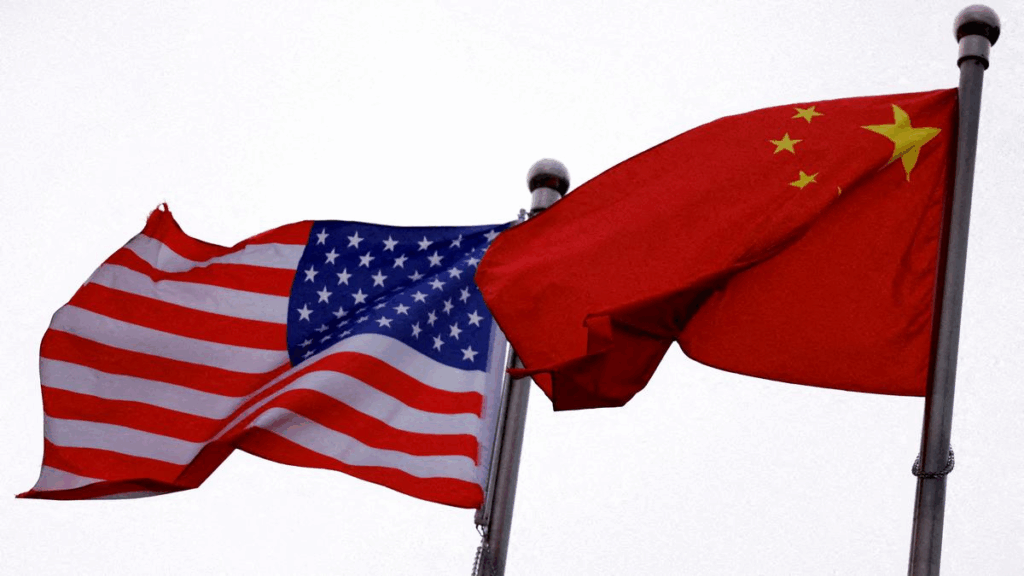
The United States’ decision to halt sanctions on China’s Ministry of State Security (MSS) has sparked new debate over how Washington balances national security with economic stability. The move—reported by the Financial Times—comes amid an active cyberespionage campaign by Chinese-linked hackers and a delicate trade détente reached between President Donald Trump and Chinese leader Xi Jinping.
This article unpacks why the US paused punitive action, what the Salt Typhoon hacking campaign reveals, and how a single sanctions package could have derailed a months-long negotiation process.
What triggered the planned US sanctions against China?
US officials had been preparing to sanction China’s Ministry of State Security following what intelligence agencies described as a years-long, global cyberespionage operation.
A closer look at the Salt Typhoon campaign
Salt Typhoon—a threat group linked to Chinese state actors—had infiltrated:
- Multiple US telecommunications companies
- International telecom networks
- A US state’s Army National Guard system
Security researchers say the campaign demonstrated an unusually deep level of persistence, targeting backbone infrastructure and exfiltrating sensitive communications data.
The US has historically responded to such campaigns with sanctions or indictments. The planned action against China’s MSS would have been one of the most direct punishments against Beijing for cyber operations in years.
Why did the US pause the sanctions decision?
At the heart of the decision was a political calculation: sanctioning China in late 2025 risked upending the fragile trade truce reached just weeks prior.
A trade agreement on the brink
On October 30, Trump and Xi met in South Korea and outlined a framework deal to cool escalating trade tensions. The agreement—still politically fragile—hinged on mutual concessions:
- Washington agreed not to impose 100 percent tariffs on Chinese imports.
- Beijing pledged to delay new export licensing rules on rare earth minerals and magnets—critical to US defense and tech manufacturing.
With the trade environment temporarily stabilizing, US officials reportedly feared that sanctions against China’s spy agency would be interpreted as an escalation, undermining the agreement before its implementation.
How do cyber operations and trade disputes intersect?
Cyber activity and economic policy increasingly overlap—and governments now treat them as interconnected levers.
Cyber penalties can function as economic weapons
Sanctions against a state intelligence agency can:
- Restrict companies from doing business with Chinese entities
- Halt technology transfers
- Trigger retaliatory trade actions
- Disrupt negotiations already in motion
Beijing has historically responded strongly to sanctions targeting its security apparatus. Analysts note that hitting the MSS specifically could have been seen as an attack on China’s core national interests, not merely an economic measure.
The US is prioritizing stability—for now
The Trump administration’s decision not to enact new export controls against China further signals that Washington wants to avoid fresh conflict in the short term. Those controls would likely have targeted advanced chips and telecom technologies—domains where China is sensitive to US leverage.
What does this mean for cyber defense in the US?
Pausing sanctions does not erase the underlying threat. Salt Typhoon and similar groups will continue operating, and US agencies will continue tracking them.
Potential implications
- Delayed deterrence: Without sanctions, China may interpret the pause as strategic restraint—or weakness.
- Shift to quiet diplomacy: The US may be negotiating privately on cyber norms, signaling issues behind closed doors rather than publicly.
- More trade-linked cybersecurity cases: As tech supply chains become geopolitical battlegrounds, cyber incidents will increasingly tie into trade diplomacy.
Why does this issue matter globally?
The US-China trade relationship underpins global markets, technology supply chains, and national security alliances.
A single sanctions package could:
- Rattle global markets
- Distort supply chains for electronics and telecom equipment
- Intensify retaliatory cyber activity
- Erode trust in bilateral negotiations
Countries from South Korea to Germany rely on the stability of US-China trade to maintain their own export-dependent economies.
What to watch next
Several developments will signal whether the cyber-trade truce holds:
1. Whether China restrains state-linked hacking
If hacking campaigns slow or become less aggressive, it may indicate backchannel agreements.
2. Whether Washington introduces targeted export rules later
Smaller, sector-specific controls could be rolled out quietly once the trade atmosphere stabilizes.
3. Whether bilateral meetings resume
A follow-up meeting between Trump and Xi would suggest both sides see value in maintaining the détente.
4. Response from Congress
Lawmakers may push for transparency on why sanctions were paused—especially those critical of China’s cyber operations.
TL;DR
The US halted planned sanctions against China’s spy agency to protect a fragile trade truce negotiated in late 2025. Despite China-linked hackers targeting US and global telecom networks in a campaign known as Salt Typhoon, Washington feared sanctions could unravel a deal preventing new tariffs and potential restrictions on rare earth exports. The decision underscores the increasingly intertwined nature of cybersecurity and trade diplomacy.