


Quick Summary
Brazil selected Belém, a city in the Amazon with high poverty and major infrastructure challenges, as the host of COP30 to confront global leaders with the realities of inequality, environmental risk, and underdevelopment—core issues in the fight against climate change. It’s a move designed to shift the symbolism and substance of climate action away from luxury venues and toward real-world urgency.
What Is COP30 and Where Will It Happen?
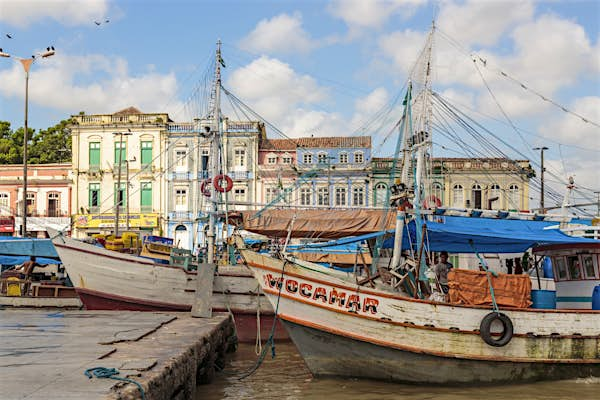
The 30th United Nations Climate Change Conference (COP30) is scheduled for November 2025 in Belém, a city of about 2.5 million people situated at the mouth of the Amazon River. Belém will gather world leaders, diplomats, business executives, scientists, activists, and media not only in the Amazon but also within the visible context of poverty, infrastructure backlog, and environmental vulnerability, by deliberate choice.
- Previous locations: Bali, Cancun, Paris, Sharm el-Sheikh, and Dubai—wealthy, well-developed resort and urban settings.
- This year’s setting: Belém, a city where only about 2% of sewage is treated, informal housing dominates, and deforestation challenges are very much local and urgent.
Why Choose a Poor, Difficult Location?
1. To Make Inequality Unavoidable
Brazil wants the world’s decision-makers to “see a developing country and city with considerable infrastructure issues… with, in relative terms, a high percentage of poverty.” The intent is to make climate discussions relevant to the billions living with these obstacles—not just the privileged few.
2. To Spotlight Amazon’s Role and Peril
Belém is at the heart of the Amazon—the “lungs of the earth”—whose forests play a key part in absorbing carbon emissions. By hosting COP30 here, Brazil aims to highlight the Amazon’s critical role as both a climate solution and a zone under acute threat.
- Recent data: Deforestation in the Amazon surged 92% year-on-year by May 2025, largely due to wildfires and drought—underlining the urgency for bold action.
3. To Put Pressure on Global Climate Financing
Brazil’s location choice brings climate finance and support for less wealthy nations to center stage, forcing richer countries to deal head-on with the realities of climate adaptation and mitigation costs for the world’s vulnerable and under-resourced areas.
4. To Tie Climate Goals to Human Rights and Social Justice
The UN recently reaffirmed that access to a clean and healthy environment is a basic human right. Holding COP30 in Belém aligns the goals of the summit with ongoing efforts to assure environmental justice as part of broader social and economic rights.
What Are the Challenges and Controversies?
Logistics and Accommodation
Belém faces significant shortfalls in hotel capacity, driving concerns about price gouging and accessibility. Brazil is addressing this by chartering two cruise ships (MSC Seaview and Costa Diadema) to dock and serve as “floating hotels,” adding 6,000+ beds, alongside hotels, apartments, and even rental of private homes.
- Priority is being given to delegations from poorer nations, with lower daily room rates for Least Developed Countries and Small Island Developing States.
Rising Costs
Initial reports of outrageously high lodging prices ($15,000/night in some cases) triggered fears of exclusion, especially for activists and delegations from the Global South. Brazilian officials insist prices are stabilizing and additional local housing will be available.
What’s at Stake for the Climate Talks?
Tougher Emissions Targets
Under the Paris Agreement, countries are due to submit more ambitious emissions reduction plans in 2025—their first major updates since the pact’s adoption. Most are late; the UN wants them submitted by September so the potential impact can be assessed ahead of COP30.
- The Paris Agreement’s 1.5°C warming limit is in jeopardy. Current national plans are not enough, and the world already temporarily surpassed the 1.5° mark in 2024.
- COP30 will force negotiators to face the “implementation gap” and strengthen their commitments.
Climate Finance
A road map for $1.3 trillion in financial support to help poorer countries adapt and cut emissions is a major item, as is a big push for ongoing support for rainforest preservation through mechanisms like Brazil’s proposed Forests Forever Fund.
Why Does It Matter for the World?
- Belém as Reality Check: The location ensures global elites see firsthand the intersection of poverty, environmental risk, and climate inequality—core to making climate policies work for all.
- Amazon’s Future at the Forefront: With near-record deforestation and ecosystem distress, the Amazon is both the backdrop and the battleground for the planet’s climate future.
- A New Standard for Future COPs: The choice sets a precedent: climate summits may increasingly be held in places most affected by the crisis, pushing leaders from wealthy nations to engage directly with on-the-ground realities.