
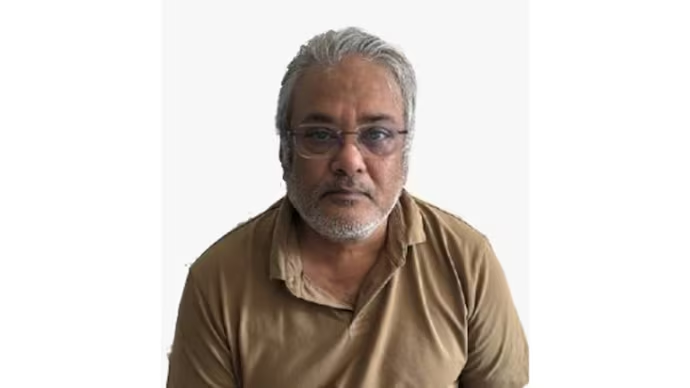
Within days of his deportation to India, Mohammad Salim Dola, a long-time aide of Dawood Ibrahim—has once again put the spotlight on the global reach of organized crime. Authorities say Dola used the alias “Hamza” and a Bulgarian passport to operate quietly in Turkey, masking his identity while allegedly coordinating a multi-country narcotics network.
His arrest, enabled by an Interpol Red Notice, underscores how modern drug syndicates blend old-school underworld ties with cross-border mobility and legal loopholes.
What Is the Salim Dola Case About?
The Salim Dola case revolves around allegations of large-scale drug trafficking tied to international routes spanning India, the UAE, and Turkey.
In April 2026, Turkish authorities detained Dola in Istanbul’s Beylikduzu district after sustained surveillance. He was deported to India on April 28 and handed over to the Narcotics Control Bureau (NCB), which is now leading the investigation.
Key Allegations
- Coordination of synthetic drug trafficking across borders
- Links to seizures of MD (methamphetamine-like substances) traced from India to overseas hubs
- Leadership role in a network allegedly connected to Dawood Ibrahim’s operations
Indian investigators say the case gained traction after a 2024 drug bust revealed a supply chain stretching from Sangli and Surat to international markets.
Who Is Salim Dola and How Did He Rise?
Early Years in Mumbai’s Underworld
Born in 1966 in Mumbai’s Byculla neighbourhood, Dola reportedly entered organised crime at a young age. He developed close ties with Chhota Shakeel, one of Dawood Ibrahim’s key lieutenants.
His early activities included:
- Gutkha smuggling between Mumbai and Delhi
- Gradual expansion into narcotics trafficking
Shift to Synthetic Drugs
After an initial arrest in 2012 for marijuana trafficking, Dola’s alleged operations evolved.
Following his release, investigators believe he partnered with fugitive supplier Kailash Rajput to produce synthetic drugs—particularly a pill known as “Button,” reportedly linked to opioids like fentanyl.
This shift reflects a broader trend: synthetic drugs are easier to manufacture, transport, and conceal than traditional narcotics.
How Did ‘Hamza’ Help Him Evade Authorities?
One of the most striking elements of the case is Dola’s use of a false identity.
The Alias Strategy
Authorities say:
- He used the name “Hamza”
- The alias appeared on a Bulgarian passport
- The authenticity of the passport is still under investigation
Operating under a different identity allowed him to:
- Avoid detection across borders
- Conduct business without raising red flags
- Establish a base in Turkey while coordinating international operations
Why Turkey?
Turkey has become a critical transit hub due to its geographic position between Europe and Asia. For traffickers, it offers:
- Strategic access to multiple markets
- Established smuggling routes
- Opportunities to blend into legitimate business environments
Dola reportedly leveraged these advantages while maintaining a low profile.
What Role Did International Agencies Play?
Dola’s arrest wasn’t a single-agency success—it was a coordinated international effort.
The Interpol Red Notice
India requested an Interpol Red Notice in March 2024. This allowed global law enforcement agencies to:
- Track Dola’s movements
- Share intelligence across jurisdictions
- Facilitate his eventual arrest in Turkey
Local Enforcement in Turkey
Turkish intelligence and Istanbul’s Narcotics Crimes Division carried out:
- Technical surveillance (likely including digital tracking)
- Ground-level monitoring
- Coordinated arrest operations
What Evidence Is Tying Him to Drug Operations?
Investigators in India have connected Dola to multiple drug seizures and financial trails.
Recent Findings
- 4 kg MD seizure traced to his network
- Over 126 kg of mephedrone recovered in linked raids
- ₹25.22 lakh in cash seized
- Statements from arrested aides in Mumbai’s Kurla area
Authorities say these aides claimed they were acting under Dola’s instructions.
Legal Framework
Dola faces charges under India’s NDPS Act (Narcotic Drugs and Psychotropic Substances Act), which carries the following:
- Strict bail conditions
- Long prison sentences
- Severe penalties for repeat offenders
Why Did His Network Weaken Before the Arrest?
Interestingly, Dola’s arrest may have been preceded by a gradual weakening of his operations.
Key Factors
- Deportation of family members from the UAE
- Increased surveillance by Indian agencies
- Crackdowns on financial channels tied to drug proceeds
Authorities believe these disruptions made it harder for him to operate discreetly, eventually exposing his location.
What Happens Next in the Investigation?
Dola is currently in NCB custody until May 8, with further interrogation expected to focus on:
Key Questions Investigators Are Likely Asking
- Who are his remaining international partners?
- What routes are still active?
- How deep are the links to Dawood Ibrahim’s network today?
- What financial channels were used to move drug money?
Authorities may also:
- Seek custodial extensions
- File additional charges
- Expand the probe to include money laundering
Why This Case Matters Beyond One Arrest
The Salim Dola case is more than just the story of one fugitive.
Bigger Takeaways
- Globalization of crime: Drug networks now operate across continents, not cities
- Identity masking: Fake passports and aliases remain effective tools
- Shift to synthetics: The drug trade is moving toward more potent, lab-made substances
- Importance of cooperation: International policing is no longer optional—it’s essential
For policymakers, this case reinforces the need for tighter financial tracking, stronger border intelligence, and deeper global partnerships.
For the public, it’s a reminder that organised crime doesn’t disappear—it adapts.
TL;DR
- Salim Dola, an alleged aide of Dawood Ibrahim, was arrested in Turkey and deported to India
- He used the alias “Hamza” and a Bulgarian passport to hide his identity
- Authorities link him to a global drug network spanning India, the UAE, and Turkey
- His arrest was enabled by an Interpol Red Notice and international cooperation
- Investigations are ongoing, with major drug seizures already tied to his network