
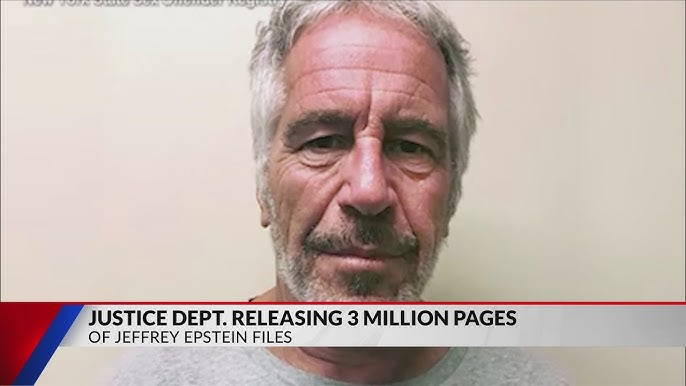
Since the US Department of Justice (DOJ) authorised the release of millions of documents tied to the late financier and convicted sex offender Jeffrey Epstein, the internet has been awash with shocking claims. Among the most disturbing: allegations of cannibalism, ritual sacrifice, and the killing of babies at elite gatherings involving Epstein and powerful figures.
The claims are graphic, emotionally charged—and spreading fast. But a closer look at the documents, and at independent fact-checking, shows a far more complicated and far less substantiated picture.
Here’s what we know, what’s being misrepresented, and why misinformation is flourishing around one of the most notorious criminal cases in modern American history.
What did the DOJ release in the Epstein case?
On January 30, 2026, the DOJ released more than three million pages of documents connected to investigations involving Jeffrey Epstein. The material was made public following sustained legal and political pressure for transparency around the Epstein case, which has long fueled speculation about powerful enablers and undisclosed crimes.
What the files include
The document dump spans years and contains:
- FBI interview notes
- Internal emails between federal officials
- Tips and complaints from members of the public
- References to third-party allegations
- Investigative leads that were never substantiated
Crucially, the release does not represent verified findings or proven facts. Much of the material reflects untested claims, uncorroborated statements, and investigative dead ends.
Where did the cannibalism and “ritual sacrifice” claims come from?
Shortly after the documents were made public, social media users began circulating selective excerpts that referenced extreme allegations, including:
- Babies being dismembered
- Human intestines being removed
- Consumption of human feces
- Ritualistic sacrifices aboard a yacht
One document in particular, shared widely online, describes claims attributed to an anonymous individual interviewed by the FBI in 2019.
What the anonymous source alleged
According to the FBI interview summary included in the DOJ files, the individual claimed that:
- He was sexually assaulted by Epstein and others in 2000
- He witnessed “ritualistic sacrifices” on Epstein’s yacht
- Babies were allegedly harmed in grotesque ways
- Human feces were consumed during these acts
The document also references “George Bush 1,” though it does not clarify whether this refers to former US President George H.W. Bush or another individual entirely.
What’s missing is just as important as what’s included.
Is there any evidence supporting these allegations?
No. And that distinction matters.
What fact-checkers found
The fact-checking organisation Snopes reviewed the claims after they began trending online. Its conclusion was unambiguous:
The allegations cannot be verified and lack supporting evidence.
Snopes confirmed that:
- The claims stem from a single anonymous interview
- The individual provided no physical, documentary, or corroborating evidence
- Federal records do not show follow-up proof supporting the allegations
- Epstein himself was never charged or accused of cannibalism
While the interview references the consumption of human feces, the term “cannibalism” was not used by the witness during the FBI interview.
The keyword confusion
Snopes also noted that within the millions of DOJ documents:
- The word “cannibal” appears 52 times
- “Cannibalism” appears six times
However, these references appear in unrelated contexts and do not substantiate the viral claims circulating on social media.
Why is a 2009 video now being linked to Epstein?
Fueling the online frenzy is the resurfacing of a 2009 video showing a 21-year-old model, Gabriela Rico Jiménez, being detained in Guadalajara, Mexico.
In the video, Jiménez makes alarming claims about elites engaging in:
- Human sacrifice
- Ritual abuse
- Cannibalistic behavior
The video has no documented connection to Epstein, his associates, or any of the DOJ files. Still, it has been widely reposted alongside Epstein-related claims, often without context.
Why this matters
The resurfacing of unrelated or unverified footage is a common pattern during high-profile document releases. Algorithms reward outrage, not accuracy—and sensational claims spread faster than nuanced explanations.
What do the DOJ files actually confirm about Epstein?
While the most extreme allegations lack evidence, the files reinforce what has already been established through court records and investigative reporting.
Epstein’s documented crimes
Jeffrey Epstein’s criminal conduct is well established:
- In 2006, the parents of a 14-year-old girl filed a complaint alleging sexual abuse at Epstein’s Florida home
- Epstein paid teenage girls for sexual acts
- He used his wealth, influence, and private properties to facilitate abuse
- Ghislaine Maxwell, his former partner, helped recruit and manage victims
According to reporting by The New York Times, Epstein maintained a systematic operation that exploited minors over many years.
Epstein died in federal custody in 2019 while awaiting trial on sex trafficking charges.
Why do extreme conspiracy claims thrive around the Epstein case?
The Epstein scandal sits at the intersection of three powerful forces:
- Real, documented abuse
- Unanswered questions about powerful connections
- Deep public distrust in institutions
That combination creates fertile ground for conspiracy theories.
The danger of dilution
Experts warn that amplifying unverified claims can:
- Distract from real victims
- Undermine legitimate accountability efforts
- Provide cover for those who enabled proven crimes
- Blur the line between fact and fiction
The presence of disturbing language in investigative files does not mean the allegations are true—it often reflects the breadth of claims investigators must document, regardless of credibility.
How should readers approach large document dumps like this?
Mass releases of legal documents are inherently messy. They are not verdicts; they are records.
A quick guide for readers
- Check the source: Is the claim from a verified report or an anonymous allegation?
- Look for corroboration: Are there multiple, independent sources?
- Distinguish inclusion from validation: Being in a file doesn’t mean it’s true.
- Rely on credible outlets: Established media and fact-checkers provide context that social media does not.
Why the Epstein case still matters—without exaggeration
Jeffrey Epstein’s crimes exposed profound failures in the US justice system, from lenient plea deals to delayed accountability. That reality does not require embellishment.
The harm done to victims is real, documented, and devastating. Holding institutions accountable depends on separating verified facts from viral fiction.
As more Epstein-related material becomes public, the challenge for journalists—and readers—is resisting the pull of sensationalism while staying focused on truth.
TL;DR
- The DOJ released over three million Epstein-related documents in January 2026
- Some files include unverified allegations involving ritual abuse
- Claims of cannibalism and baby sacrifice are not supported by evidence
- Fact-checkers confirm the allegations stem from a single anonymous interview
- Epstein was never charged with cannibalism
- His documented crimes involve sexual abuse and trafficking of minors